Translate

Sunday

X-MEN: The Freaks Rule


September 11 was but an unimaginable future horror when Bryan Singer set to work on his sequel to X-Men. Yet, in the time it has taken for the $120 million comic-book blockbuster to reach our screens, a weird synchronicity between art and real life has occurred. Almost by chance, X-Men 2 now looks like a highly polished mirror held up to our troubled times. It is not just post-9/11, but post-Iraq.

Given that the timeless themes of intolerance and prejudice have always been at the heart of the X-Men universe - the first film even opened in a concentration camp - and given the seemingly limitless adaptability of the comic books’ mutant metaphor, it is not a complete surprise to find our own world reflected in the multi-layered fantasy of X-Men 2. What is astonishing, though, is the sheer clarity of that reflection.

"It’s really, truly amazing," gasps Brian Cox. A newcomer to the franchise, the acclaimed Scottish actor plays William Stryker, a US government official who uses a mutant’s attempt to assassinate the President to justify an attack on Professor Xavier’s School for Gifted Youngsters, by implying that the target is a terrorist training facility.

Soldiers enter the mansion at night and shoot tranquilliser darts into sleeping children. As military helicopters hover noisily above the mansion, all is panic and chaos inside. The upshot is a local war between "normal" humans and mutants which threatens to escalate into global mass destruction. Sound familiar?

Although there was a press junket for X-Men 2 in LA, Cox says London is the first place he has done publicity for the film.

"I think the Americans are very nervous about Stryker, because they don’t want to damage their opening weekend. But you can’t blame the film for history kind of realising itself. Stryker does happen to be Director of Homeland Security, though. So that - and the fact that we’re dealing with these right wing hawks - makes it a little awkward, to say the least.

"This shows you the kind of mentality that is going on and the pressure that people are under in the States. It’s not a very nice time, to be honest. It’s also about fear, because everybody’s afraid of their position."

As if to illustrate Cox’s point, Dan Harris, one half of the film’s young writing duo, later tries to distance himself from comments he made to the American magazine Cinefantastique comparing Stryker to George W Bush, and the events in the film to the invasion of Iraq. "I was just blabbering, and I apologise for that. So we can’t talk about that. I was wrong, because I said some dumb, dumb, dumb things that weren’t true," he says, unconvincingly.

Stryker could be "a bit" problematic, admits producer Lauren Schuler Donner, because he represents the government and reflects "government suspicion of anybody who looks Middle Eastern. But that’s an unhappy coincidence," she suggests. "In terms of themes, X-Men 2 would be relevant at any time."

Donner is right. Historically, the X-Men comics have always had their finger on the zeitgeist, so X-Men 2 is simply carrying on that tradition. "Spider-Man is about a teenager growing up and getting the girl," sneers co-writer Mike Dougherty. "The X-Men films have a political awareness."

Indeed, it was in part the conflicting ideologies of progressive liberal Professor Charles Xavier (Patrick Stewart) and the militant Magneto (Ian McKellen) that drew Bryan Singer, who was keen to make a science fiction fantasy film, to the X-Men story in the first place.

"The notion that Professor Xavier was Martin Luther King and Magneto was Malcolm X, and these were two men who had very strong, decent beliefs, but had taken different roads. And the irony of that, and the moral ambiguity of that, intrigued me. It was a step beyond simple crime-solving, superhero action. It was much more socio-political, and in that way exposed more truth."

Of course, there are myriad other readings - Xavier and Magneto could be Jews fighting for and against assimilation, for instance - which is partly why the X-Men comics have lasted 40 years and are now spread across six different titles (as well as spawning an animated TV series and video game). Another reason for this longevity is the mutant metaphor, which is so allegorically adaptable that it allows for a high level of identification whatever your race, creed, colour, religion, sexual orientation, age or whatever. The fact, too, that its superheroes are treated like outcasts and freaks is, ironically, also highly comforting, especially for adolescents.

"The things that make the X-Men freaks also empower them, which is cool," says Shawn Ashmore, who plays Bobby Drake, aka Iceman, in the films. "Because when you’re a teenager reading this comic book or watching the film, it’s like the things that make you feel different are usually the positive things, but you don’t see it at the time. You sort of have to grow into that."

Singer was a perfect choice to direct this material. Not only is he able to handle large ensemble casts but, as a gay Jew, he also knows what it is like to be part of a minority. More than most summer event movies, X-Men 2 - and X-Men before it - feels like personal film-making. Where the first film seemed to express his feelings about being Jewish in America, the new one makes its themes of homosexuality and homophobia more explicit. None of the characters is actually gay, but one does literally "come out" to his parents about his mutant powers. "Have you ever tried not being a mutant?" asks his shocked mother.

Elsewhere, the fact that Alan Cumming is gay gives his casting as Nightcrawler, a teleporting blue-skinned mutant who happens also to be Catholic, a mischievous subversive twist.

"He’s a devout Catholic but he looks like the devil, so I couldn’t think of anything more appropriate than putting an openly gay actor in that role," laughs Dougherty. "It’s like an openly gay actor playing a superhero, which people don’t usually think go together, and playing a superhero who is a Catholic demon. It’s a perfect match."

Singer’s identification with the material, I discover, goes beyond questions of religion and sexuality. He was, he tells me, an "infant adoption", so Wolverine’s quest to discover his origins has become an increasingly personal journey for him. "Because it’s not just about where did I come from, who am I really, but how important is that to who I am now and to who I’m going to be?" says Singer.

So these films are a way for Singer to explore his own situation?

"Absolutely. And what better way than in a giant, action, summer event movie. I could think of no better place to spill out one’s own personal problems and foist them onto the world," he laughs. "And for that I apologise.

"But then again," he adds, "these ideas and concepts have existed in the X-Men world since its creation at the height of the civil rights movement in America in the 1960s. They are what has been the backbone through all six offshoots of the comic book, the graphic novels and the animated series - tolerance, acceptance, finding your place in the world, prejudice."

Linking the X-Men movies to Singer’s previous films, The Usual Suspects and Apt Pupil, is a fascination with the cause and nature of evil. In X-Men, Magneto’s militant line and cynical view of human nature is founded in his incarceration in a Nazi concentration camp. The fear of the knock on the door haunts both X-Men films, while Cerebro, the machine Xavier uses to communicate telepathically with the world’s mutants, becomes a weapon by which Stryker could carry out his final solution to the "mutant problem".

Underneath its thrilling set pieces, humour and moving relationships, X-Men 2 is actually quite a chilling film. Ultimately, it all goes back to Singer. "I was very obsessed with the Holocaust as a child and man’s inhumanity to man and, ultimately, it came from my fear of intolerance. In certain places, for whatever reason, just for being Caucasian or having blue eyes, someone might want to cut my head off. For being American, for just being myself, someone might want to destroy me. That concept is so terrifying that it constantly bears exploration."

With luck, he will continue this exploration in a third X-Men film. Certainly the door is left open for another instalment, although only X-fans are likely to know the meaning behind the movie’s mysterious final image ...


Published in The Scotsman, 23 April, 2003

Wednesday

Last Night Star Eva Mendes Shoots From The Lip


Eva Mendes on the rough and the smooth of Hollywood.

The last time we met was for the James Gray thriller We Own the Night.

“That was a really amazing experience for me. I love that movie so much.”

You said you hoped it would attract more dramatic roles. Did it?

“You know, it did. Not everything is instantaneous in this business but it absolutely did, because I did Bad Lieutenant with Werner Herzog, and you don't get any more serious than him. For me he is one of the few legends. From the documentaries to his films, woo! Fitzcarraldo, Aguirre Wrath of God - I am so in awe of this artist. He saw me in We Own the Night, and that would have never come about, and it's a dark, edgy film and raw. And now I've done Last Night with Keira Knightly, Guillaume Canet, and Sam Worthington, and I would never have gotten that if the producer on that didn't see me. Well, he produced We Own the Night and saw my dedication, saw how far I'm willing to go for my craft, and then he told the director. So it absolutely has helped me.”

Are you looking for directors who are going to test your limits?

“Yeah, absolutely!”

Going darker in some of your more recent roles, have you discovered new sides to yourself that you haven't been able to express before?

"I think that that happens naturally with age, you know? I grew up very, very sheltered, like really sheltered, in a Cuban-American family. Well they're Cuban, I'm the only American, the only one born in the States. So I grew up incredibly sheltered. When I went to Europe for the first time I was 19 years old or 20 years old and for me it was huge! And I didn't start, like, experiencing life until a much later time. I had my first puff of a cigarette at 28?! Everything happened so much later. And I thank God for that because I was able to deal with certain things in my own way. But, at the same time, I just had a childlike existence throughout my 20s, like really immature in a sense.”

But did that put obstacles up, emotionally or mentally, that you then had to overcome to be able to do certain roles?

"I think so, because I lacked the life experience. So I think what happened was I had to kind of learn quick. And the business will do that to you, so it was great: I needed the dark experiences the business has provided for me so that I could be a better actress.”

What kind of dark experiences?

"Those are personal things. But whether they're more personal or they’re people promising you the stars and the sky and the moon and you're really believing in them, and they're looking you straight in the face, looking at your eyes, telling you how good you are, and then the next minute it's, 'Who are you?' That might sound superficial to somebody but to me, when you look at somebody in the eyes and you say, 'The role is yours and this is happening,' that means something. Your word means something with me. To be just disappointed by people over and over again hasn't made me bitter, thank God, but it's made me aware and made me feel those feelings of utter and complete devastation and disappointment.”
 
So has your relationship with Hollywood, or your attitude to it, changed?


"Yeah it has. I just laugh at everything and I don't take anything to heart. Anything. And if it happens it happens, fantastic. But I no longer take what people say to heart. Not that I don't take it seriously, I just don't take it to heart, because I'm really sensitive. I'm just not letting it affect me. It's not easy to laugh, but if you just force yourself to chuckle and get into a laugh, there is a nice release there and you go, 'You know what? Screw it. It's not a big deal.'”

In the past you said you were not scared of nudity onscreen but you were worried about portraying sexual intimacy. Why was that, and did doing your first sex scene in We Own the Night overcome that?

"Well, I was always okay with nudity in the right situation because it's circumstantial. But I've become very guarded about my body and my image in a certain way, because I never want to feel objectified. So it's got to always be on my terms, and it has been and I'm very happy about that. But like I said, it's on my terms. So when I go scantily clad for Calvin Klein, I knew going into it this is going to be a provocative campaign and I thought, 'Cool.' I was in great hands. It's Calvin Klein, the most iconic American brand we have, and known for controversy, and I was ready for it.

"When I do certain photo-shoots it's very calculated. It's: 'Okay, do I want to do this men's photo-shoot now? Do I want to be on the cover of the magazine scantily clad? Yes, I do, because I'm promoting a movie such as Ghost Rider or such as The Spirit, and that's my audience.' I'm not just like, 'Oh! There go my clothes off again!', although I make jokes about it that way because I'm self-deprecating and I'll be like, 'Oh, oops.' But the truth is I'm a smart cookie and I know what I'm doing. So nudity is one thing I'm very comfortable with in a film, if it makes sense.

"Training Day was my big break in the business and in the scene where I have to do full frontal - it was very tasteful, I thought, and I really trusted that director [Antoine Fuqua], and trusted Denzel Washington, of course - I wasn't doing a love scene and that was okay for me. It's a strange thing, I think, the intimacy. It's a tough one.”

I spoke to Maggie Gyllenhaal once who talked about doing a sex scene that left her feeling bad afterwards because it was a quite an emotionally grueling scene and because sex is such a personal thing, if you're an actor who puts everything into your work you can be left . . .

"Feeling exposed and vulnerable? That's why, for me, it's who you're working with. The scene in We Own the Night, that opening scene, I was exposed - not to make a joke out of it, I was literally exposed -  and I was very emotionally vulnerable. And I could not have done that the way I did it, which was with honesty and being completely in the moment, if I didn't trust Joaquin Phoenix completely, and I didn't trust [the director] James Gray completely. So it's about the people you work with as well because you are left feeling very vulnerable. The truth is that's you out there.

"But it's not just love scenes that leave you feeling like that. Also in the scene with Joaquin where we're fighting in the room and I smack him, I was so depressed when I went home that day. It was one of the things where you've got to go to that ugly, dark place; so there's a lot of times where that's the result of it. But I think, too, with a love scene, a sex scene, it's just embarrassing, you know? So it takes extra effort. But that's when I thank God I'm a trained actress. I still go to school, I've been with my acting coach for almost 10 years, and that's when I say, 'Okay, thank God for the training.' But I still think, 'Oh gosh, there's a camera right there.’”
 

Did doing that film made you look at roles that you maybe wouldn't have contemplated before because you hadn't got over that hurdle yet?

"No, I would never shy away from an amazing role because there was a sex scene or a rape scene. Look, nobody would look forward to a rape scene. But if the script was amazing, that's part of the deal.”

When you have control over your image the way that you say you do, can doing something like the risque photo-shoot you did for Italian Vogue in 2008 be empowering?

"[Giggles and smiles] Yes! It was amazing! I love that you brought that up because I want to make a comparison and I know that you totally get what I am saying. The Italian Vogue shoot was so empowering. We came up with a character - we had two days and it felt like I was doing a mini film - and I let loose! My inhibitions were out the door! And, of course, again it's circumstantial. I'm working with Steven Meisel, one of the best living photographers we have. So I didn't even have my publicist with me. I just knew it was about me and Steven, and it was about just getting down and dirty. Our inspiration was Elmer Batters, this crazy photographer from the 50s and 60s that had a foot fetish [laughs].

“I'm so proud of that [shoot]. I've never wanted to put a magazine I've been on the cover on, on my coffee table before. And I didn't because I thought it might be tacky. But that was the first one where I thought, 'I'm proud.' I loved it.

"Now the complete opposite of that was the first time I was on the cover of a men's magazine. It was my first interview, and it was my first photo-shoot. This was for 2 Fast 2 Furious, and it had to be five or six years ago. I had never done a cover, nothing, and I will say it: I was manipulated in the photo-shoot. The images aren't disgusting by any means, you don't see anything very much, but there's some images where they had me on a piano, everything was white, and I was manipulated. They saw a young girl who didn't have experience, who didn't know how the situation was, and I felt very manipulated. I saw those images and till this day I cringe when I see them. Not because I'm scantily clad - look at the Italian Vogue - but because it wasn't on my terms. I vowed to myself never again. Never again.”

So it was a learning experience?

"Absolutely. Because, literally, my soul hurt. Literally. And it's a big men's magazine. Huge! I'd go into a 7-Eleven or an ampm, those little marts, and I couldn't escape it for a whole month. It was staring at me right there, because it was everywhere. And again it wasn't anything that anyone else would blink an eye at. But for me, for my soul, I said, 'Who's that girl?' I feel that the cover looks like I'm about to cry.”

You felt like something had been taken away from you?

"Absolutely. And I didn't do sexy shoots for a few years because I was like, 'I got to get this under control. I got to figure this out. I got to gain some control over this.' And then the last few years [claps her hands], I feel like it's a [tongue in cheek] renaissance.”

How does your partner feel about some of your photographs? He's got to be pretty secure.

"He's very secure or he wouldn't be here, you know? I always joke around people. When they ask, 'Are you with somebody?' I say, [dreamily] 'Yeah, I'm with the cutest boy.' But the truth is he's a man, and he just gets it.”

So when he saw the Vogue shoot, how did he react?

"He loved the Italian Vogue! He loved it! But, you know, we're cut from the same cloth. We're yin and yang but we have the same core values and he gets it. He's such a little artist. I say it like that not that he's a little artist but [wistful] I just see the artist trapped inside of him. I'm like, 'C'mon . . .' So he loved it. He gets it.”

When you did The Spirit it was something completely new for you because like Sin City, which Frank Miller co-directed, it was completely shot using green screen.
 

"Yeah, and I hated it. I hated it the first few days. I thought, 'What am I doing? How am I going to do this? What is happening?' First of all, it's really green in the studio. It's really annoying because everything is green and your eyes have to adjust, and you're like, 'Can someone turn on the lights? Like why is everything green?' But that's a minor thing, obviously, and you adjust to that. But it's like if you and me were in a scene together, the only thing that would be there would be the seats we're actually sitting on, that's it. If there's a clock on the wall that you need to reference, it's not there. If there's a, I don't know, a mini gorilla at the end of the room, he's not going to be there. So it's really about connecting with the other actor, which I love, but it's also about using your imagination.

"The cool thing about that is, the first scene I shot, like my first day, I was so unhappy with it. I just didn't have it, I just didn't get it, and in the middle of shooting, or a few weeks in, I said, 'Frank [Miller, the director],' who I adore, I said 'Frank, can you help me out? Can we re-shoot that first scene? I didn't bring it. I didn't give it to you.' And he said, 'Absolutely.' And that's the beauty of it, too, because we don't have to go back to a location or anything. We just added it. At the end of the day when I wrapped, we added that scene [getting excited], re-shot it, and it's so good now!

"That was actually a big victory for me too, because speaking up sometimes is difficult, believe it or not. I know I come off as a loudmouth, I understand that. And I am at times obnoxious. But speaking up for what I want? You know, I think a lot of females share this kind of quality where even if you're raised in a progressive household, you don't want to rock the boat. So I really pat myself on the back every time I do that, because it was easy. I just asked, and it happened."

Well it's your face that's going to be up there, it's your performance, so I guess you do have to try and keep some control over it.


"You do, but asking to re-shoot a scene, that's a big one. But then I realised, 'Wait a minute we don't have to go to another location.' Normally I don't think that would happen, because it's so much money to re-locate, you know what I mean? So it happened.”

You play a jewel thief in The Spirit and I wonder if you enjoy playing the villain or outlaw-type character, because I remember the first time I saw you was when you were kicking ass in Once Upon a Time in Mexico, opposite Johnny Depp?

"I was so nervous on that movie.”

Really?

"Yeah, 'cos I was such a baby in the industry as far as experience [goes]. I'd done a few things but I was nervous because I was working with Johnny Depp and I was like, 'Oh my God.’ And I realised, I think on that film, that the only way I could cure my complete anxiety before doing a scene with a star like Johnny Depp, a star that really knows their work and has true chops, is by completely being over-prepared. OVER-prepared. And that taught me that. But I was so nervous. I had fun, though.”

Is it fun playing these outlaw types?

"Yeah, it is fun. To be honest, I just want more range, because that is definitely fun. And I'm not sitting here going, 'I want to be taken seriously as an actress.' I just want more range, because I do feel like that's one of my pluses. I can do a comedy and I can do a drama. And I can do a dark comedy and then I can do a slapstick. I'd love to work with the Coen brothers. Oh my gosh, I would love to go that far. And then my dream director is Mike Leigh. Dream director! I've heard about his process and, oh my God, I would be committed. I would stop my whole life to work with him.”

It can take months.

"It takes months and then the improvisation, the character study - I would die for an experience like that. Die!”

When you played the lead in the reality TV satire Live! the character was originally written as a man. So is it quite difficult as a woman to find complex roles?

"Absolutely, because they all go to Kate Winslet first, which is understandable. I'm a huge Kate Winslet fan. When I talk about range, that's what I mean. It's like that's it, that's the dream career. That's the career I would love to have because she really does it all. And yeah, those roles are really hard to find.”

How do you change that?

“By just being diligent in my work and really showing people that I'm here to stay, and that I work my ass off for my craft. And I will tell a new director when I'm up for a part, 'Call my directors. Call all of them.' Whether it's Ghost Rider or it's We Own the Night, or it's Bad Lieutenant, my approach is always the same: I do my character study, my script breakdown, and I go for it. I just go for it.”
 
Finally, can you comment on the fact that the ad you did for Calvin Klein's Secret Obsession was banned from US TV?

“Yes, isn't that cool.”

Were you surprised?

“I was surprised that we were banned. But it was actually kind of exciting because I've never been banned from anything before, and it felt very rock-'n'-roll.”

What is it with Americans and nipples? People were scandalised when they thought they saw a flash of Janet Jackson's nipple at the Super Bowl.

“I know! I mean, come on, it's no big deal. You know I love being American, and my family fought so hard to come to that country, so I have a respect for it, and yet I think we need to do less with the violence and celebrate the human form more, and be okay with it more. We need to learn from the Brits. Yeah, we need to learn from the Brits.”


© Stephen Applebaum, 2011

Monday

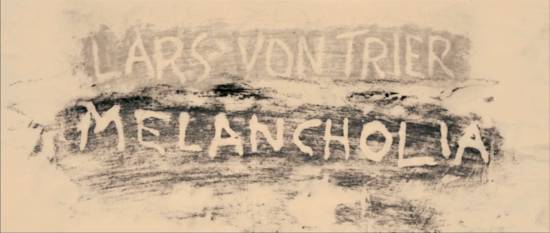
Cannes Review: Melancholia

Danish provocateur Lars von Trier's 2009 Cannes film, Antichrist, mixed explicit sex and graphic violence as it depicted the dark and brutal collapse of a marriage. The director claimed the film reflected his disturbed mental and emotional state.


Apparently, he was in a happier place when he made this year's Cannes competition entry, Melancholia. But while the film is far less shocking, it is certainly no comedy. This time it is not just a marriage that comes to an end, but the entire planet – which von Trier destroys twice.

And he doesn't make us wait for the end of the world, instead getting down to business immediately with an operatic prologue of painterly, slow-motion images cut to the overture of Wagner's Tristan and Isolde, as the eponymous planet collides with Earth.

Partly these are visions of the coming apocalypse, partly they're the visions of Justine (Kirsten Dunst), who appears to be a happy newlywed. But behind her happy demeanour is a woman in crisis. By the end of the first of the film's two chapters, she has lost her job and her husband, and looks to be losing her mind as well.

In the second half, her sister, Claire (Charlotte Gainsbourg), tries to care for her, but as the end of the world gets ever closer, she begins to fall apart, while Justine grows stronger – her depression making her more prepared for death.

Dunst is convincing; the explosive climax delivers an emotional kick, and the visuals are ravishingly beautiful and audacious. That said, Von Trier struggles to justify the 130-minute running time.

Originally published in The Scotsman, 21/05/11

Cannes Review: The Tree Of Life


Terrence Malick has only made a handful of films in 38 years. So when a new one comes along, it is always an event - and yesterday's world premiere of his The Tree of Life, starring Brad Pitt, Sean Penn and the very busy Jessica Chastain, who also had
the disturbing apocalyptic thriller Take Shelter in Cannes, was no exception.

Filmed three years ago, the press-shy auteur's fragmented epic is challenging, bloated, sometimes boring, poignant and one of the most visually breathtaking films since Kubrick's 2001: A Space Odyssey.

Book-ended by a haunted-looking Sean Penn, the film is both an intimate family drama and an epic overview of the origins and fragility of life. With monumental ambition, Malick depicts the fiery birth of planet Earth from cosmic dust, and the origins of life on land. A vaguely twee scene with dinosaurs appears to show the beginnings of empathy, before the beasties are wiped out by a meteor.

After the awe-inspiring visual splendour of these elemental scenes, the sections focusing on the story of Penn's character's childhood in a small Texas town in the 1950s feel a little bathetic. His parents, played by Chastain and Pitt, personify the eternal struggle between good and bad that is at the heart of Malick's films. She is grace and love; he is ego, anger and disappointment.

Here the creation of the Earth becomes the development of a boy from childhood innocence to adult disillusionment and, his claustrophobic environment of vertiginous tower blocks seems to be saying, to a way of living that is estranged from nature and spiritually bankrupt.

The mixture of boos and applause that erupted at the end of the Cannes screening suggested the film will divide audiences. But then Malick has been doing that ever since The Thin Red Line. But love The Tree of Life or loathe it, it is impossible to fault Malick's ambition and not to admire a man who is making big, personal, non-genre films at a time when many filmmakers are playing it safe. Long may he continue. 
Originally published in The Scotsman, 17/05/11

Tuesday

Cannes Links

Half-way through the 64th Cannes Film Festival, my personal favourite films are Terrence Malick's audacious and visually awe-inspiring The Tree of Life, and Scottish director Lynne Ramsay's disturbing psychological horror movie, We Need To Talk About Kevin.

Prize for the grimmest film so far goes to the Australian real-life drama Snowtown, about a serial killer in Adelaide in the 1990s. The film's uncompromising approach to its subject matter had people squirming in their seats and leaving the cinema in disgust.

Best interviewees so far include the Olsen twins' younger sibling Elizabeth, and the female lead of The Tree of Life and apocalyptic thriller Take Shelter, Jessica Chastain. 

Links to Cannes coverage:

http://news.scotsman.com/entertainment/Cannes-Film-Festival-preview-which.6762549.jp

http://news.scotsman.com/entertainment/Film-review-Midnight-in-Paris.6766720.jp

http://news.scotsman.com/entertainment/Film-review-We-Need-to.6767445.jp

http://news.scotsman.com/uk/Not-so-luvvie-anger-at.6768008.jp

http://news.scotsman.com/entertainment/Film-review-The-Tree-of.6769501.jp