FEATURES, INTERVIEWS & ASSORTED WRITINGS FOCUSED ON FILM & ENTERTAINMENT BY FREELANCE WRITER STEPHEN APPLEBAUM
Translate
Showing posts with label Denver. Show all posts
Wednesday
Retrospective: Christian Bale, Batman and The Machinist
Christian Bale: Cinema's extremist
Christian Bale is to be the new Batman, but first he lost 63lb and wrecked his health for The Machinist
By Stephen Applebaum
This June, Christian Bale swoops into cinemas as the Caped Crusader in Batman Begins. But little over a year ago, he wondered if he even had a career. "I wasn't in demand," he recalls, frankly. His last memorable role had been as Patrick Bateman in American Psycho, way back in 2000. Since then, he'd been filling his CV with mediocre fare that included Captain Corelli's Mandolin, Shaft, Reign of Fire and Equilibrium.
Personally disappointed by some of his recent work, he was trying to raise his game. But he needed the right material and didn't like anything he was being offered. Though time was not on his side, he was determined to hang on. "I needed money because I had just bought a house, but I just kept saying, 'I really can't do another movie that I know is not going to turn out the way I want it to, and that I have to make a lot of concessions in my head for.'"
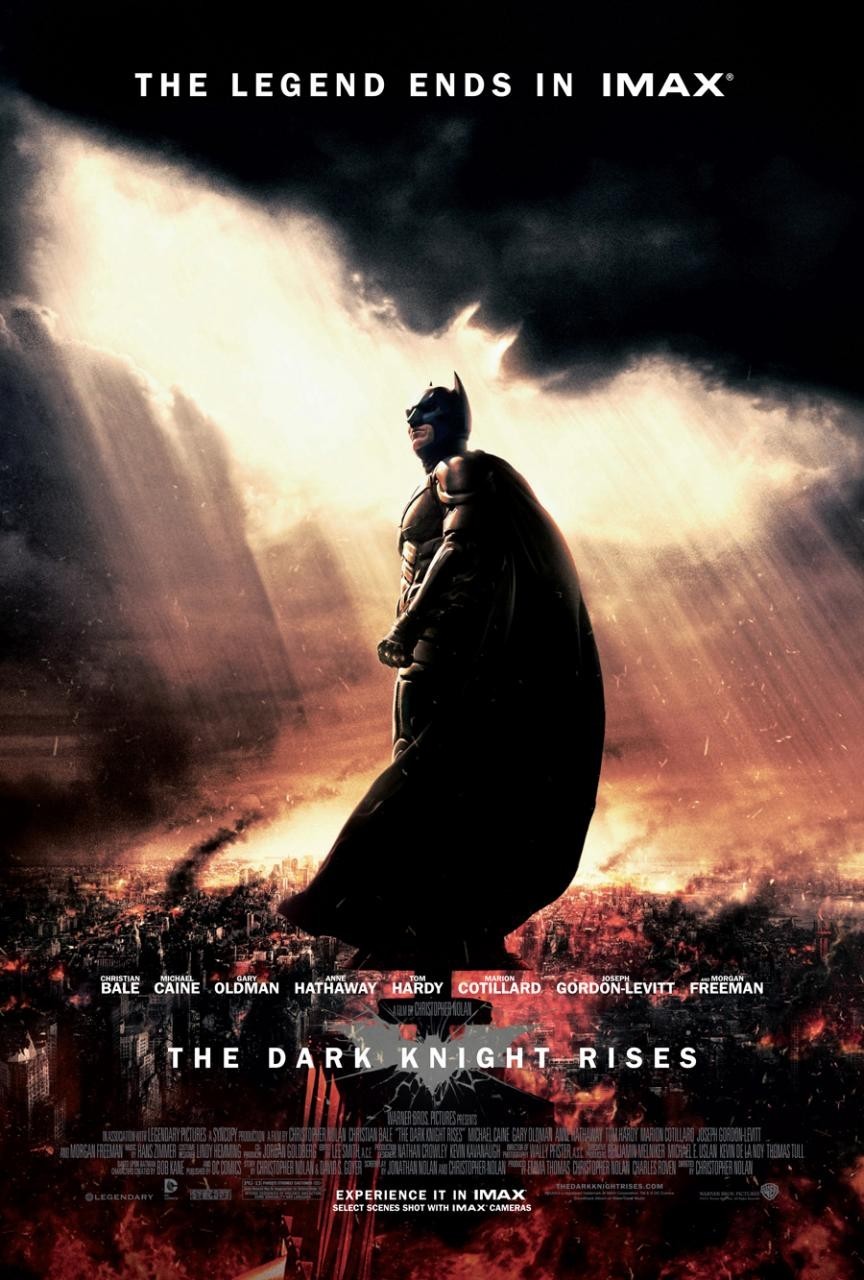
Bale attributes some of his mistakes to his risk-taking approach to work. However, not everyone has the same idea of what constitutes a risk. While American Psycho was presented to him as one, he says he never saw it that way; same with Velvet Goldmine, Todd Haynes's esoteric take on the Seventies British glam rock scene. "These are films I love," he enthuses. "For me, there's a bigger risk trying Batman.Ultimately, the big point was that Chris Nolan [ Memento], who you would not expect to be doing that kind of movie, was going to direct it, which is exactly what I was looking for, because you want to do something totally different from the other Batman movies."
It was not the man in the rubber batsuit that rescued Bale, though, but a skinny lathe operator named Trevor Reznik, and a little existential thriller called The Machinist. When he read Scott Kosar's script, Bale felt he had finally found something he could throw himself into, body and soul. Actually, he would throw a lot of his body out, shedding an incredible 63lb in order to transform his 6ft 2in frame into the living skeleton that Reznik, the film's haunted protagonist, has become after suffering insomnia for a year. The film arrived not a moment too soon.
"I had spent weeks staring at the wall in my house out of depression because of things that had gone wrong and the choices I had made," remembers Bale. "When I read The Machinist, I just went, 'Wow! This is perfect.' I was having dreams about the character and I couldn't stop thinking about it. I felt like this one was going to save my arse, and pull me out of the depressed state I had got into."
The idea of losing weight did not bother him - he'd gone through extreme physical transformations before. He pumped iron for weeks and went on a special diet to achieve Bateman's sculpted look, and has beefed up again for Batman. He thought the pain of becoming Reznik might even be good for him. "To me, it was a little bit of penance for bad movies I've made in the past," he laughs. "It was like, 'All right, I'll discipline myself and put myself through this miserable time.'"
Bale's reference for what he wanted Reznik to look like was a somewhat morbid photograph of the country singer Hank Williams, taken when he was 29 but he looked 50, says the 31-year-old Welshman. "It was a photograph of him getting released from jail just a few months before he died. He's shirtless and he looks a wreck, absolutely emaciated. So I stuck that on the front of the script to be my image of what Trevor should be, and then just kept going and going and trying to reach that."
He started losing weight under the supervision of a nutritionist, but when he got down to the weight she had set, he was still not satisfied. So he lost another 20lb. By the time he arrived on set in Barcelona, he was surviving on an apple and a café latte a day. He looks like a walking cadaver in the film; when he bends towards a sink, shirtless, you fear his vertebrae will tear through his paper-thin flesh. Bale's wife was worried.
"First of all, think of the tolerance she must have had just to have her husband walking around and coming out of the shower looking like that," says Bale. "It's not pretty. I did wake up a couple of times with her very close, putting a mirror under my nose to check if I was still breathing."
Brad Anderson, the director of The Machinist, also remembers a couple of occasions when he wondered if his star had gone too far. "I looked over at him and he was sitting on a chair, holding an apple with one bite out of it, and staring vacantly into space. He looked so withdrawn it kind of occurred to me, like, 'Man, is he going to make it?'"
On the positive side, Bale says he achieved a Zen-like calm; on the negative, the days seemed endless without meals to break them up. Moreover, when he started to put the weight back on, he discovered that he had the cholesterol level of an 80-year-old man (a strict diet and exercise has now put that right). So what drove him to put his long-term health on the line for a film, even one he felt passionately about? "I had the arrogance of thinking, 'You know what? I'm young. It ain't going to happen to me. I can build myself back up. I'll be fine.' But," he admits, "I would be worried if I was to do it again."
Bale stuck to his guns in Batman, too. "I decided in the screen test, 'I'm going to do it exactly how I want to do it and if they don't like that, I don't want to do the movie anyway,'" he says. He was concerned that, in previous films in the Warner franchise, the villains were always more interesting than Batman, whereas it should have been the other way round.
"Is he nuts?" asks Bale. "What's going on with this man who thinks he can run around in a batsuit in the middle of the night? It's a funny, bizarre place you have to get to in your head for that to become acceptable to an individual. Of course, we're looking at fantasy. But Chris and I really wanted to attempt to answer these fantastical questions with as realistic a motivation as possible."
As any Batman fan will know, the event that tips Bruce Wayne over the edge is the murder of his parents. This had resonance for Bale, whose own father, the activist David Bale, died of brain lymphoma, aged just 62, in December 2003. However, he denies reports that he dedicated his performance in Batman to his late father. Nor did he draw on his own experience to enter Wayne's emotional and psychological space.
Breaking eye contact for the first time during our interview, and clearly having difficulty with the subject, Bale says: "I don't like to actively and specifically use my own life for scenes in movies, certainly when it comes to something as life-changing as my father's death." I begin to wish I hadn't asked the question. "For me, it's an abuse of our time together, as he was ill and as he was slowly fading. Those moments were just too special and a movie cannot compare to that for me, so I don't like to use that, ever.
"I was having a difficult time of knowing if I was actually going to be capable of making a movie because it obviously was so present in my mind that the film paled into insignificance. I just ceased to care, whereas normally I care intensely. I did manage to come around to that and to immerse myself in it. But I think that you cannot help but have everything in your life affect every choice you're making. Did I consciously think of that? No. I couldn't have done that and felt good about myself."
It will be interesting to see how Bale comes out the other side of the whole Batman experience. Following his still impressive debut 17 years ago in Steven Spielberg's Empire of the Sun, Bale found the press attention oppressive, and would frequently find excuses to duck out of interviews. Instead of basking in the limelight, he retreated from it. This perhaps explains why he has avoided the crash-and-burn trajectory of so many child stars. Even now, he admits that he is no fonder of the attention. How ready is he for the hoop-la that will inevitably surround the release of Batman Begins?
"Well, I don't know if this is naive, but I feel that the movie can kind of do it by itself. Because of the size of the film, my hope is that I won't have to put myself everywhere and become some sort of soulless, empty being by the end of it. Frankly, I also just get bored of seeing people who are around too often. And I certainly get bored of seeing myself if I'm around too much. But I have to wait and see exactly what changes may occur. Who the hell knows? I may detest it and run a mile, or maybe I will be able to deal with it."
Whatever happens, you can be sure that we will be seeing a lot more of Bale in the near future, on cinema screens at least. He is back in demand, and has just finished filming The New World, for Terrence Malick, after which he went straight on to the set of Harsh Times, a gritty, low-budget, urban drama directed by the Training Day screenwriter David Ayer.
After that, he says, "I'll be ready to sit back and take a bit of a break, because you start to feel yourself burning out after a while."
First published in The Independent, 2005
Labels:
batman,
Christian Bale,
Denver,
Empire of the Sun,
Harsh Times,
Michael Caine,
Spielberg,
The Dark Knight,
The Machinist
Sunday
Retrospective: Cinema after Columbine
Columbine - a no go for Hollywood
Published at 12:00AM, January 18 2004
Hollywood won’t touch Columbine, but indie film-makers are finding
unique ways to respond to the massacre, says Stephen Applebaum
Five years after the Columbine High School shooting, the subject of
Dylan Klebold and Eric Harris’s murderous rampage remains virtually
untouchable in Hollywood. Yet, despite the major studios’ reluctance to
explore it, three Columbine-related films — Gus Van Sant’s Elephant, Ben
Coccio’s Zero Day and Paul F Ryan’s Home Room — did open in America
last year.
Significantly, they were all independent features.
Hollywood’s
problem is that, in the wake of the shooting in Littleton, Colorado,
studio chiefs found themselves in the firing line from Congress.
Politicians desperate for answers pointed the finger at the film
industry and its role in marketing violence to children. After all, the
14-year-old gunman who killed three students at a school in West
Paducah, Kentucky, had claimed that he was inspired by The Basketball
Diaries, in which Leonardo DiCaprio shoots up his classroom; and the
Columbine killers were practically addicted to violent films and video
games like Doom, which they tailored to their fantasies.
Hollywood
is now leery of anything involving children and guns, says Eli Roth,
the director of last year’s horror hit Cabin Fever. “I wrote a script
called High Noon High with a friend, and we basically wanted to make a
film that would show the absurdity of kids bringing guns to school. It
was set 100 years ago. But it went out around the time of Columbine, so
nobody would touch it. I have since tried to resurrect the project, and I
always get the same comment: ‘The subject is taboo.’”
Although
there had been school shootings before Columbine, none shocked America
in the same way, partly because of the scale of the event (15 died,
including the shooters), and partly thanks to the live news coverage
from outside the school on the day of the attack. Primarily, though, it
was the location that made Americans sit up and take notice. “The event
occurred in a middle-class, suburban context, whereas most had grown to
assume that this, in America, was an urban problem, a problem with poor
communities, and often a problem with young men of colour,” says Deborah
Prothrow-Stith of the Harvard School of Public Health, co-author of the
book Murder Is No Accident. “So it became the pivotal event that made
it clear, even if people were ignoring it, that this was a bigger
issue.”
Van Sant and Coccio knew immediately that they wanted to
make films exploring what had happened at Columbine. Ryan was a little
more hesitant. He was already working on a script about a hostage
situation in a suburban high school, in reaction to shootings in Paducah
and Jonesboro, Arkansas. After Columbine, he no longer felt it did
justice to the subject. Nor could he imagine trying to move forward with
a movie about a shooting in the immediate fallout. He was, more-over,
made queasy by the revelation that Harris and Klebold had made tapes in
which they boasted about how their action would inspire film-makers.
“I
thought, ‘F*** you. I’m not going to tell your story. You don’t even
have a story that’s worth telling,’” recalls Ryan. “That’s why Home
Room, in a large degree, changed from being a story about the shooters
to being one about two survivors. The shooter in Home Room isn’t even
given a name, and he is completely absent from the whole story.”
While
Ryan says it was easy for him to raise the money to make his film from
independent backers, Van Sant, despite his standing in the industry,
struggled to find someone who would support his project, which he wanted
to do for television. “There’s so much journalistic coverage with an
event like that, but I think there are other types of treatments that
could also address the issue, and not so much in an entertaining way,
but in an informational way,” he says. “People tend to consider any
movie that’s not a documentary an entertainment. That’s the reason I
wanted to do it, because of that thing in people’s heads. So I wanted to
make a television movie in the sense of a CBS, NBC or ABC television
movie, because that is the mainstream forum where the journalistic
articles are as well.”
Unfortunately for Van Sant, at the same
time as he was pitching his idea, studio chiefs were flying to
Washington in the fear that there would be actions against television
violence. It was a while before HBO, the risk-taking cable channel,
finally agreed to do something on the subject, and then it was a
different movie from the straight re-creation Van Sant had initially
envisioned. Instead, Elephant is a languid immersion in the quotidian
details of high- school life on the day of a massacre. Inspired by
playing Tomb Raider, which he encountered after learning computer games
supposedly influenced the Columbine killers, and by watching the work of
experimental European film-makers such as Bela Tarr, Van Sant shoots in
long, flowing takes, replaying the same moments from different
characters’ perspectives. The result is like a waking dream that
gradually becomes a nightmare.
Elephant won the Palme d’Or at
Cannes. However, its success proved highly controversial, with some
(mostly American) critics arguing the film was exploitative because it
failed to explain the massacre. Actually, the clues are there. It is
just that Van Sant leaves it up to us to decide what impact an
environment containing drugs, violent computer games, television
violence (represented by a documentary about Nazis), bullying, an
impersonal school setting, access to guns and so on might have on
children at a time when they are arguably at their most vulnerable.
“It’s the style of the film to have the conclusions emerge from the
audience, collectively,” explains Van Sant. “It’s like a group mourning,
or a group investigation.”
Elephant is not an attempt to
“pinpoint why these particular kids did this particular thing, because
then I would be leaving out all the other wicked things that go on in
the world. It’s really about why violence happens”.
He partly
blames his own generation for tragedies such as Columbine, although he
says he may change his mind if and when the shooters’ tapes are
released. “When I went to high school it was the late 1960s, and
conformity was suspect, at least in my circle. People battled against
it. But those same people, the hippie generation, for some reason became
ultraconservative when they grew up. Now they drive sports utility
vehicles and they want children to succeed beyond all expectations. They
make their children feel that anybody who doesn’t exist like they exist
is somehow cancerous — to the point that they’d probably be proud of
their children if they picked on classmates who are ‘losers’.”
Coccio,
who funded Zero Day with credit cards and loans and, like Van Sant,
employed non-professional actors, says he does not have any answers
either. “As a film-maker I get inspired by things I haven’t made up my
mind on yet. I have that luxury because I am an independent film-maker,
and I definitely wasn’t answering to anyone making this film. I just
went off and did it.”
Shot in the form of a video diary by two
friends as they plan a school shooting, Zero Day creates a compelling
feeling of intimacy with its subjects, Andre and Cal, who address us
both as confidants and sometimes, chillingly, as potential victims. We
watch them with their families, who are blissfully ignorant of the small
arsenal, including guns and bombs, their sons are amassing. We think we
know the boys, but when we watch them in the final school- massacre
scene through the dispassionate lens of a CCTV camera, the disturbing
realisation dawns that, like their families and friends, we do not know
them at all.
Zero Day, the most subversive of the three films —
and, given the amount of apparently accurate detail about making bombs
and reconfiguring guns in it, also the most worrying — Coccio agrees,
could never have been made in Hollywood. “Not before. Not after
Columbine.”
“There’s only one thing that will change their
minds,” suggests Roth about the big studios, “and that’s the box office.
A $100m box office for Elephant will send a message that it’s okay to
talk about these subjects, because people will pay money to hear what
the film-makers have to say about it. But the reality is that these
films are very small releases, and with so many movies crowding the
multiplexes, it’s a real long shot for any of them to break out.”
Labels:
Columbine,
Denver,
Elephant,
Gus Van Sant,
Harris,
Klebold,
Michael Moore
Subscribe to:
Posts (Atom)