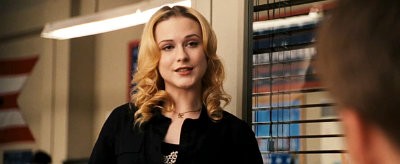
Writer-director Derek Cianfrance discusses his tear-stained adaptation of M. L. Stedman's bestselling romantic novel, The Light Between Oceans, and explains why its stars, Michael Fassbender and Alicia Vikander, are like Muhammad Ali and Seabiscuit
Do
your Italian roots partly explain the fascination with family in your
films Blue Valentine, The Place Beyond the Pines and now this?
"I
think so. I've been obsessed with family and trying to make home
movies my whole life. When I was a kid I used to think we lived on an
island, because I felt like when people would come over to our house,
we would change: we would act like perfect versions of ourselves and
then when people would leave, we'd be real again. So my whole
childhood I carried tape recorders around and I used to record
arguments, and I used to instigate arguments with my family, and I
used to take photographs of people crying in my house.”
Do any incidents stand out?
“When we went to Disneyland I brought a home video camera. I never shot a single moment there but I shot the car ride over where we blew a tyre in the middle of the desert, and my dad was screaming at me to turn off the camera. So I have spent my whole life trying to make family pictures."
It sounds like you grew up in an emotionally-charged environment.
"Yes. The Italian side of my family was always so hot blooded and so passionate, and so emotional that they were dangerous. That they got into trouble. That there was feuds.”
Has this influenced the way that you portray families in your work?
“Yes, because when I was growing up we had family pictures all over our walls that were smiling and I always thought it was not a real family picture. So I used to never smile in family pictures and just tried to take the real family pictures. Now, as a man, I have been trying to make movies that take place in that intimate family setting."
You've said you like people who make decisions based on passion and without thinking about the consequences.
"Yeah, I think that's the key to this movie and a lot of human relationships, as I know them. Characters in my movies aren't good, they aren't bad, they aren't heroes, they aren't villains; they're just human beings and often-times they make these decisions based on good intentions, but they make them with emotion, and that emotion always has a consequence.”
What is the alternative?
“If you don't make emotional decisions maybe sometimes you don't make any decisions, and maybe you have more of a stagnant life, a safe life. I've always just responded to characters that choose emotions and live with the consequences. I have instances in my family over years that I feel, like, the reverberations of legacy, and I've just been obsessed with that in my movies."
Why did you choose film?
"The movie theatre always felt like home to me. I have some form of dyslexia and I'm ADD, and so I never was a big reader and I always discovered the world through movies."
Does your obsession with family and documenting family life extend to your sets?
"Yes, I feel like I'm a documentarian of fiction. I have great actors that I'm working with on this film. They don't need me. There's nothing I can tell them. But what I can give them is an experience. And what I fight for on my movie sets is that experience.”
For yourself as well as for them?
“Yes. By the time I'm on set with actors I'm so sick of my script and so sick of my ideas, I just want to be surprised. I memorise my stories and I see it in my brain, and when I get on set the last thing I want to see is what I see in my head. I want to see it be alive. So I ask actors to surprise me. I ask them to fail."
The stars of The Place Beyond the Pines, Ryan Gosling and Eva Mendes, became a couple off screen. Now the same has happened to Michael Fasssbender and Alicia Vikander. What are you doing right?
"I don't know. I'm like a yenta or something. I try to find actors that are going to work off of each other and I try to think of chemistry beforehand. I started with Michael and then I had to find someone that I thought would be the storm if he was going to be the ballast, and would be an actor that would challenge him. He's like Muhammad Ali and I had to find an actor that could push him. I couldn't bore him with somebody that wasn't at his level.”
So you found Alicia.
“She's a thoroughbred, she was like Seabiscuit. Michael gives it in the second take and he's done, but she goes and she goes and she goes, and she doesn't tire, and he can't let her beat him because he's the champ. So he picks himself up and then she's not going to lose either, so it becomes this great human competition. And then what happens on set is they begin to catch each other when they fall. It was a beautiful relationship. And the movie witnessed this relationship, you know?”
A lot of moments in the film feel real and seem to transcend artifice.
"I always think about chefs and the way they have to make, like, the same meal 300 times a night. It's about consistency. As a film director, I don't feel like I need to be consistent at all. I feel like I have to get one moment that can't be replicated. So that's my whole quest on set with actors: I'm always looking for a place where something happens that within the confines of a story, within the boundaries of a narrative, is truly alive."
One such moment is when Alicia shaves off Michael's moustache. Whose idea was that?
"Michael's. I thought it was a great idea, but then here we go to the essence of making movies. The production company said, 'Okay, but you're not going to really have her shave him, are you?' I said, 'Yeah, why not?' They said, 'It's dangerous. It's a real razor blade.' I said, 'I think she can handle it.' I can't tell you the months of discussion I had fighting to let Alicia have a razor in her hand.
“The process of making movies is like a sea of fakeness, and I have an allergy to fakeness. So I said, 'OK, Alicia, can you shave his moustache?' By this point we've had so many discussions about it, she's unsure. She says, 'I think so.' I said, 'Michael, do you trust her to shave your moustache?' and he said, 'Yeah.' So I was like he believes in it, she believes in it, let's go.”
As the moustache and the blade were real, presumably you only had one chance to get it right.
“It's the essence of the chef thing. There's no way to do a take 2. However they do it is the way they do it. As a director, I'm not judging it. I set up a situation, I fought for a situation, and the way that she did it is so beautiful to me because she doesn't want cut him, like in real life. I get chills when I see it. That was one of those moments where Michael and Tom were inseparable and Alicia and Isobel were inseparable. They became one in that moment."
Your search for realism led you to film on a peninsula in New Zealand. Did this give you a sense of the isolation Tom and Isobel experience in the story?
"Oh yeah, because we lived there. I spent four months searching all over, trying to find a location. I found some great locations in Australia where the novel takes place, and then the Australian government gave all the tax credit to Pirates of the Caribbean 5, and all of a sudden I couldn't make this movie. So I had to take a deep breath and say, 'Okay, let's go to New Zealand.'”
Was it difficult finding somewhere secluded?
“I found a lot of great lighthouses but they were always right next to cute little towns, and I thought to myself, 'I'm making a movie about the isolation of a relationship. What am I going to do, go to this boutique hotel at the end of the night and have room service?' So I found this place, Cape Campbell, and it was an hour and a half on a bumpy dirt road from the next living, breathing person. I said, 'I can make a movie here. It can be our island.'”
This isn't often how movies are made today. As you said, there is a lot of fakery.
“Well the studio said, 'It's impossible because you are going to spend two or three hours a day travelling from set.' I said, 'Well, why don't we just live there?' Eventually they said, 'Okay, fine. But you're never going to convince your actors.'”
Did
they take much persuading?
“I called up Michael and I said, 'I want you to live there with me on this island. We'll get you a trailer and you'll live there.' And he said, 'Is that really necessary?' and I said: 'Look, it's the only way we can make the movie. I can't tell you anything that's going to make you feel better, Michael, but I can give you an experience.' He basically told me: 'I'm an actor. I can do this without that.' Eventually he said, 'I'll try it out for one night.' So he came out for one night and that turned into two nights. And eventually that turned into five and a half weeks. And by the end, I had to pull them, kicking and screaming, from the place. Because we lived it, you know?"
Did being together like that make for an intense experience?
"Absolutely, it made us a little crazy. In the middle of the night the wind would come, and it was so violent. There's a certain breed of cattle in that part of New Zealand that is like the most oxygenated cattle in the world. So it creates this very oxygenated beef that's supposed to be the best in the world. And it's because the wind is crazy. It comes from Antarctica and it's completely humbling. You wake up at 5 in the morning from not having slept at night, and all of a sudden you're here to make a romance movie and you're unhinged. You're sleep deprived and you're going crazy.”
Did people ever live there?
“Yes. I was walking around that island for the first time and I stumbled across this tiny gravestone and it said, 'For Our Daughter, Gone Too Soon. September 1896 - November 1896.' I realised that there had been a whole history of life that had happened on that island. Tragedy and pain and joy and triumph had all happened right there, and I felt like if those people could live there, we could live there. And the madness that kind of befalls our characters could actually happen to us, a little bit, while we're making it. Again, I feel like I'm a documentarian of fiction, so I'm always trying to find a place where narrative collides with real life."
Was it liberating?
"It
was beautiful to be without cellphones and without computers and
without television and without media and without a connection to the
rest of the world. It was beautiful to spend five weeks in a primal
human state where all we were doing was exploring these human
characters. That takes great bravery and courage and trust from the
actors. When I watch the movie now, the emotions are so naked on the
screen. And emotions are embarrassing, you know?”
What do you mean?
“You can go somewhere like this and play, but then all of a sudden you have to face the music and show it to the world. And you show people your worst qualities up on the screen and what's ugly about you and what's imperfect about you. But that's part of the game."
For you as well?
"Of course, every time I make a movie. It's my therapy."
You have the word 'AMIGO' tattooed across the fingers of your right hand. Is that connected to a film?
"I was shooting a race car movie from '99 to 2002 in Los Angeles and I spent three years hanging out the window of these cars on the freeway, going like 135 mph. I'm not a speed demon, I don't like speed, so I used to get drunk. One night I was in a Home Depot parking lot and I heard this voice say, 'Hey, Amigo,' and I looked up and there was this Hispanic guy. He was about 5 feet tall, and he was covered in sweat, and he had a white hat on that was just turning yellow. He had this wild look on his face and he lifted up his shirt and he had this festering wound, and his intestine was coming out of his stomach. He said, 'Can you help me?' and I said, 'Yeah, with everything I got,' and I gave him all my pocket change. And then I thought, 'Is that the kind of help he just asked me for or did he need me to call him an ambulance?' I turned around and he was gone. Anyway, I wrote this on my hand the next day so I'd always remember what I did with this hand and am responsible for. And I stopped drinking that day, too."
The Light Between Oceans is released Nov 1