Considering the state of Dogme in 2005
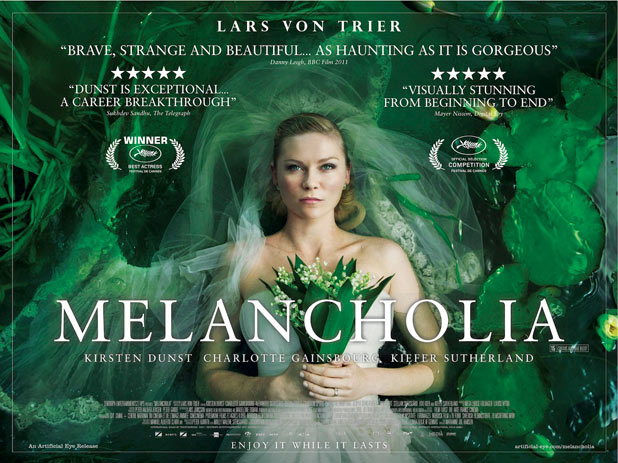
It’s now ten years since the Danish film-makers Lars von Trier and Thomas Vinterberg produced the Dogme manifesto, a series of rules that stripped film-making down to the bare bones. There could be no artificial sets, no special effects, no stories set in the past or the future, and no music other than that played live on set — and the diktats of the manifesto soon filtered through to other areas of Danish cinema.
It all sounds rather serious but, in fact, says the director Annette K. Olesen, a lot of the films made in her native Denmark in the past decade have been comedies. Her Mike Leigh-inspired Minor Mishaps, for instance, was written by Kim Fupz Aakeson — “the funnyman in Danish films”.
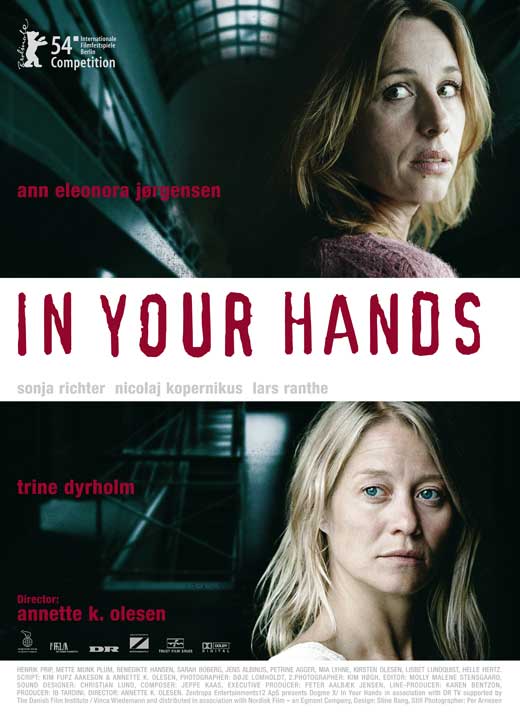
Olesen called on Aakeson again when she was asked to make a Dogme movie, but this time both were determined to “shift gears”. The result is In Your Hands, a tough and uncompromising story that asks a lot of questions but refuses to provide any answers. In it, Anna (Ann Eleonora Jørgensen), an inexperienced and idealistic priest, takes up a post at a prison for women, where a new inmate, Kate (Trine Dyrholm), is apparently performing miracles. “There’ s something about her and God,” says one prisoner, claiming that Kate cured her drug addition. Though she is both fascinated and threatened by the cell block saviour, Anna turns to Kate for help when her unborn baby is diagnosed with a chromosome defect whose consequences cannot be predicted.
“The highest criterion of success as an individual in our society is to be in control and to be able to predict your life,” says Olesen. “What we really wanted to explore is the fact that if you want to control every square millimetre of life, you cannot submit to anything because it’s equal to giving up control.”
While submission in the film has the positive effect of, for instance, letting love in, it also leaves the door open for betrayal and disappointment. But that, Olesen seems to be saying, is the chance we all take in our relationships.
Ironically for a film with a priest as its protagonist, In Your Hands feels more like an existentialist drama than a religious one. There is no moralising, the characters have to make their own choices and live with the consequences.
“I’m very happy that you say that,” says Olesen, “because we’re not telling people to go to church. We talked about this film in a very existential way, so you can probably say we’re more related to existentialists than theologians.”
Thus we see Anna struggling to reconcile her faith in God and His unconditional mercy with the demands of a society that emphasises personal responsibility and perfection. Should she terminate her baby because there is a chance it may be handicapped? And if she does, will she be able to live with the knowledge of what she has done? Anna’s anguish as she weighs up her choices forces us to consider the profundity of such a decision and underlines the difficulty of trying to live up to the expectations that society has created.
“We want life to be perfect, and it ain’t,” concludes Olesen. “None of us is going to go through life without suffering, somehow.”
It all sounds rather serious but, in fact, says the director Annette K. Olesen, a lot of the films made in her native Denmark in the past decade have been comedies. Her Mike Leigh-inspired Minor Mishaps, for instance, was written by Kim Fupz Aakeson — “the funnyman in Danish films”.
Olesen called on Aakeson again when she was asked to make a Dogme movie, but this time both were determined to “shift gears”. The result is In Your Hands, a tough and uncompromising story that asks a lot of questions but refuses to provide any answers. In it, Anna (Ann Eleonora Jørgensen), an inexperienced and idealistic priest, takes up a post at a prison for women, where a new inmate, Kate (Trine Dyrholm), is apparently performing miracles. “There’ s something about her and God,” says one prisoner, claiming that Kate cured her drug addition. Though she is both fascinated and threatened by the cell block saviour, Anna turns to Kate for help when her unborn baby is diagnosed with a chromosome defect whose consequences cannot be predicted.
“The highest criterion of success as an individual in our society is to be in control and to be able to predict your life,” says Olesen. “What we really wanted to explore is the fact that if you want to control every square millimetre of life, you cannot submit to anything because it’s equal to giving up control.”
While submission in the film has the positive effect of, for instance, letting love in, it also leaves the door open for betrayal and disappointment. But that, Olesen seems to be saying, is the chance we all take in our relationships.
Ironically for a film with a priest as its protagonist, In Your Hands feels more like an existentialist drama than a religious one. There is no moralising, the characters have to make their own choices and live with the consequences.
“I’m very happy that you say that,” says Olesen, “because we’re not telling people to go to church. We talked about this film in a very existential way, so you can probably say we’re more related to existentialists than theologians.”
Thus we see Anna struggling to reconcile her faith in God and His unconditional mercy with the demands of a society that emphasises personal responsibility and perfection. Should she terminate her baby because there is a chance it may be handicapped? And if she does, will she be able to live with the knowledge of what she has done? Anna’s anguish as she weighs up her choices forces us to consider the profundity of such a decision and underlines the difficulty of trying to live up to the expectations that society has created.
“We want life to be perfect, and it ain’t,” concludes Olesen. “None of us is going to go through life without suffering, somehow.”