Lars von Trier stunned the media in Cannes with his comments about Jews and Nazis. But what did he really mean?
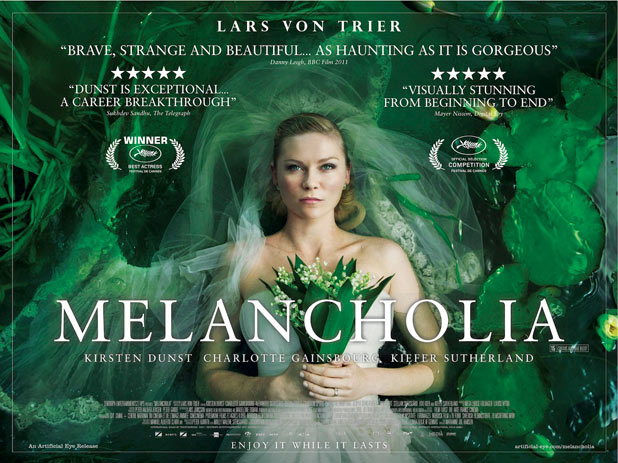
Danish cinema's not-so-enfant terrible, Lars von Trier, came to Cannes this year trailing Melancholia, a beautifully mounted apocalyptic drama, which, compared to his previous cinematic assault, Antichrist, had all the shock value of a children's tea party.
There was no graphic sex, no horrific close up of clitoral self-mutilation, no violence - just an extremely depressed heroine, convincingly played by Hollywood actress Kirsten Dunst, essentially willing on the end of the world. The most shocking thing about Melancholia was that it wasn't shocking.
This time, it was up to Von Trier to personally up the ante at the now notorious post-screening press conference that sent shock waves along the Croisette. Seemingly unable to control himself, the filmmaker embarked on a series of rambling answers about the link between German Romanticism - which he was playing with in Melancholia - and the Third Reich, during which he declared that he was not a Jew but a Nazi, and that he understood Hitler.
Some journalists took the director at his word and branded him an anti-Semite. The festival itself pronounced him "persona non grata" and banned him from coming within 100 metres of the Palais and red carpet. It was a swift and dramatic fall from grace for Von Trier, whose musical, Dancer in the Dark, won the Palme d'Or in 2000.
Taken literally, his comments were shocking and bizarre. Even during the press conference, though, it was clear that his meaning was being misinterpreted. What was missing was the context.
When he talked about not being a Jew, Von Trier was actually refering to his mother's deathbed confession that the Jewish man he had grown up believing was his father, Ulf Trier, wasn't in fact, and that his biological father was really her boss, a German by the name of Fritz Michael Hartmann. But why, I asked him recently, had he used such provocative language?
"A German, in slang in Denmark, is called Nazi," he explained. "So I was not a Jew, I was a Nazi. Not meaning I was a Nazi, meaning I was a German. Which was, of course, stupid. It's a matter of me putting things in a forum where they shouldn't have been."
Clearly stung by the charge of anti-Semitism, he said: "Everybody that knows me, knows that I have a very, very famous Danish Jewish name. All my children have Jewish names . . . I am not Mel Gibson, I am the opposite. I have been through all these f****** concentration camps and I think that the Holocaust is the worst crime against humanity that, in my knowledge, has ever been."
By saying that he understood Hitler, he did not mean that he condoned what the Nazi leader did, he said. On the contrary, he was acknowledging the dictator's humanity and, albeit weakly, trying to imply the risk of not recognising some of his qualities in ourselves.
"It is extremely easy to say that [what happened] is Hitler's fault and that, I think, is dangerous for all of us. I still say there is a little bit of a Nazi in all of us, somewhere. And that's not Hitler's fault. He used it. If it hadn't been him, then there would have been somebody else."
Whatever his real intention, the director's long links with Cannes now look to have been damaged beyond repair. He said he is sad because of his long friendship with the event's president, Gilles Jacob. On the other hand, having taken every one of his films to the festival, he no longer feels a pressure to finish a movie in time for Cannes. As for being persona non grata:
"My parents would be so proud of me," he laughs. "I mean, I am a kind of persona non grata deep down in my soul. But this was a stupid way of becoming it."
There was no graphic sex, no horrific close up of clitoral self-mutilation, no violence - just an extremely depressed heroine, convincingly played by Hollywood actress Kirsten Dunst, essentially willing on the end of the world. The most shocking thing about Melancholia was that it wasn't shocking.
This time, it was up to Von Trier to personally up the ante at the now notorious post-screening press conference that sent shock waves along the Croisette. Seemingly unable to control himself, the filmmaker embarked on a series of rambling answers about the link between German Romanticism - which he was playing with in Melancholia - and the Third Reich, during which he declared that he was not a Jew but a Nazi, and that he understood Hitler.
Some journalists took the director at his word and branded him an anti-Semite. The festival itself pronounced him "persona non grata" and banned him from coming within 100 metres of the Palais and red carpet. It was a swift and dramatic fall from grace for Von Trier, whose musical, Dancer in the Dark, won the Palme d'Or in 2000.
Taken literally, his comments were shocking and bizarre. Even during the press conference, though, it was clear that his meaning was being misinterpreted. What was missing was the context.
When he talked about not being a Jew, Von Trier was actually refering to his mother's deathbed confession that the Jewish man he had grown up believing was his father, Ulf Trier, wasn't in fact, and that his biological father was really her boss, a German by the name of Fritz Michael Hartmann. But why, I asked him recently, had he used such provocative language?
"A German, in slang in Denmark, is called Nazi," he explained. "So I was not a Jew, I was a Nazi. Not meaning I was a Nazi, meaning I was a German. Which was, of course, stupid. It's a matter of me putting things in a forum where they shouldn't have been."
Clearly stung by the charge of anti-Semitism, he said: "Everybody that knows me, knows that I have a very, very famous Danish Jewish name. All my children have Jewish names . . . I am not Mel Gibson, I am the opposite. I have been through all these f****** concentration camps and I think that the Holocaust is the worst crime against humanity that, in my knowledge, has ever been."
By saying that he understood Hitler, he did not mean that he condoned what the Nazi leader did, he said. On the contrary, he was acknowledging the dictator's humanity and, albeit weakly, trying to imply the risk of not recognising some of his qualities in ourselves.
"It is extremely easy to say that [what happened] is Hitler's fault and that, I think, is dangerous for all of us. I still say there is a little bit of a Nazi in all of us, somewhere. And that's not Hitler's fault. He used it. If it hadn't been him, then there would have been somebody else."
Whatever his real intention, the director's long links with Cannes now look to have been damaged beyond repair. He said he is sad because of his long friendship with the event's president, Gilles Jacob. On the other hand, having taken every one of his films to the festival, he no longer feels a pressure to finish a movie in time for Cannes. As for being persona non grata:
"My parents would be so proud of me," he laughs. "I mean, I am a kind of persona non grata deep down in my soul. But this was a stupid way of becoming it."
Melancholia opens 30 September


