Translate

Showing posts with label Ethan Hawke. Show all posts

Tuesday

Ethan Hawke Talks About First Reformed

Ethan Hawke gives the performance of his life as a priest in crisis in Paul Schrader's masterpiece, First Reformed. I met him at the Venice Film Festival in 2017.

Ethan, Paul Schrader said he chose you because you look haunted from the very beginning and therefore fit the character. Do you recognise that about yourself?

"No you never know what people see in you. I remember, years ago, a director telling me I look like I believe in God, and that there;'s some people that look like they believe in God and some people that don't. So I thought about that when Paul asked me to play this part."

Do you believe?

"I don't think it's a simple question. I think the short answer would be yes."

There is a lot in the film about the end of civilisation. How do you feel about having kids the way the world is today? 

"I'm grateful to be alive. I don't care what shape the world's in; I'm happy my parents had me. I don't think there's a parent in the history of mankind that doesn't feel fear for their children a little bit. We fear everything. It's our great resource to make ourselves sharper. Got to protect the species. And that fear extends to a larger place right now because our technological advances have gotten to such a point that we can do real harm to each other and to our world. Other generations didn't have the possibility of deforesting South America. These are new problems. But that's what's so wonderful to be part of a movie like this, because it, hopefully, will sponsor conversations like this as it gets seen throughout the world. That's the hope of making it."

Are there parts of you in the character?

"I love my character. I am so grateful for it. Have a character that even mentions some of the ideas and thoughts and themes. Paul Schrader's not the only person that's looking to the religious community for guidance and leadership, and what to do with an ever-changing world. We've gotten very little leadership from the religious community about where to place our fears and anxiety about the environment. We have a Pope right now that's really trying to do a good job with it. He's really preaching this a lot. And if the religious community could take up the baton of the environment concern, it would have a major, major impact. And so I think it's a serious question that Paul's pitching."

You seem to like playing characters that write stories as the film is unfolding. Why is that? Obviously you've written books. 

"You know, I think we all get cast in ways the directors see us. You know? We don't really control that. I'm always just trying to take the best part I can. I'm not looking for parts that people write anything. I wish I would be cast as a gladiator, but people don't see me that way."

And how did you find doing the levitation scene?

"It somehow connects to the end of  the movie. The movie's asking you to - there is an essay that Paul wrote about transcendental cinema, and we're all trying to transcend our environment, right? As human beings we're having difficulty pitching ourselves against the world. There's something about it that totally doesn't make any sense and it's crazy, and at the same time it makes perfect sense to me. You know? I remember when I first read it I thought, 'Well how's that going to work?' But the movie is strange. There is now doubt that the movie is strange.

"David Lynch has this great quote where he says the only place that's left, the uncharted territory for cinema, is things that don't make literal sense. And all our brains are always trying to make literal sense of everything, even though we can't do it with our own life. Lynch has done that to great effect and I think Paul is doing that a little too."

When did you become aware of Paul's work and what was your initial reaction?

"I saw a double feature, there was a thing called Theatre 80 in New York that doesn't exist anymore, it was kind of a cinema club, and once a year they would show Taxi Driver and Raging Bull. So I watched that as a double feature when I was about 21 or something, and I have been following. I have worked with Richard Linklater a lot and Richard talks about Paul Schrader, about his mind and his contribution to cinema. I think Mishima: A Life In Four Chapters is Rick's favourite film. So I've been aware of him for a long time now."

Do you come to work with a lot of questions? Do you question the director a lot?

"Some of them more than others, you know? Paul, at our first read-through of it, it was clear that you were meeting somebody that this film is coming out of them and in the best sense that people like to talk about art. But it was clear that this thing had been gestating in him and it was ours just to execute. Sometimes you show up on set and the directors need a lot of help or that's part of their game plan is to you create it for them. But you really could publish this screenplay. There wasn't anybody at that first read through that didn't feel like they didn't just witness a work of art."

Were you interested in the way that the film explored how a religious text can be used to justify extreme actions?

"Well religious texts have been used to justify extreme behaviour throughout mankind. I mean part of the wonderful thing about the forefathers of America is the separation of Church and State is based on  that principle alone, that any religious dogma, no matter how beatific or well meaning, can be interpreted for murderous, greedy causes. Mankind has never stopped to do that. And so that's why you need laws."

I think it's interesting that at a time when there is such a focus on Islamic terrorism, here we have a Christian character who is becoming radicalised.It is just not seen as much.  

"Yeah but you've had Christian terrorists throughout history, too. The script very beautifully lays in the Abolitionist movement, which were Christian terrorists. John Brown was killing slave owners and citing the words of Jesus Christ as he did so."

But that isn't so much part of the discourse. 

"Well it is. You see me teaching these other kids."

I mean generally. Outside the film.

"Oh yeah. It's part of the discourse of the film but not of our culture. And people find that very threatening. There's a case to be made that John Brown helped start the Civil War and helped end slavery. That's a scary discourse because the idea that there is a right kind of terrorism is scary to people. And it's something I find very interesting fodder for a dialogue in a movie. But people should be thinking because they're interesting questions."

Are you religious?

"The cinema is the Church of my choice."


Friday

Paul Schrader On First Reformed

Raised in Michigan by a Calvinist family, Paul Schrader has often written films in which a tormented central character descends into a personal hell. 

In his latest film, the religious thriller First Reformed, which many consider to be the writer-director's late-career masterpiece, Ethan Hawke's boozy, diary-writing priest, experiences a crisis of faith which threatens to have catastrophic consequences.

I met Schrader, whose back catalogue includes the Martin Scorsese collaborations Taxi Driver and Raging Bulling, at the Venice Film Festival in 2017.   

You have said something like this is a film you have been making for a lifetime.

"No, actually only a little more than two years. But it is the culmination of a lifetime. Before I became a screenwriter I was a critic, and I wrote a book on spirituality in films [Transcendental Style in Film: Ozu, Bresson, Dreyer], which has just been reissued. So it was always the kind of film I was interested in. Never thought I would actually make one."

Why not?

"I was more interested in some of the aggressive qualities of film:  action, empathy, stuff like that. I just never thought I would make a film like I wrote about. And then a couple of years ago, I was having dinner with Pawel Pawlikowski, who had done Ida, and he was talking about that film. And then I left that dinner, I was walking, and I thought to myself, 'Time for you to write one of these movies.' Once I sort of acknowledged that, it became easy. 

"And also it had to do with the financial realities. It's now possible for me to make this film financially in a way it wasn't 10 years ago, just because the budgets have come down so much. So, you know, 20 years ago this film would have taken 40 days. Now it took just 20 days. That's a whole different financial reality. And it applies across the board to all films. So the upside is it's very to make a film now; the downside is it's almost impossible to get it seen."

It's funny you mention Pawlikowski because the film is reminiscent of The Woman in the Fifth, which also has Ethan Hawke in, where he's also a writer and he writes the story.  

"Yeah. No, the format is from Ida, which is the traditional 1:33. In fact I wanted to do it in 1:33 black and white, but the financier blocked that with delivery requirements for colour. So I made it in colour, but not colourful."

Can you talk more about the spirituality in this work and what it means in the state of America today, people hiding behind religion, etc?

"Well, ah, I mean I was raised in the Church. I still go to church. So you don't escape that kind of programming. But you have to be careful when you talk about The Church, because it's not a monolithic thing, and we tend to describe the bigoted and bombastic evangelicals as if they were The Church. They are not. They are a very vocal part of it, but there is a mainstream liberal humanistic Christianity as well. And so you have to be careful not to tar Catholicism or Protestantism, whatever, with a brush of the fanatics. Just like you have to be careful not to tar Islam with a brush of the fanatics."

Picking that up, First Reformed is about radicalisation, isn't it?

"In a way. I mean this guy has a sickness. A sickness Kierkegaard called 'the sickness unto death'. Lack of hope. Despair. Angst. And this sickness has manifestations. The cloth of the clergy is one manifestation. The diary is another. The alcohol is another. And finally the environment  [Environmentalism] is a manifestation of his soul's sickness. He grafts this cause onto himself, in fact picks it up like a virus from another person; but if it wasn't the environment it would be another thing."

Why did you choose the environment?

"Well,you know, theologians and philosophers have beeen having discussions for four or five thousand years and all those discussions are now in boldface because we are actually at the point in human history where there may be some end to those discussions. I mean you start talking about what is the purpose of life? What is the purpose of humanity? What does it mean to be human? What does it mean to have consciousness? You know, if you stand on your tippy-toes and look, you can start to see the end of that conversation. And therefore it's a very exciting time to be alive, and a frightening one as well. So the environment takes these classical religious and philosophical debates, and puts them in neon flashing at you."

Do you share any of the views of the character concerning the world? 

"Well I don't think we, as a species, will outlive this century. You know, the world is going to be fine; we're not."

So what do we do then?

"Oh no, we'll be evolved. There will be a post-human species. Which we already seem in bits and pieces already. Carbon-based intelligence is now giving way to silicon-based intelligence, and eventually carbon-based intelligence will be seen as a period of history on the Earth."

Will these films survive? Will your work survive?

"[Laughs] Well I tell ya, our antecedents, they're going to have one hell of a museum. A museum to humanity [laughs]. That'll be a great museum. And hopefully movies will have a room in there."

Speaking of conservation, this movie is extremely cinephilic. It's full of references to your passions. 

"Well, I mean, for me it's kind of easy. I'm probably part of the most privileged generation in the history of the planet. The baby boom generation. We have lived in the cone of affluence and ease, leisure time. No one in the history of planet Earth had it easier than we have. And we responded by fucking it up. So the harder choice is for our children and the children after them, which is what this one character says. What do you say to your child when your child looks at you and says, 'You knew this was happening and you did nothing about it'? What do you say? You say, 'Well, too bad for you. We had a good time.' So yeah, it is kind of bleak in that way."

How did you choose the actors?

"Um, normally when you write a script you don't think about actors because it makes you a lazier writer. But I did start thinking about Ethan because when you have a man of the cloth in this way, you like to have a haunted actor - that way they don't have to play haunted. And Ethan has that haunted look. So it's easier to do it with Ethan than, say, to do it with Brendan Gleeson in Calvary, because Brendan had a very hard time looking haunted. But Ethan looks haunted the moment you see him. So it was an easier task and he was finally just about the right age. Three actors came to mind, one was Oscar Isaac and another was Jake Gyllenhaal, and they were both, like, 10 years too young. Ethan was just the right age."

Plus he reminded me, even physically, of Gunnar Bjornstrand, in Bergman's Winter Light.     

"Yeah, he is also reminiscent of Monty Cliff in I Confess."

Was Winter Light a big referential film, because I saw some nods to that?

"Well if you saw some nods you would probably be right. In fact there are quite a few nods in this film. I should do a 3D version where the footnotes come out at you boom, boom, boom, boom. This is from this. This is from this."

Is it difficult for you to visualise this inner turmoil? We see a lot of different ways of doing it in your work, in Taxi Driver talking to the mirror, here with the journal. How do you work around that to be effective in making the audience feel that turmoil?

"I've done a number of these films. I call them 'monocular films', because it's like looking at life this way. You don't see any other life but your character's life. There is no other life. And in fact if you saw another reality other than the taxi driver's, you would break the spell. So you lock into a kind of a person and the goal, hopefully, is to get the viewer to start to empathise, because we do this naturally. Just like we form constellations out of stars: the stars don't actually look like a dog or a lion, we do that. That's how our mind works. 

"So we form these empathetic relationships with performers. And once you do that, you end up identifying with someone who you realise isn't worthy of your identification. And that's a very interesting place to put a viewer because they're too far in to leave, and they're too invested not to care. But they no longer believe in the rightness of the character. So that's the kind of fascination."

A character in the film says the younger generation is more extreme and more polarised. Is that you talking and why do you think this has happened? 

"Despair. I mean we now have the first generation of people who no longer believe life will be better than it was for their parents. It was always a premise of humanity that things would get better. That if I work, sacrifice, I can improve my lot. Kids today know they're not going to improve their lot no matter how much they work. Well that's a bleak cloud to live under and leads to all kinds of extremism, whether it be drugs, or in behaviour, or in general apathy. I think that the opioid explosion in the West has to be, somehow, connected to the sense of hopelessness."

Does that make you depressed?

"Well I'm out of here. I'm in the First Class car. I'm going to be fine. My kids are fucked."

Some of the characters in your films have already been to where you say young people are now. They're often in despair. They're apocalyptic, in a way. Is the younger generation where they have been?

"Well some of them, yeah. There's a lot of denial going on. And denial festers. I don't know, if I were 20 years old again, 50 years ago, I'm not quite sure how I would react."

Martin Scorsese made Silence, which was a film dealing with more or less the same issues. Were you in touch with one another?

"No, no. I knew he was making it. And in fact I tried to steal that script from him about 20-30 years ago. But, you know, I think he had a very big problem with that film, because he set it in the past. Because the premise under which that film was written, that book was written, no longer applies. There was a premise that the missionary effort was inherently a positive one. We used to believe that, 50 years ago. No one believes it anymore. Now everyone thinks of missionaries as the spear-tip of colonialism. And so the book was predicated on the premise that the missionary effort was a positive one, and not even Marty believes that anymore. So he ends up making a film in which Kundun and Last Temptation of Christ have a debate, and no one wins [laughs]."


First Reformed opens in the UK and Ireland on July 13

Saturday

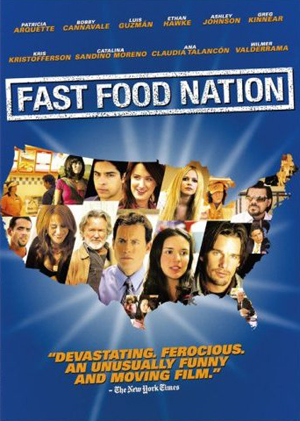
Richard Linklater & Eric Schlosser Take A Bite Out Of The Fast Food Industry

Stephen Applebaum met Richard Linklater and Eric Schlosser in 2006 to discuss their collaboration on the movie, Fast Food Nation. The following article appeared in The Scotsman newspaper.

Big Macs and Whoppers did not look so tasty after the publication of Eric Schlosser’s Fast Food Nation in 2001. Painstakingly researched investigative journalism, the bestseller uncovered a litany of unappetising truths about the global fast food industry, revealing how its drive for efficiency and a big bottom line superseded compassion for its workers and concern for its social, cultural and environmental impact.

Whereas Morgan Spurlock's Super Size Me would show the damaging effects of a McDonald’s only diet, Schlosser made it damningly apparent that you did not even have to eat burgers to suffer the consequences of the way that the fast food industry operated.

The author and his book became such specific targets for the likes of McDonald's that when Richard Linklater made his film based on Fast Food Nation, he initially gave it a fake name as a cover. This is not unusual, but in this case it was a necessity. 

“We could only imagine what they would do when they heard a film was being made, so we just stayed under the radar,” says the film-maker, his T-shirt and shorts out of place amidst the chintz of a London hotel suite. “We were like a guerrilla operation: we stole locations and were very underground in our approach.”

The truth leaked out eventually and they lost some locations. But they still managed to shoot inside a meatpacking plant in Mexico, its ‘kill floor’ - where the animals are slaughtered, skinned, gutted and dismembered - providing some of the film’s most disturbing images.

Linklater, who gave up eating meat at 23, is surprised when people tell him the sequence is graphic. “It’s amazing how we’re very disconnected from our food sources. That’s the reality! I’m like, ‘Jeez, this goes on 10 billion times a year. This is the real world.’ I just think to acknowledge the reality of anything is a good starting place.”

He mentions the sanitised images on American television from the Iraq war and how little they are shown. “We live in a world where we can live in our mythical minds about what’s going on and where everything comes from, but they really are going way out of their way for you not to see the reality. That’s in corporate, that’s in government, it’s kind of in everything,” he argues. “It’s like this obsession with pop culture. Jessica Simpson’s getting divorced, let’s analyse the shit out of that. But let’s not analyse something that really means something. What could be more important than the food that you eat, for your family, for the health of a culture?”

Linklater actually wonders whether people are being deliberately encouraged to be unhealthy. Because of the money being made out of ill health, he says his “paranoid spectrum goes: OK, eat crappy food without question, you're a consumer there, and then at some point you join the medical-industrial complex, treating your symptoms. There’s a lot of dollars to be made out of surgeries you will have to have. You then die 20 years before you should, so you don’t collect benefits. The real title of this movie should be Fast Food, Slow Death Nation. It’s a slow death. It’s not murder, it’s a self-inflicted thing over time, by choice,” he laughs, ironically.

A work of fiction rather than documentary, his Fast Food Nation filters Schlosser’s concerns through the lives of a handful of characters based on people in the book. In it, Greg Kinnear plays an executive from a hamburger chain called Mickey’s who visits a Colorado meatpacking town to investigate claims that animal faecal matter has been found in the meat used in the company’s popular sandwich, the Big One. The plant is staffed by illegal immigrants who work long hours, in dangerous conditions, for very little pay. Other threads include the burgeoning politicisation of a teenage Mickey’s employee and a haphazard attempt by students to free burger-bound cattle.

Schlosser says it was important to him that the meatpacking plant figured centrally in the film. His work has always looked at what is “happening at the bottom of society as a way of looking at the whole,” he explains, and in the book the meatpacking section provided a metaphor for “the way that the people at the bottom are literally being ground up.” In the film, “the way the whole plot eventually leads you to the kill floor is a good symbol for much of what is happening in my country right now”.

The film gave Linklater the opportunity to fulfil a dream and make something about industrial workers. He had personally experienced what it feels like to be at the “absolute labour-intensive, crappy bottom” of an industry when he worked as an offshore oil worker, and he wanted to explore those emotions in film.

He first wrote a script about auto-assembly line workers in Flint, Michigan, but could never raise the funds to make it. He then did a pilot for HBO called Five-fifteen and Hour (“my alternate title for it was Shit Job”), which would have been a series of comedies about people working in the service industry, but it was not picked up. Fast Food Nation finally gave him the chance to put on screen what it feels like to be told, as he was when he worked offshore, “’Hey, you’re only getting from here [points to his neck] down.’ I will never forget that. I’ll use it in a movie some day.”

More importantly, perhaps, Fast Food Nation allowed Linklater to dramatise the experiences of Mexican immigrants. It was this strand of the film which had excited the meatpacking plant owners in Mexico. “We told them it dealt with the plight of Mexican workers going north and they liked that – and that’s all we told them. But that’s not a story that gets seen much, that’s kind of absent from the media landscape.” Living in a border state in Texas, though, Linklater is well aware of the risks people take to cross into North America, and he is shocked by the disregard that people have for them.

“I have always been really struck by how many people die in the desert, crossing into our country,” he says. “It used to be 50 or 60 a year and now it’s nearer 500. Yet, these aren’t seen as tragedies, they’re seen as inevitabilities. And for the families, the people back home, there’s no feeling. I’m amazed.” People are reduced to abstract statistics, he says, and people don’t care. “There’s this huge modern disconnect. So I think what we were trying to do is put a human face on this whole world behind it.”

The film ends with Linklater’s first freeze frame, as a people smuggler hands new arrivals bags of Micky’s burgers as a welcome gift. We know from what we have seen that they’re full of artificial flavourings and possibly contain traces of animal faeces. I ask Linklater if he is saying, ‘Look, for you the American Dream is a lie. For you, it’s shit’? He laughs. “Tastes good though. But yeah, that’s the implication.”

This seems like a particularly bleak ending, and not in character with Schlosser’s professed optimism. Both director and author, who co-wrote the screenplay, say the film is not pessimistic. However, “I think to be honest about what’s happening in the United States right now, you can’t sugar the pill,” says Schlosser. “Things are bad. It would have been a lie to have it neatly resolved in any happy way.” He has a thought. “I’ll give you grounds for optimism. Those of us who criticised the Iraq war three years ago were called ‘traitors’ and ‘un-American’, and now we’re in the majority. So that’s significant.

“People are beginning to see through the lies. So there’s a reason to get out of bed in the morning. I write about really dark subjects but I see how none of it was inevitable. And if it’s not inevitable it doesn’t have to be that way, and that leaves a margin for . . . something.”

Copyright Stephen Applebaum, 2014