Translate

Showing posts with label Holocaust. Show all posts

Friday

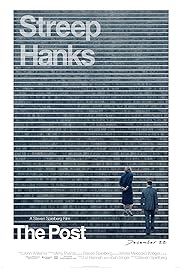
Interview: Steven Spielberg: The Post

I interviewed Hollywood legend Steven Spielberg about his new film, The Post. Read the interview here:

Steven Spielberg: the isolated Jewish boy who just wanted to be liked
Jewish Chronicle-18 Jan 2018

Next year he'll celebrate 50 years as a Hollywood hotshot, this year he has two films out. Steven Spielberg tells Stephen Applebaum how it all started as a way of defusing antisemitism.


Thursday

Looking Back At The Return of Mein Kampf In Germany

Last year a heavily annotated academic edition of Hitler's antisemitic tome, Mein Kampf, was published amidst controversy in Germany. The book became an unexpected bestseller, mainly among academics and history buffs, and won an academic prize. 

Below is a longer version of an article that I wrote in advance of its publication, examining the contrasting opinions about the book's re-emergence in Germany, 70 years after the death of its author.

Many wish that Adolf Hitler's hate-filled manifesto, Mein Kampf, would simply disappear. However, with the book about to enter the public domain in Germany in 2016, the country is again having to confront one of the most charged remnants of its Nazi past.
  

Since 1945, the state of Bavaria, which took over Hitler's estate after the US occupation, has been able to prevent publication of the tome as the copyright holder. But that control will cease when the copyright expires, 70 years after the author's death, on December 31st. 


The idea of anyone being able to publish their own German-language edition of Hitler's brutal text actually in Germany has, inevitably, provoked heated debate over how the situation should be handled, and whether it is appropriate, safe or moral for the dictator's self-mythologising and virulently anti-Semitic screed to go on sale in the cradle of the Third Reich. Dr. Charlotte Knobloch, President of the Jewish Community of Munich and Upper Bavaria, is in no doubt about what the book represents, or what should happen to it. 


“Mein Kampf is the most evil anti-Semitic pamphlet ever published, and its repercussions were catastrophic,” she tells me by email. “It was the handbook for THE crime of the Nazis: the cold-blooded extermination of European Jews. This book needs to be locked away permanently.”


Knobloch acknowledges that the book's availability on the internet – including to Germans, who can download it from servers abroad; while anyone claiming academic research interest can buy a copy legally from an antiquarian bookshop – means that total suppression is not an option. Even so, she believes that making it widely available in print would be a step too far. 


“It should not be published in Germany, the country on whose behalf this unprecedented crime was committed. Mein Kampf was and is Pandora's Box – once opened it's impossible to re-close it, and the the evil escaping it will be impossible to trap again.”


Concerned about the potential impact of raw copies flooding the market after the December deadline, the Bavarian government gave 500,000 euros to Munich's highly respected Institute for Contemporary History (IfZ), in 2012, to help fund a critical edition that will attempt, Dr. Christian Hartmann, the historian leading the project, has said, to “defuse” Mein Kampf. 


The good intentions of the state were not enough to satisfy everyone, and Bavaria's premier, Horst Seehofer, found himself under pressure to rethink its participation. Following a trip to Israel with Knobloch, he announced that he was withdrawing funding. More outcry followed, this time from supporters of the work. Seehofer responded by withholding the government's seal of approval, but left its money to be funneled it into other IfZ research projects and replaced with funds from the institute's regular budget. IfZ will now publish the book independently.   


Asked why the government had changed its position, Hartmann says by email: “I think the state actors should answer this question by themselves. In fact, they didn't inform us on their motives when they changed their course. The state government later justified the withdrawal by stating that they didn't want to serve as 'political publisher' of a new edition of Mein Kampf."  Knobloch refers me to a December 11, 2013, story from the newspaper Frankfurter Allgemeine Zeitung, in which Seehofer pointed out the difficulty of putting the government's seal on Mein Kampf after calling for a ban on Germany's far-right NPD party. 


Neil Gregor, a professor at the University of Southampton and the author of How to Read Hitler, as well as other books on the Nazi era, identifies two main fears fueling the debate about re-publishing Mein Kampf: “The first is the obvious fear that the book will become an inspiration for the far Right once again. The second is that republication will send the wrong symbolic message about contemporary Germany’s relationship to the Nazi past: that it may give the impression that the German state sees this as distant history, part of Germany’s deep past, and no longer an issue in any meaningful contemporary way.”


Since neo-Nazis have long had access to Mein Kampf, he believes that the first fear, whilst not unfounded, has been “overstated”. Hartmann, likewise, says he “wouldn't overrate the danger of Mein Kampf; the book is, in many ways, the product of a very specific historical situation and many references are not understood any more. Nevertheless, the brutal anti-Semitism in Mein Kampf demands a decisive answer.” 


Hartmann, who is a member of the German-Israelite Society, says their edition will analyse this aspect of Hitler's ideology “very, very thoroughly”.


As for what kind of message permitting republication would convey, Gregor says “one might argue . . . that it is a symbolic gesture, too - a gesture of faith in the strength of German democracy, an affirmation that [Mein Kampf] is part of a historical past to which Germany will not return.”


The expiration of Bavaria's copyright will not remove all the barriers for would-be publishers of  Mein Kampf.  “Out of respect for the feelings of Holocaust survivors and their families,” says Ludwig Unger, the press speaker for the Bavarian Ministry of Education and Science, “the State Government will utilise the existing legal framework to prevent the inappropriate dissemination of Mein Kampf after the 31.12.2015.” Simply reproducing the original text will qualify as Volksverhetzung, or “incitement of popular hatred”, explains Knobloch. “Hence one doesn't have to fear a mass publication in Germany.” What this means for the IfZ annotated edition, however, “remains partially unclear”, she says. 


Hartmann calls the situation “confusing”. “But nevertheless, it can be taken for granted that an annotated edition that critically contrasts Hitler's propaganda and half-truths with historical facts is far apart from being anything like Volksverhetzung." 


He believes that the decision to impose a block during the 50s, 60s and 70s, when many more people who lived through the Third Reich were alive, was “good and clever”. Today, though, the prohibition “seems to be an anachronism”, he suggests. “In a world without taboos, this ongoing ban could cause the wrong curiosity.”


The IfZ has already published an annotated collection of Hitler's speeches, containing many of the ideas promulgated in Mein Kampf, but the latter has accrued an almost mystical power in the decades since the war. Their edition, therefore, sets out to deconstruct and contextualise Hitler's words, using around 3,500 annotations and a detailed introduction. The scholars trace the sources – some of them newly discovered - that Hitler drew on for the development of his ideology, says Hartmann, and illustrate how the Nazi leader was the product of his time and place. “This shows, again, that Hitler was by far not the only person to be responsible for the crimes of National Socialism.”


Importantly, they underscore how Hitler shouldn't be taken at face value by exposing his many lies and false claims, as well as some of the many contradictions between his words and deeds. For example, Hitler reproaches the Weimar Republic for not doing enough for veterans of World War One. Hartmann says they show that German welfare legislation for the veterans was “exemplary”, in fact, while reminding readers that between four and five thousand traumatised veterans were murdered with gas as part of the Third Reich's euthanasia programme.


“We comment with a density and intensity that hasn't existed before regarding Mein Kampf,” he says. “The comments are designed to offer something new even to scientific specialists, but in a way that can be read and understood by a broad public . . . What we say is that we encircle Hitler's book like in a battle.”


Around 12 million copies of Mein Kampf were distributed, with all newlyweds receiving it as a wedding gift from the Nazi state from 1936. There is some dispute over whether many people actually read it – Hartmann believes it was often set aside quickly, “simply because it is very theoretical, very badly written and endlessly boring” – but should those who did have been able to see what Hitler intended for the Jews? Is the book a blueprint for the Holocaust? 


“Only partially,” says Hartmann. “What is becoming evident is the fact that Hitler was a brutal and fanatical anti-Semite. But the scientific research, meanwhile, shows that it is still a long and sometimes meandering way to Auschwitz.”


©Stephen Applebaum, 2017

Interview: Ed Mosberg, Holocaust Survivor (Featured In The Documentary Destination Unknown)

Ed Mosberg, Holocaust Survivor
Born in Krakow, Poland, in 1926, Ed Mosberg was 13 at the outbreak of the Second World War. He was moved to Krakow ghetto with his family, and then went through Plaszow, Mathausen and Linz concentration camps. He is now one of the survivors interviewed in the moving documentary, Destination Unknown

I interviewed Mosberg. Below is a transcript of our conversation.

You have become the face of the documentary Destination Unknown. You appear on the poster. How did you become involved? 

"You know Llion [Roberts, producer of Destination Unknown], right? I met him about 14 years ago, and he was interviewing me, and interviewing me again, and he came to the United States many, many times, and I met with him in Europe and we went to the concentration camps, and we went to Jerusalem, to Israel, because at one point I was picked from the United States to meet the Pope, Pope Benedict XVI, in Israel, to shake hands with him. So this is 


 When did people in the United States, where you now live, really start to take notice about the Holocaust?
 
"Schindler's List really started people realising about the Holocaust. I saw the movie but I used to work, in the war, in a concentration camp for Amon Goth, in his office. So, to me, the actor [Ralph Fiennes] was a different person to the real Amon Goth."


How did the portrayal of Amon Goth in the film differ from the man that you knew? 

"How was he different? I knew how sadistic he was. I saw how he could beat people. How he could shoot people without any reasons. I saw him running with a whip, hitting people. Or [kill them] with his dogs [Ralph amd Rolf]. No one could, in my mind, have portrayed a person like this. When I saw him, I was always afraid. He used to come up to the office where I worked, and just walk through. When he walked into the room, you had to stand-up to attention. You could not move. So when I saw the movie, I was not affected like this during the movie. 
 
"One day, I saw him hang a man on a wall by his hands, and beating him and beating him. When I walked there in there in the morning he was still hanging. I and some other guys cut him off. He [Goth] tried to get something out of him and he could not. He didn't talk. I didn't know what he wanted from him. His hands were like that, you know, against the wall, and I let him drink. After that I didn't see the man and I didn't know if he'd survived or not. Many, many years later, I was in Vienna, in a restaurant, and he walked in there with some other people. I recognised him. So I walked over to him and I said, 'My name is Ed Mosberg. Do you remember the glass of water?', and he started crying. Years later I tried to get in touch with him, he lived in Israel, and his wife answered the phone and said, 'Yes, yes. who is calling?' I said, 'Ed Mosberg.' She said, 'Any time your name comes up, he starts crying.' But I did not understand the beating that he got - no one can understand this - until later on, when I was in Mathausen. At that time I realised what it means to be beaten like he was. I was wishing at that time that I would be dead. Because once you have been killed, you don't feel the pain that I felt. So I remember him, you know?"


You say in the film survival was a matter of luck.


"Correct, yes. No one was smarter than the other. There was only luck. There was no such thing as you were stronger or weaker. Because the strong people, they went down faster than the weaker ones."


Was there any way that one could try and shift the odds in one's favour?


"Yes, there was a chance if you had money [he is talking about before going into a camp]. But the minute the money ran out, you knew you were dead already. Because they would take the money - I don't say all the time, but some of them would take it from you - and then when you didn't have it, the safety was gone. They'd tell them go. They'd push them out."


When you talk about your story for a film like this, or I have read about you giving talks elsewhere, how important has it been for you, personally, over the years to talk about what happened, and were you always able to talk about it or has it been a gradual process? 


"I'll explain to you the situation. I have been married for 70 years. I met my wife in a camp. And in my opinion she suffered more than I did because she was in so many different ghettos and camps. She was in Mielec, Dubienka, Krakow ghetto, Plaszow, Auschwitz, Birkenau, Bergen-Belsen, Gelllenau, and Mathausen. She was in so many different places. But my wife, she would not talk. So somebody had to talk because if we don't talk, this will be forgotten, number one. And number two, the people who say it never happened, they will have a ball. So I have to talk. This is my duty and my obligation to go and talk. As long as I live, I have to talk. 

"You have to understand, the United Nations made January 27th International Holocaust Remembrance Day, but to me the Holocaust is on Monday and on Tuesday and on Wednesday and on Thursday - every single day of a year is Holocaust Day for me. I never forgot it. I think about it every single day. I have on a wall in my bedroom pictures of my family and on the other wall pictures of my wife's family. And when I get up in the morning, I stand and I look at those pictures. When I go to sleep, I look at those pictures. It has never happened that I miss a day. I always think about it because I lost the whole family."


Where does your strength come from? 


"Where does my strength come from? The strength is to think about it. That somebody had to talk. Okay? If I stop, then it is the time that I would die. To the last day I will talk. Because I tell you right now, when I went into the camp in Belzec - I lost 16 members of my family - when I walked through that place, I could hear the voices of the 600,000 people murdered there and my family saying: 'Don't forget us.' How can we forget and forgive the barbaric murderers?  Auschwitz, Birkenau, Belzec, Treblinka, Majdanek - we could not prevent their first death, so by forgiving this would be like you would kill them a second time. Only the dead can forgive. We have no right to forgive. Only the dead can forgive. This is my life's story. It happened that Mr Roberts picked up on me and stuck with me, and I stuck with him, because he is the one that put his whole heart into it."


When you put on the camp uniform at the start of the documentary it is quite unsettling to see. When did you do that for the first time, and why?


"I had the uniform for years. But one day, Mr Roberts asked me to put it on. But I put it on and take it off many times I go into schools, synagogues, different places. I always bring this uniform with me to show them, and the uniform of my wife. This last time I was in Auschwitz at the March of the Living, I took my granddaughter, because my wife cannot travel anymore. She's in a wheelchair and cannot travel. So my granddaughter went with me and she was wearing my wife's uniform."


When you put it on today, how does it make you feel?


"I don't feel nothing. I don't feel nothing in that uniform. The uniform is for the other people, not for me. It doesn't make me feel anything on me anymore."


I suppose if you are living with it inside every day, the uniform is just an outward show . . . 


"That is correct. I live with it every day so the uniform is just for the other people. A lot of people ask me many times, 'How can you put on that uniform?' and I say, 'I am putting it on for you.' The same thing like I have on my wrist a number. This is a number from Mathausen. Like my wife has a tattoo on the arm. in Mathausen they didn't tattoo a number, they gave you like a small number on a medal and you wear this on wires on your wrist. So I make this from the original plate, I make a bracelet, and I wear it. And many times I will go into a place, to a store, and they will say, 'What is it?' and I tell them, and they will say, 'We never spoke to or saw a Holocaust survivor.' So I am not ashamed of it. Like right after the war, people were ashamed that they survived. My wife had the tattoo and she was hiding it. She didn't even want our children in the beginning to see it. I never did [feel ashamed]. I said, 'People have to know. Not forget something like this happened.'"


Were you able to talk about it from the very beginning or was there a period of processing what had happened?


"Any place they need me, any schools, synagogues, wherever they need me, I go. I remember one day somebody asked me to go to Tennessee. So I went there to the school. First time they had a Holocaust survivor. And I went there because one boy got up in class and he said, 'Too bad they didn't kill them all.' So somebody asked me to come down there. This is who I am. I go and I talk."


Does it help you as well talking about it?


"No, not help me. I don't need no help. My family don't want me to talk. You can ask Mr Roberts. They are stopping me from going and talking. They are afraid that one day I will drop dead. But this is it, if it happens it happens."


It is mentioned in the film that you have three daughters. How have they been affected by what you and your wife went through?


"Let me tell you, they know about the Holocaust. They hear it all the time from me. Every day something different like the story I told you about the man that was hung on the wall, I just talked to my daughter about it. Yesterday she said, 'I have heard from you for many years . . . ' and I said, 'Every day something else comes to my mind what happened.' In Stuthof [a concentration camp in Poland], there was this camp on the Baltic Sea near Danzig and one day they lined up 7000 girls, alongside the Baltic Sea, and they shot them with machine guns. And the next day was liberation. And my two sisters, and a sister of my wife, were at that place. They were murdered there. Prior to it, they took some women and put them on a raft, and pulled them out into the Baltic Sea, without food and without water. I talked to Mr Roberts about it. He said, 'No, I never knew about it.' He was there with me at that spot and there is a big sign about it. He said 'The sign was in Polish and you never translated it for me.' [Laughs] But there's a sign we don't know how many drowned at that time. But a couple of them were picked up by Swedish boats, so that's why we know about them."


The sisters you mentioned were the ones you talk about in the documentary?


"Yes. Correct."


Had you talked about them much before because Llion said it appeared to put a great strain on you. 

 
"I've talked to hundreds of different schools, synagogues and things and always mention my sisters. As well as my mother, my father, my grandparents, my uncles - they were all murdered."


You were born in Krakow. Before the invasion by the Nazis, what was life like for you as a Jew in Poland? 

"First of all, when the war started I was 13 years old. I came from a family that was pretty good [financially]. I was going to school and I never saw any antisemites. They did exist but I never did. I never did see an antisemite at that time. When the Germans came in they started moving us from our house to the ghetto."
 
What was life inside the ghetto like?

 
"We had a big apartment before the war. My grandparents had a big apartment. One of my aunts had an apartment. Another aunt. And they put all of us together in one apartment, two bedrooms, but we were still together. We were alive. I never thought that this [the Holocaust] would happen, because no one believed that somebody would be murdering so many people. When we were in the ghetto they were systematically making selections and they were taking them to Belzec, but no one knew where they were going because they [the Nazis] were telling the people, 'When you go, take with you all your belongings. Whatever you have with you, your jewellery, your money, whatever you think, because you will be re-settled. And they re-settled them - to the Belzec gas chambers. So no one knew, because no one came back."


Before going into the ghetto had there been any talk about trying to leave Poland? Presumably it was too late by that point.


"It was very hard because you could not do it. You could not get out from it."


 How long were you in the ghetto for?


"The ghetto was started in 1941, in the middle of '41, and in March 13, 1943, they started to liquidate the ghetto. And at that time I saw the murders that were committed of the people. Amon Goth, he was running around shooting people. When a woman was carrying a child in her arms, they ripped the child out from the mother's arms and hit the child's head against the wall, killing the child instantly. If the woman was carrying the child in a knapsack, they'd shoot into the napsack to kill the child inside. Some people were in the hospital so they brought them to an assembly spot, and they took away their crutches and the canes, and said: 'If you can get to the other side of that square, you'll survive. You will be left to live.' There was four people, they were crawling on their hands and knees from one side to the other side, and when they came to the other side, they were all shot."


What happened to you next? You were taken to Plaszow?


"We walked from there. It was only like 3km, so we walked from the ghetto to Plaszow."


Was your family split up?

 
"Well my father got killed right from the beginning. And my grandparents, they were taken to Belzec from the ghetto. One aunt with my cousin were also taken to Belzec. My other aunt with her daughter got killed also - they never arrived at Plaszow."


Who made it to Plaszow? You mentioned your mother in the documentary.

 
"My mother. My two sisters. One of my cousins."


How long were you there before you lost your mother?

 
"My mother was taken to Auschwitz to the gas chambers in 1944. This was May or June 1944."


When you were in Plaszow did you know by then what was happening at other camps?


"Yes and no. To a point yes. Because people were transferred from one camp to the other and they knew it. And we knew already that in Auschwitz they had the gas chambers. Not to that extent, but we knew in Auschwitz they were killing people."


Was there any attempt by the Nazis to suppress information as prisoners were moved? 


"No, no. They didn't care. You could see them killing people in Plaszow. I saw. They were killing and burning them. They burned them on a fire outside."


How long were you in Plaszow for before being transferred to Mathausen?


"I went from there to Mathausen. I think it was August of '44 I went to Mathausen. Did you see the Schindler's List movie? Did you see when they were pouring water on that train? I was on that train when they were pouring the water and people were dying from the heat. A hundred people were packed into these wagons and there was no air. Nothing. So they were pouring water on it to cool it off. And then we wound up in Auschwitz, and we stayed there on the railroad the whole night. At the crematorium they were too busy so they never unloaded us, and they took us to Mathausen. And at Mathausen, I worked in the stone mines; 186 steps up and down [Stairs of Death]. If somebody stopped for a moment, they'd push them to their death. Or they'd beat you. Or they'd shoot you. Mathausen and Gusen - they were the two worst concentration camps of all of them together. And they were classified that way by the Germans [they called Mathausen the "bone grinder"]. And you have to remember one thing, you've heard of a Kapo?


Oh yes. 

 
"Sometimes the kapos were more vicious than the Nazis themselves."


They were often people who'd been criminals on the outside, weren't they?


"That's correct. Hitler started the concentration camps with Dachau [in Germany]. They put all the political prisoners that were against him in there. Most of those people, they were intellectuals. Then they emptied their prisons and they had these murderers, all kinds of criminals, they were German, and they brought them into Dachau. Those criminals, they hated the other ones, and they hated each other. Then they brought in the homosexuals, and they also hated them. And then they brought the Jews, and all of them hated the Jews. And many times, those criminals, somebody was sitting in a latrine and they'd walk in there and they see a Jew, so they push them in and they drown him."


How long were you there for until liberation?
 
"Well I came in some time in August and then we were liberated on May 5, 1945. And on the last day, May 5th, they said that the Americans are coming here and there will be fighting and they want to save us. So they marched us to some caves that were set up with dynamite to blow us up, and they did not succeed. It did not go off. This is why I can sit here [emotion welling up] and talk to you. I don't know if you know, April 14, 1945, Himmler issued an order to all the the concentration camp commandants, to not leave any prisoners alive. 


"I don't know if you heard about the camp at Ebensee. It was a sub camp from Mathausen. Mathausen had 45, I think, sub camps, and in my opinion, as a survivor, camp Ebensee was the worst one from all the camps together. You know why? Because they were starving the people to death. If somebody died in the night, the other prisoners cut them and they ate them. And I have a testimony from a major of American soldiers who liberated there. He has written down about the things that happened there. And also written testimony from a survivor. I tell you, I never say anything, and Mr Roberts knows this, that I'm not a hundred per cent sure what happened."


Because there is always the danger people are going to try and pick it apart and find ways to claim things never happened.


"Correct. I remember one day, during an interview with Mr Roberts, I said to him 13000 people a day were murdered. Then he left and I went back home. I called him and said, 'Listen, I made a mistake about the 13000.' He said, 'Okay, I'll come back,' and he came back to correct the take. Months later, I found the documents and, really, I was right. I showed it to Mr Roberts and I said, 'I was not wrong at that time.'"


There are always deniers who are trying to pick apart testimony. Have you ever encountered one?


"I would never talk to them. If I could get a guy, I would invite him to meet me. You know where?"


No.


"I would meet him at the top of the quarry in Mathausen - 186 steps - and I would hold his hand, and I would jump with him, together."


Are you concerned though about the spread of denial on the internet?


"As I say the deniers can say a million times nothing happened, and this is why I am here and I talk about this. Because if I would not talk, and not tell what happened, the deniers will have a ball. And like I told you from the beginning [angry], as long as I live, I will be talking about this. That's all."


With the survivors disappearing, it is becoming increasingly important that testimony like yours is on the record and there are people to carry on the mission. This documentary is part of that.


"Every day there is less survivors. I can't help it. I can't stop the dying. Whenever comes my day -tomorrow, whenever it is - I cannot stop it. But as long as I am alive, I will be talking. I never stop."


Finally, if there is one message you'd like people to take away with them from your story, what would it be?


"They should talk about it, tell their children and their grandchildren, that I, a survivor, told them this story. This is a true story. And they should know it should never be forgotten."   

  
Destination Unknown is out now

©Stephen Applebaum, 2017


Monday

Philippe Mora Discusses His Personal Documentary, Three Days In Auschwitz

Mora At The Gate To Auschwitz
When Philippe Mora visited Auschwitz-Birkenau, in 2010, to commemorate family members murdered by the Nazis, he began a quest to try and understand the inhumanity that produced the Holocaust 

If the Nazis had had their way, the Franco-Australian filmmaker/painter, Philippe Mora, like so many Jews, would never have been born. His mother, Mirka, her two siblings and his grandmother were arrested in Paris during the Roundup, in 1942, and sent to a transit camp in Pithviers, from where they'd expected to be transported to Auschwitz. However, 24 hours before being moved, they were freed.

Discussing his new documentary, Three Days in Auschwitz, from his home in LA, Mora tells me: “Only something like a hundred Jewish people were released, and four were my family. So the probability of me even being here on the phone, talking to you - .” He breaks off, as if still trying to process the grim odds. “It's unbelievable.”

Why they were saved became clear last year, when police records held in Paris revealed that his grandfather had used a letter forged by the Resistance to claim that the four were needed as labour in a Parisian garment factory producing uniforms for the Germans.

“It was obviously b.s.,” says Mora. “My aunt was eight and the other was 10, so they could hardly be making uniforms. But that's how they got out.”

As Mirka survived in hiding, the man who would become Mora's father, Georges (a German Jew born as Gunther Morawski), fought alongside Philippe's future godfather, the legendary mime artist Marcel Marceau, in the French Resistance. “It turns out that a lot of my family were what you'd call 'fighting Jews',” says the director, proudly. “There's an antisemitic myth that the Jews went quietly into the gas chambers. It's nonsense. There was a lot of fighting and a lot of protest.”

Eight of his father's family did die in Auschwitz, though. And when Mora attended a 2010 retrospective of his films in Wroclaw, Poland, where his paternal grandparents had been married, he was able to find out about them in archived documents that the Nazis hadn't had time to destroy before the Russians swept through.

“I couldn't believe the names of all my family members. I knew they'd died, but here it was in black and white.

“One name that struck me was Charlotte Morawski, who did a thesis on Nietzsche, in 1915, in Breslau (the German name for Wroclaw) University. There was a notation in her file that said: 'Charlotte Morawski has asked for the photo of her father to be given to the local synagogue when she is evacuated.' Evacuated was the term the Nazis used for Auschwitz/murder.”

To his horror, he discovered that the Nazis had gone through the house of a “comparatively very wealthy” great uncle, and valued every item “down to each cup, each plate, each chair . . . The value of taps. The value of toilets. It wasn't just murder. It was a huge looting, a robbery, and then kill the victims and no one will know.” 
Mora Outside A Gas Chamber

As Auschwitz wasn't far from Wroclaw, Mora decided to go to the camp to pay tribute to his dead relatives. Three Days in Auschwitz emerged from this and subsequent visits, over a period of five years, as the filmmaker - whose documentary Swastika shocked the Cannes film festival in 1973 by attempting to make sense of Hitler through intimate home movies shot by Eva Braun - struggled to find an “explanation for humans doing this to other humans”.

He began with a plan but as each each door he opened led to numerous new doors, the project became increasingly personal, until he reluctantly found himself in front of the camera, effectively scratching his head and wondering how you even make a film on the subject. “Every time I tried to analyse it, I came up to that wall of, 'What happened? How do you do this?',” he says. “So I just thought: 'I'm going to drive myself crazy here. Just do it and see where the cards fall.' In one way, it's more like a painting than a movie.”

In the film, he actually tries to convey some of the violence of the Final Solution through paintings he did inspired by Munch's The Scream (a foreshadowing of the Holocaust, he suggests) and Francis Bacon's post-Shoah work, though he questions the power of art to influence and change people.

Anti-Hitler artists in Germany “were on to it, the horror, before it all happened,” he says. “But the sad thing is, it didn't stop the war.” A few years ago, in Madrid, the sight of a group of schoolchildren studying Picasso's Guernica moved him. “[But] what is the effect of art?” he asks. “What is the effect of a movie? It's certainly overpowered by bombs, to put it crudely.”

In a quote at the beginning of the documentary, Goebbels tells Germans to “hang on” and one day they will be the subject of a colour film that will be elevating, rather than one that makes people “hoot and whistle”.Three Days in Auschwitz is Mora's slightly bewildered response to the twisted ideology that resulted in the murder of 6 million (possibly more) Jews, and the delusion of the Nazi regime.

The camp itself is now “the largest cemetery in the world”, says Mora, who, when he visited Auschwitz for a fourth time last year, was told that the number of visitors is “increasing exponentially”.

This is heartening at a time when antisemitism is surging and social media is being used to spread Holocaust denial. Mora recalls a quote he read from a professor: “Denial is a second genocide.” “That struck me, because if you deny this happened, you are creating a false reality. A counterfeit reality. Which is very, very dangerous.”

He views attempts by people on the internet to whitewash the Holocaust as particularly disturbing. “At first I ignored it, but I think it's dangerous to ignore it. I think you just have to calmly fight with facts. The true fanatics, you can't convince them. The nuts are the nuts. Its the people who think, 'Oh maybe that's true,' they're the ones that have to be nipped in the bud.”

Maybe Three Days in Auschwitz – intimate, unconventional, highly personal, and furnished with a haunting Eric Clapton score that could help it to reach a different kind of audience - can play a small role in this.

Art alone may not be able to hold back the darkness, but that doesn't mean it isn't worth doing – especially when 24 hours are all that have separated your existence from oblivion.


Three Days in Auschwitz is available on DVD and digital

A version of this story appeared in The Jewish Chronicle, May 26th, 2o16

http://www.thejc.com/arts/film/158650/picturing-how-i-was-almost-not-born

Friday

Philippe Sands Discusses His Extraordinary Fathers & Sons Documentary, My Nazi Legacy

'My quest to understand the unapologetic Nazis'

By Stephen Applebaum, November 5, 2015

Left to right: Horst von Wachter, Philippe Sands, Niklas Frank
When Philippe Sands was growing up, the Holocaust loomed silently over his world like an unwanted visitor who won't leave. “I've lived with it my whole life,” says the eminent barrister, when we meet to discuss his role in the thought-provoking new documentary, My Nazi Legacy.

I grew up in a household in which we didn't have German things. My brother and I knew there were things that had happened, but like many families we never talked about it.”

Sands' mother was born in Vienna and survived the war as a “hidden child” in France. She claims to remember nothing before 1945. His grandfather, who was born in Lviv in western Ukraine, never spoke about the war or where he came from. Sands later discovered that he was the only survivor in a family of 80.

So there was no talking about it, but it's there. And it's a big issue. And it informs and it affects you, and I'm sure it affected the career choices that I made.”

Last year, when filming the documentary with director David Evans, Sands found himself standing in a waterlogged field in Ukraine where the remains of most of his grandfather's family lie - among 3,500 people murdered, with a single bullet to the head, on March 25th, 1943 - to this day.

With him were Horst von Wachter and Niklas Frank, the sons of high-ranking Nazis Otto von Wachter and Hans Frank, whose implementation of the Final Solution wiped out the remaining Jewish population of Lviv and its surroundings.

The trio had already visited a former parliamentary chamber where Hans gave a speech in which he praised Otto for making many of Lviv's Jews disappear; and the imposing disused synagogue where Sands' family worshipped which the Nazis set on fire. Their next stop brought him face to face with current Ukrainian Nazi sympathisers at a chilling commemoration ceremony for the Waffen-SS Galicia Division – the first SS unit to enlist foreign fighters – created by Otto.

The men's lives converged after Sands became fascinated with Frank's father - “He was highly intelligent, highly educated; how could someone take the direction he had taken?” - while researching a book due for publication next year, East West Street: On the Origins of Genocide and Crimes Against Humanity. He wrote to Niklas after reading his acclaimed book about his father Hans, In the Shadow of the Reich, and they met in Hamburg, where they talked for hours. While Niklas bitterly distanced himself - psychologically, emotionally, morally – from Hans and his crimes, he told Sands: “You should meet my friend Horst. They're not all like me.”

Left to right: von Wachter, Sands, Frank
 
In the film, Niklas takes out a photograph of his father after he'd been hanged for mass murder at Nuremberg. (He keeps it as proof to himself that he really is dead, but also to remind Germans about what can happen when civil society breaks down.) Horst also shows Sands photographs, but the mood is different. Horst feels no anger towards his father, just love and devotion. It was the system that was wrong, he says, absolving Otto of any responsibility. Unlike Hans Frank, von Wachter was concealed with help from the Vatican, and died before he could be brought to justice. If he had gone to Nuremberg, he would have been acquitted, Horst insists. “Who would speak against him?” he asks Sands, rhetorically. “Only the Jews.”

When Sands visited Horst for the first time, the Austrian and his wife were living in three ground-floor rooms of their crumbling Gormenghast-like schloss. “It was bitterly cold, -2, -3 inside, and he's broke,” says Sands. Horst kept his father's library on the third floor, and the photograph albums he produced astonished and fascinated the lawyer. “You open them and there's Goering and Goebbels and Himmler and 'AH' [Adolf Hitler], and incredible images.”

One day, Horst took a black book down off a shelf. “It was Mein Kampf and it was inscribed by his mother - she'd bought it as an engagement present - 'For our struggle.' So he lives with it and he'll say: 'That's interesting. I didn't know that I had that.'”

Neither Horst nor Niklas hid anything from the film-makers, and even agreed to open up their dialogue to the public in a live discussion at the Purcell Room in London last year, which forms part of the documentary. “We thought there would be a huge explosion, that they wouldn't be talking to each other anymore, and that would be the end of the film,” reveals Sands.

Instead, the men respectfully held their positions without any major fireworks. And it wasn't until near the end of the debate, when Horst proudly revealed that his father is venerated in Ukraine, that the filmmakers knew where to go next. 

“After the Purcell Room, Horst said, 'Well, if we're going to go to the Ukraine, let's go on commemoration weekend and I'll introduce you to all these lovely people.'”

During the trip, Sands becomes increasingly impatient with Horst's refusal to recognise his father's guilt. In a key scene, he presents him with a document proving Otto's involvement in mass murder and is rebuffed. “His reaction, let's just say, irritates me,” says Sands, “and I lose my rag.” He admits he's “uncomfortable” with the scene. As a barrister you're “trained: don't show your emotion, stay cool, be balanced.” But, he adds, “I'm a lawyer and I'm a human being and there are points where one can no longer be excluded with the other.”

Although he never succeeded in eliciting an acknowledgement from Horst, it was important to him to keep trying because “there's a concern that in failing to acknowledge you effectively take ownership of what has happened, and that really bothered me.”

Their last destination, where newly unearthed remains of fallen Waffen SS soldiers were being buried in a ceremony attended by men in Nazi uniforms, is the most troubling. Throughout the film there is a strong sense of the past pressing against and informing the present, and nowhere was this more explicit. “My big theme in this is if you suppress stuff, it will come back,” says Sands. “It doesn't go away. It's my own family story of my grandfather and mum not wanting to talk about these things and nevertheless it comes back. And I think that you see that in the fields in Ukraine.”

The commemoration ceremony was “as shocking a day as I have ever had,” he says. Horst, on the other hand, couldn't have been happier. The inner conflict he sometimes seems to be experiencing up until that point appears too resolve itself as his belief in his father's decency is vindicated by Ukrainian military veterans and younger swastika-wearing attendees. Niklas is disgusted. He tells Sands he believes Horst is a full-blown Nazi and vows to break off contact with him.

I'm pretty careful who I throw that label at,” says Sands, who regards both men as victims, “and I say in the film I don't think he's a Nazi . . . But he's an apologist, and that's really bad.”

Does he think, at a time when antisemitism is increasing, that the film is a warning?

Yes, the film is an expression of my own greater consciousness of the seriousness of issues that are out there for the Jewish community but also for other communities. Xenophobia and racism are on the rise, and antisemitism is part of that.

I think David and I felt very strongly that those scenes in the Ukraine were incredibly important. But I think the heart of it is this sense that it's showing that what happened then is very alive today. Things that are deeply buried don't disappear and we have to be constantly vigilant.”

A slightly edited version of this story appeared in The Jewish Chronicle, November 6th, 2015

Come back soon for a full transcript of my fascinating interview with Philippe Sands