Translate

Showing posts with label Jewish. Show all posts

Friday

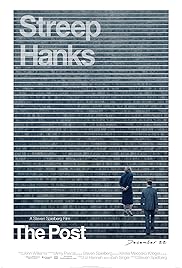
Interview: Steven Spielberg: The Post

I interviewed Hollywood legend Steven Spielberg about his new film, The Post. Read the interview here:

Steven Spielberg: the isolated Jewish boy who just wanted to be liked
Jewish Chronicle-18 Jan 2018

Next year he'll celebrate 50 years as a Hollywood hotshot, this year he has two films out. Steven Spielberg tells Stephen Applebaum how it all started as a way of defusing antisemitism.


Wednesday

David Leon Talks About Making His Feature-Directoring Debut With 'Orthodox'

Stephen Graham as Benjamin
 As an actor, David Leon has appeared in films including Oliver Stone's Alexander and Guy Ritchie's RocknRolla. His hard-hitting new film Orthodox, starring Stephen Graham as a boxing Orthodox Jew, marks his feature-directing debut.  

Getting people to open their wallets for a first feature is never easy, says actor-turned filmmaker David Leon, whose provocative debut, Orthodox, is playing in the UK Jewish Film Festival. “You know no one is going to give you that opportunity on a silver plate. So you have to find innovative and dynamic ways of working around the system."

He started by making a short version, as “a kind of pilot”, to give potential investors an idea of what the feature-length movie would look and feel like. Also called Orthodox, it starred Stephen Graham (This is England, Broadwalk Empire) as an Orthodox Jew called Benjamin who's alienated himself from his community by becoming a boxer. The short was self-contained and existed in its own right. However, by making the material part of the longer version, Leon, who had gained experience in front of the camera in movies such as Guy Ritchie's RocknRolla and Oliver Stone's Alexander, only needed to raise funding for a 70 minute, rather than a 90 minute, feature. 

Whilst it was a clever (and ultimately successful) strategy, getting a feature off the ground was still difficult. The film's Orthodox Jewish backdrop could be regarded as somewhat niche, but Leon always saw this as a strength. 

“It was my intention that it would be niche,” he says. “I think when you make a micro-budget film like this, you have a responsibility to deal with subject matter that is niche, and probably in an unconventional way, because it is the only thing that allows your story to stand out, quite often."

 Leon was born in Newcastle Upon Tyne and is Jewish on his father's side. His religious upbringing was “moderate”, with neither parent forcing their different point of view on him. “As a consequence, it made me much more inquisitive,” he says. “And as I grew older, I became more intrigued by the conflicts that presented. And there certainly was conflict when my mother and father got together.” 

He describes himself as “half Jewish”, an identification which is “a very personal thing”, he says. He knows that to the Orthodox community he is in no senses Jewish, and this informed some of the feelings surrounding Benjamin's situation in the film. A proud and dedicated family man, he longs to be fully acccepted by his community, but the choices he has made in his life – including marrying a secular woman who converted – and his inability to meet the standards of observance demanded of him, have landed him between worlds. 

His troubles begin when he defies his father and takes up boxing, following a violent anti-Semitic attack. Leon witnessed such an assault on a Hassidic boy by “secular kids” in Stamford Hill. The fact that it happened in liberal, cosmopolitan London made it seem all the more “archaic and barbaric”, he says. 

“What was interesting was that that boy was literally wearing his beliefs on his sleeve. We all believe in various things but we don't all dress in a way that projects that for the world to see, and that's an incredibly brave thing. I wondered whether [the attack] would make him more intent on his values, or whether it could make him question them.” 

That Benjamin's father effectively cuts his son off for (reluctantly) pursuing boxing as a response to his attack, seems extreme.

Leon, though, spent 18 months in Orthodox communities in Newcastle, Gateshead, and north London doing background research for the short and feature, and says he learned that “the idea of one man inflicting pain upon another was frowned upon in the context of the Jewish faith.”

Stephen Graham (Right)

He found this fascinating. In the late 1800s/early 1900s, Jewish men used boxing as way to escape from being part of an underclass, and to assimilate and confront anti-Semitism. The sport turned them into heroes. But times change and Saul's reaction has to be seen in the wider context of the challenges now facing a community whose cultural cohesion, Leon seems to be suggesting, is under threat from modernity. 

“The intention was never to make an observation on the religion,” he explains. “It was much more about the culture. And not just about Jewish culture but about 21st century culture and the demands that are placed on people within the Orthodox Jewish community as a consequence.”

The community is not monolithic but composed of individuals. And while they may all live under the same umbrella of shared beliefs, “some will believe in certain things more extremely than others”, says Leon. “I think what that does, in this day and age where we have access to information at the touch of a button, particularly to kids and those that have less strength of character, or those that are more inquisitive, is present a real conflict that I think the Orthodox Jewish community has never had before.” 

Benjamin represents this as a character and, in some respects, in the choice of actor playing him. Stephen Graham ties on Tefillin and wears a kippah like he's been doing it all of his life, but he's not Jewish. In fact the question of whether a Jew should play the role never came up, says Leon. 

“In many ways the character is as much secular as he is Jewish, because of the way he chooses to live his life. So there was something interesting, as a film-maker, in taking somebody who is not Jewish and introducing them to that world, because here is a man who to all intents and purposes is not living his life as a Jewish man; he is living his life as a kind of a halfway house.” 

Benjamin's predicament – inspired by someone Leon met – allows the film to reveal some of the different sides of the community, which is portrayed honestly, seemingly accurately, and without sentimentality. It offers people love and security, but can be tough on those who don't observe its practices.

“That was my experience,” says Leon. “The community can be a very safe environment and somewhere people feel very close, and there was a real sense of people looking after one another. But it's fair to say the demands placed on the individual are very restrictive and very unrelenting. And I think if you don't toe the line, you can be cast aside and ostracised.”

Many do meet the demands, of course. For Leon, as a film-maker, however, “those who fall through the cracks and fall by the wayside” are more interesting. 

That said, he stresses that he came away from the process of making Orthodox having encountered a “beautiful feeling of being willing to forgive. There is an unremitting attitude towards forgiveness, and I think that is something that the Jewish faith, particularly, upholds.”

Friday

Nancy Spielberg: Above and Beyond

Nancy Spielberg on her documentary Above and Beyond and growing up Jewish in Arizona


Sunday

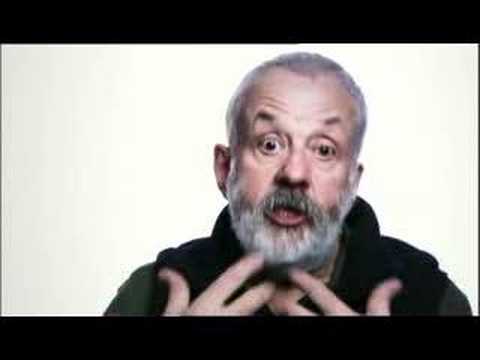
From The Vault: Cannes Returnee Mike Leigh On The "Inescapable" Jewish Spirit In His Work

Mike Leigh may be a staunch anti-Zionist but much of his work is ‘inescapably Jewish’, he claims 

By Stephen Applebaum, November 4, 2010


So much dust was kicked up by Mike Leigh's recent decision to cancel a cultural visit to Jerusalem and the West Bank that it almost obscured the fact that the outspoken veteran of stage and cinema has a new film out this week - and arguably one of his best, at that.

Another Year is like the hangover from Leigh's uncharacteristically upbeat 2008 comedy, Happy-Go-Lucky. Where that film was filled with a youthful joie de vivre, thanks to its positivist singleton protagonist, Poppy (Sally Hawkins), the new film taps a gloomier vein of middle-age angst. Leigh himself regards Another Year as no less "life-affirming", though he admits that "it does deal, in a more obvious way, with what we may call deeper and darker things".

Set over the course of a year, the film follows a group of family and friends revolving around a happily married, late middle-aged couple, Tom (Jim Broadbent) and Gerri (Ruth Sheen). While their lives seem sorted, some of the people in their orbit, in particular Gerri's desperately lonely fifty-something work colleague, Mary (Lesley Manville), are barely coping.

As usual, Leigh, who grew up the son of a doctor in what he calls the "north Manchester Jewish scene" in the '50s, serves up tears and laughter in Another Year - a characteristic of his work which he describes as "inescapably Jewish".

There's always two sides to a thing — in that sense there's a Jewish spirit in my work
"Inescapable" is an interesting choice of word, since Leigh long ago turned his back on Jewish life, in between returning from a trip to Israel with the Zionist youth group Habonim as a teenager, and enrolling at RADA to study acting.

And he is keen to make something clear about that period of his life. While he was in Habonim, "I was never a kibbutznik or anything," he says. "I was just a kid, you know? I went on their very nice, wonderful Israel camp, supported by the Jewish agency, and the idea was to make us go and be kibbutzniks. Indeed some people did, and I still know people at a couple of kibbutzim, that go back all that way. But I walked away from the whole thing because I was sceptical, and have become more so really."

Yet he believes his funny-sad aesthetic proves that the ties to his Jewish roots still bind. "It's not something I do consciously or I think about," he says, "but it is nevertheless a fact. The films are comic and tragic, there's always two sides to a thing, and all of that - in that sense there's a Jewish spirit in my work."

This, perhaps, explains why he makes "films - and sometimes does plays - which are never concerned with general political statements or simplistic analyses or propagandist conclusions. That's not what I'm concerned with," he says. "I'm concerned with humanity and compassion and life as we live it, and all that sort of thing."

His works observe life, and the human condition, from different angles, without telling the viewer what to think. For instance, Tom and Gerri's relationship with Mary raises a number of questions about the limits of friendship, without actually answering any of them. Are the couple helping her or unwittingly preventing her from moving on with her life? Another Year does not tell us, because Leigh probably does not know himself.

Famous for building his films through a protracted process of improvisation with his actors, who only know what their own character knows, the director says: "I embark on a journey, always, and Another Year is no exception, and that journey is a journey of discovery as to what the film is."

In the way that they are made, and the way that they play out on screen, Leigh believes his films embrace the "spirit of Talmudic study". "I'm inviting you, my audience, to sit round the table and for us to say: 'Maybe it's this. Maybe it's that. We don't know'. Which is a Talmudic investigation that doesn't arrive at any conclusions, basically."

Indeed, the central subject of Another Year is ageing and what comes with it; how life, says the 67-year-old director, "becomes at the same time clearer and more complicated. The film is about how we come to terms with life, really, and face ourselves and each other." Leigh offers no answers, of course, and he is uncomfortable with the suggestion that the film focuses on the pursuit of happiness and how, as we get older, we are forced to look for it inside ourselves.

"That may be true and it may not," he grins. "I don't know about it because we are all products of our background and victims of stuff that has happened to us. Yet there's talk in the film that you have to take responsibility. Mary is a victim of bad things - relationships, abuse, etc - but on the other hand, you can plainly say she's only got herself to blame. Then again, if she's an alcoholic, why does she need that? Also, you can see she's a woman that's spent a lifetime saddled with the received notion of being sexy, of being feminine. That comes from what's been fed to her. You see her hanging on to that, but it's desperate."

This understanding of the intimate relationship between past and present, and the need to look at the complete picture, is there, too, when Leigh talks about Israel - and may have had some bearing on his recent decision to cancel his visit. He does not dispute the connection between the Holocaust and the creation of the State of Israel, but says that he and his "old haverim from way back" often "ruminate about how we never knew Palestinians were evicted from the properties and everything that goes with that. It was denied to us," he claims.

"We were never, ever, really focussed on the fact that they actually were people with roots and a place and they weren't just generic Arabs. You still hear that now: 'It's their fault'. And the fact is now you've actually bred generations of resentful Palestinians. In the end people may say it's an insoluble situation. Well, that's a tragedy."

Leigh had his artistic say on the subject in 2005, in the play Two Thousand Years. He is now about to return to the theatre with a revival of his 1979 play, Ecstasy, at the Hampstead Theatre. He will also put on a new play at the National Theatre. As usual, the project is draped in secrecy. "I can't say anything about it," he smiles, "except that it's extremely unlikely it will be a further investigation into matters of a Zionist nature."

Mike Leigh returns to Cannes next month with Mr Turner

First published in The Jewish Chronicle, November 4, 2010

Wednesday

JOSH RADNOR: LIBERAL ARTS


 Josh Radnor is talking about alcohol. The actor-director and sitcom star has given it up and is finding life as a former imbiber difficult. “There’s some grief that goes with that change, because alcohol feels so kind of youthful and sexy and romantic,” he sighs, before confessing to a recent lapse in Paris when he indulged in a few glasses of red wine. 

Friday

Chris Weitz Talks Family and A Better Life

Chris Weitz could have parlayed his success as the director of Twilight: New Moon into an even bigger film. Instead, he used it as an opportunity to make a small, intimate drama about a Mexican illegal immigrant called Carlos, who does back-breaking work to provide for his resentful teenage son, Luis, while trying to keep him out of the gangs in their poor East Los Angeles neighbourhood.

On paper, A Better Life looks like an odd fit for the man behind American Pie (with his brother, Paul), About a Boy and The Golden Compass. It is, though, Weitz's most personal film to date, reflecting not only his feelings as a father, but also as the descendent of a Mexican maternal grandmother whose beauty took her to stardom in Hollywood, and into a marriage with a Jewish film producer from Bohemia; and, less obviously, of assimilated Jews that fled Germany when Hitler came to power.

In the film, a crisis forces Luis to see for the first time what his father has given up and how he will never again experience his homeland and culture in the same way. This is essentially an “accelerated” version of something that Weitz went through. Except that in his case, it wasn't until after his father, John, “passed away [in 2002],” says the director, “that I really began to understand the aspects of history and his background that had haunted him.” Although he admits that he didn't actually think about his own dad as he was making the film, he says: “It's interesting putting the pieces together right now, talking about it.”

Born Hans Werner Weitz in Berlin in 1923, John was the son of a wealthy textile manufacturer. Awarded the Iron Cross after being wounded on the Eastern Front in the First World War,  Weitz says his grandfather had “every reason to believe that everything was going to be fine”, as Germany descended into economic and political chaos.

In 1933, however,  he packed John off to be educated in England, at The Hall Preparatory School in Hampstead, and then St. Paul's School, and, finally, Oxford University. When war broke out, he was interned temporarily in a camp near Liverpool.

His parents accepted in the meantime that there was no future for them in Germany, and escaped to America as refugees. When their son joined them, “There was nothing,” Weitz sighs, the family business having been “sold for a pittance” in the rush to leave. “There is a country house in East Berlin that has been going through a legal process for 15 years, since the Wall came down. But it will probably never be returned to the family.”

At least America gave John a way to “strike back” at the Nazi regime. He joined the Army, and because he spoke fluent German and looked ayrian, he was recruited for undercover work by the OSS - the precursor to the CIA – and became one of the first people to enter Dachau after its liberation. “He told me a story that I will never forget,” says Weitz. “He talked about seeing the gas chambers and this little glass window so that the operator could see that the people had died, and described seeing taped under that glass window a picture of the gas chamber operator's daughter. That image, I think, affected the rest of his life.”

Though he went on to become a highly successful fashion designer and author in America, Weitz's father never forgot where he came from or what had happened. “The story of his later years was really the story of his trying to come to grips with with his German heritage,” says his son. “He did believe in Germany, he did believe in it as a country. He had dealings with German resistance members, and that, I think, saved the country for him in his mind.”

Nevertheless, he found it difficult to comprehend how the German “intellectual cultural elite could subscribe to the gangsterism” of the Nazis, says Weitz, and wrote books about Ribbentropp, “who had essentially been a champagne salesman”, and Hjalmar Schact, Hitler's banker, in an effort to understand. “I think it was easier for him to understand how the veteran of the First World War trenches, who had seen the hyper-inflation and lived in poverty, might join the Nazi Party. But how was it that these people had joined?”

Weitz doesn't think his father ever resolved the question for himself. And the way he coped with it was, he admits, “quite strange”. “He had a correspondence with Reinhard Spitzy, who was Von Ribbentropp's private secretary, a Nazi. Of course, de-Nazification might have been a political cleansing, but it didn't mean that everybody who had been in power during that period fell out of power. So he spent his life coping with that.”

Despite his conflicting feelings, Weitz says his father presented himself in later life as a man who was at peace with Germany and the Germans. He had even received orders of merit from the German public, partly as a consequence of his work towards reconciliation. The filmmaker was therefore surprised when, about a year ago, his mother sent him a letter that John had written around the Dachau period, containing “a great deal more anger than I had ever experienced, in terms of his expression towards the German people.”

In it, his father talked about how Germans living near the concentration camp were expelled from their homes so that soldiers could be billeted, “and he was certainly pleased to be part of this conquering army that had come back through,” says Weitz. “He was in his twenties, and I think to have been kicked out of his country and to have seen the aftermath of these massacres, and then to have won back possession of his country, literally, was a tremendous shaping experience for him.”

In a recent interview about A Better Life, Weitz said that he realised when he had a son that it was the responsibility of parents to teach their children that beauty is always present in the world. Was his father still able to do that for him, I ask? “It's a very deep question,” Weitz says solemnly. “Certainly he was haunted by [the past] and brooded upon it and struggled with it. But at the same time, he felt that he did still love life. And, actually, [England] had a great part in that.”

He explains that when his father went to school here, he had been “treated like a human being, having come from a country where he was a second-class citizen, or not even a human being. Because of that, he retained, for the rest of his life, a love for this country.”
 

As we come to the end of the interview, Weitz looks across at a poster for A Better Life that's been propped up against a wall, and falls silent. He then returns to the subject of his roots.

“So yes, I'm the son of a refugee,” he says, “and it took me a long time to understand the differences between his experiences and mine, and how much he'd sacrificed and given up to make life better for me, and for the rest of my family. Which is sort of the theme of this movie.”

A Better Life opens today

A version of this story appeared in the Jewish Chronicle, 29/07/11

Tuesday

Jesse Eisenberg: Low Crime And High Anxiety

Jesse Eisenberg is still feeling the effects of his Oscar-nominated performance as Facebook-founder Mark Zuckerberg in The Social Network, and it's making him uncomfortable.

Up until that film, the 27-year-old was quietly garnering critical kudos for playing intelligent, sometimes unworldly, frequently stubborn, nearly always socially-awkward misfits, in low-budget films such as his 2002 debut feature, Roger Dodger, Noah Baumbach's semi-autobiographical The Squid and the Whale, and, in something of a left-turn, the action comedy Zombieland.

Now, thanks to The Social Network, the intensely private New Yorker is having to deal with a level of scrutiny he never really expected, and certainly never pursued. For someone who has had problems with anxiety and an obsessive-compulsive disorder for much of his life, it has not been easy.

"[The Social Network] has, almost inadvertantly, provided a more public platform than I would have wanted,” he says down the line from America, in a stop-start rhythm reminiscent of Woody Allen. “It's great to be in something that's received. But, on the other hand, there's only so much attention one person should get before it's overwhelming.”

If this means he doesn't really like doing press, it doesn't actually show as he discusses his unusual new release, Holy Rollers. A small-scale passion project that he helped shepherd to the screen over a number of years, director Kevin Asch's film is based on the true story of Hasidic Jews who became involved in an ecstasy-smuggling operation, with a gang connnected to an Israeli cartel. Eisenberg stars as an intelligent but naïve young Hasid from Williamsburg, Brooklyn, called Sam Gold, who, unhappy with his life, gets drawn in by his wayward neighbour.

The film presented Eisenberg, who studied anthropology at university alongside his acting career, with an opportunity to explore the lives of Hasidic Jews. Raised in a secular Jewish home by his college professor father, and a mother who uses “a drama-based platform to teach cultural sensitivity to young doctors”, he says his own family had become increasingly distanced from religion the further they “got away from my grandparents' generation that came over from Poland. I went to Hebrew school,” he says, “but dropped out before I had a bah mitzvah.” It was, however, partly a fascination with the Hasidim, and the similarities and differences between them and himself, that drew him to Holy Rollers.

“On the one hand you think you can probably relate to them because you come from the same background,” he says. “And then there's the added strange part of being associated with them by virtue of having the same religion. But I don't feel any kind of kinship with their day to day experience. So I was really interested in learning about that."

He attempted to gain access to the kind of closed community portrayed in the film, but found himself “trying to infiltrate a world that I was not welcome to”. His way in eventually came via a sect that “seeks out secular Jews in order to encourage them to be more religious. They stand on the street in New York and if you're Jewish, try to bring you in to their mitvah trucks to pray with them.”

Far from rejecting him, they were “almost aggressive” in the way they  embraced Eisenberg. They took him to their schools, synagogues, and the kosher restaurant where they ate. “They'd call me all the time to see if I would go to their events, because their goal is to bring you into the fold. So not only were they not suspicious or irritated by me, but they were actually eager for me to join in.” They even, according to other interviews, gave him the bah mitzvah that he'd never had as a boy.

Eisenberg had assumed that the group would be “monolithic in its attitude towards religion, and be a hundred per cent devout and non questioning”. In fact he discovered conflicting attitudes, and “people who felt certain practics were too extreme, or not extreme enough.” It was a significant insight, he says: "It meant that, as an actor, the character I was playing could realistically feel that even as a Hassidic Jew raised entirely in that world, that maybe religion is not right for him.”

It was important to the film-makers that Holy Rollers should feel grounded in reality and be sympathetic to the culture. Because too often, says Eisenberg, “Hassidic Jews in movies are used as a sight gag or caricatures, a joke in some way, and that was never our intention.”

Asked if being with the group made him feel like he'd missed out on anything as a secular Jew, Eisenberg admits there were moments when he “regretted not being more devout”. But then he'd come up against things which conflicted with some of his “feelings about gender roles and acceptance of other cultures," he says. "So even when I felt I was missing out on stuff, there would often be times where some of their comments would rub me the wrong way.”

The experience made him realise that he's part of a different community, whether it be an American community or a theatre arts community, which “provides a similar sense of belonging”. What he doesn't want to be, though, is a fixture of popular culture. Though part of the movie business, he consciously avoids reading film magazines or stories about the industry, having realised early on that their treatment of film as a product made it harder for him to buy into the artifice of acting.

For him, acting is more than just a job, it is a way of coping with life. He now sees that during childhood, “it was probably a way to focus whatever personal anxieties I had,” Eisenberg says candidly. “It was a way for me to direct it in a productive way rather than to just live with it and suppress it. That's certainly what it provides now. I have a catharsis every day in a safe and creative way, and that's a lot easier than holding something in.”

When he isn't acting, he writes. The problem now, though, is that The Social Network, and the attention it has brought him, has produced a lot of distractions from activities that he finds not only fulfilling but, it appears, also necessary. So what would he do if he couldn't create? “Gosh, I don't know. Maybe more yoga?” he says wryly.

As we finish, he reveals that he is about to work with Woody Allen in Rome on the veteran film-maker's next film. “I don't know anything about it as of yet, but I'm really interested in seeing him work.”

One can only imagine the anxiety levels on that set.
 
A version of this story appeared in The Jewish Chronicle

© Stephen Applebaum, 2011
Friday

Mike Leigh Defends His Decision Not To Go To Israel


Zionism? To hell with all that, says film director


By Stephen Applebaum and Simon Rocker, October 21, 2010

Mike Leigh, the film-maker and playwright who has cancelled a planned trip to Israel next month, has backed a cultural boycott of the country, calling its policies "suicidal".


In an exclusive and personal outspoken interview in which he justified his decision not to teach a masterclass at a Jerusalem film school, the 67-year-old, Salford-born author said he was now "implicitly part" of the boycott.


Mr Leigh, director of award-winning films such as Secrets and Lies and Topsy-Turvy, had been invited by the Sam Spiegel Film and Television School in Jerusalem to take a workshop for students. During the week that he was due to spend in Israel he had been scheduled to visit Palestinian film-makers in Jenin, on the West Bank, and also to give a wide-ranging press conference.


Mr Leigh admitted to having been "extremely uncomfortable" about agreeing to go to Israel in the first place, but the loyalty oath planned by the Israeli government for new immigrants had proved "the last straw".In his interview, given to publicise his new film, Another Year, Mr Leigh gave his angriest assessment yet of his life as a Jew and his feelings towards Israel.


He complained that he and his fellow former members of the left-wing Zionist movement, Habonim, had been duped by Israeli propaganda, and denounced religion in the strongest terms.


"Religion's never been an issue. I've been sceptical about religion since I was born, basically. And certainly by the time I came to my barmitzvah I had long been sceptical. I think organised religion is bulls***. And I have thought that literally since before I could walk. So that's not a problem for me. Although I grew up in the north Manchester Jewish scene, in a district that's now completely where all the frummers live."


He revealed that he had planned to take his sons with him to Israel, where he has a "lot of very close relatives. My mother's surviving sister, who went on aliyah in 1949, is still alive. She'll be 90 very shortly, and she was looking forward to seeing me. But in the end, to hell with all that. A decision had to be made that this simply wasn't good enough."


Although the argument might be put that "committed, serious, liberal, left artists are not responsible for the Israeli government," he said, "that simply won't wash. Because actually, the truth is that what Israel is doing… is suicidal."


While cultural talks went on "in the nice cinematheques of Jerusalem, Tel Aviv and Haifa, it is hell on earth in Gaza and I wouldn't want to be there basically".


A former member of Habonim, he has only twice visited Israel, once in 1960 and again in 1990.


"Not only was I in Habonim, in the '50s, but I actually happen to come from a very long, unusually Zionist background in Manchester, at a time when many Jews were not particularly Zionist," he said. "In fact a lot of Jews were very sceptical about the whole notion of Zionism. My great-grandfather actually edited a Zionist newspaper in Manchester at the turn of the last century. So, I have struggled with this issue, the whole thing, for a very long time."


All his close friends from Habonim had long since "walked away from Jewish life" but they talked about Israel, he added: "We wring our hands on a daily basis, saying 'For f***'s sake, what are they doing? They are shooting themselves in the foot'."


His 2005 play about Jewish identity, Two Thousand Years, would have been "tougher" if he had written it now, he said. He felt that not only had he done "the right thing" in deciding to call off his trip to Israel but "in so far as anything achieves anything, more publicity has come out of what I have done than would have been the case had I simply not gone, or had I gone and merely made a few statements that no one was listening to inside Israel."


He said he had been "of course exhorted not to go to Israel by a number of factions. That included Israeli factions within Israel. Whilst I have been berated by some Israeli positions, there are also Israelis that are extremely pleased I made that decision."


Mr Leigh, who insisted that all his work was "unquestionably Jewish", was dismissive about rocket attacks on Israel. "I don't want to know about rockets," he said. "What I am concerned with is humanity, is life being lived properly. And you cannot deal with this issue from an Israeli perspective and not from a Palestinian or a Gaza perspective. You simply can't. And if you do it's totally unacceptable. And that's the bottom line."

Originally published in the Jewish Chronicle, October 21, 2010

Wednesday

BLOODY HELL . . . IT'S ELI ROTH!


Eli Roth returns to the scene of the crime in Hostel 2