Translate

Showing posts with label Oscar. Show all posts

Thursday

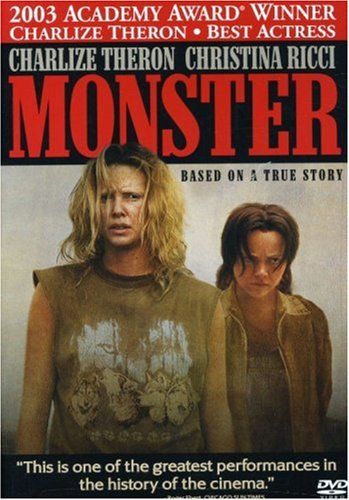
From The Vault: Wonder Woman Director Patty Jenkins On Her Directorial Debut, Monster

Patty Jenkins' one cinema feature prior to Wonder Woman was Monster, in which Charlize Theron gave an Oscar-winning performance as real-life serial killer Aileen Wuornos. I spoke to Jenkins before the film's 2004 UK release. 


You must be proud not only of the fact that Charlize won the Oscar but also that you stuck to your guns and championed her over bigger name actresses who wanted to play Aileen Wuornos?

I definitely am. Also, it’s been such a strange journey. Ever since I saw her performance, this never seemed out of the realm of possibility as far as being deserved. But it did seem like the kind of thing we would never actually get. I’m so proud of her and the industry, who despite the money we’ve taken and the amount of time we’ve been out, actually saw it and gave her an award like this. I’m amazed.”

How hungry do you think Charlize was for a role like this? At the Berlin Film Festival in February, it appeared that this was the kind of opportunity she had been waiting for a long time.

I think that’s true, although I don’t think you would have known that. She didn’t actually initiate this at all; I went after her. She’s a tough girl, and she just looked at me and said, ‘Why me? What are you after?’ So I think she was looking for something to shake it up but never quite knew how to go about doing that, because they don’t let her try for those roles.”

Do you think her blonde bombshell looks have pigeonholed her in some people’s minds?

I have such a new perspective on this whole phenomenon now, because there’s been so much talk about her uglying herself up. But we can say the same thing about Russell Crowe, who got a lot of attention for playing someone who was mildly retarded [in A Beautiful Mind], or Robert De Niro doing Raging Bull. The more common roles that don’t display talent are those of attractive leading people, and that’s always going to be what’s the most popular thing in Hollywood, because people want to see heroes. But, generally, most of those actors get attention when they play something outside of that. So it’s not just women like Charlize who do this; men have also done these character roles.”

Did you talk to Charlize about her violent upbringing in connection with this role (her mother shot dead her alcoholic father when Charlize was 15), and did you get the feeling that it helped her to empathise with Aileen Wuornos, who also had a violent childhood?

It wasn’t discussed as literally having a relationship to the film, but it was discussed as we got to know each other. I think we both knew ahead of time what that meant, and that that was there. What was interesting to me is that I also experienced some tough stuff as a child. I grew up in Cambodia during the Vietnam war when I was very young, my father was a fighter pilot, and my mother tells me that I saw a lot more than I remember. I’m always trying to assure my mother of this, but I actually am glad that I came into this world knowing that there is this sliding scale of comfort and suffering going on.

Any number of things can teach you that, but it gives you an understanding and empathy for people’s circumstances. I’m sure Charlize also has that, and I think that is what I sensed from a distance. She grew up in South Africa and it was very tough. In addition to the things that happened in her own personal life, that absolutely shaped her ability to empathise with the situations that people live their lives in, in a way that a lot of American actresses who have never lived outside the U.S. can‘t.”

You’ve mentioned before that you watched people experiencing very hard times as you were growing up. Could you tell me a little bit more about the context of your upbringing?

I lived all over the world when I was very young, and then continued to go south every summer. I ended up in Kansas for a very long time. I never was quite an outsider, but I think because I travelled so much, I always ended up with the outsiders in Junior and High school. A lot of them were people who were from other places, or people who had horrible abuse going on in their life.

Anyway, I found myself in the heart of the mid-West when the hardcore scene was appearing. Some of the kids, like my Polish best friend, had roots outside America, and that was the difference between them and everyone else. But some of the other kids were being beaten to death. I watched kids that I became close with, from the time I was 13 years old, go down a really, really dark path, including one of them getting a gun and killing everybody in a family. There was a lot of alcoholism. A lot of heroin addicts. It was just a really eye-opening experience to know those kids, who were very young and beautiful, and watch what happened to their lives. No matter how hard they tried to fight against it, they couldn’t escape it.”

That, of course, is what we see Aileen trying to do in Monster when she attempts to gain legitimate employment. Is that something you brought to the film or was that in her letters?

Both. She didn’t talk about that so much in her letters but it’s documented in Florida. She, in her own defence, brought it up several times when they tried to make out that she just wanted kill people for the money. It was on record in Florida that she had tried everything from work in a factory to the military -- she was deaf in one ear from having being beaten so badly as a child, though, so they wouldn’t take her. It was just pathetic. There were also the things she really thought she was going to be able to pull off, like the pressure-cleaning thing, which got greatly reduced in the film. What was always such a heart-breaking angle into her, for me, was that she had a pressure-cleaning unit for cleaning carpets and it had been stolen from her by a boyfriend. So her great dream was to do these things to get enough money to buy a pressure-cleaning unit again so that she could be self employed. The idea that that was her romantic idea of being a straight citizen was always heartbreaking to me.”

To go back to what you said about your friends for a moment, the way you described their tragedies seems to be reflected in the way you and Charlize clearly empathised with Aileen.

It’s funny because all those pieces only come together in retrospect, because there has been so much talk of how this film came together, you know? Charlize and I were driving around, and she told me a story about seeing a guy in a car, like, burning to death, and someone pulled out a gun and shot him in the head, when she was five years old. That life is very educational, and no matter how much we move on, it still informs us. So the more I think about it, the more I think, ’Of course we came together.’ Whatever it was that’s subliminal and we were seeing in each other, there is a huge difference between us and other people.

That is why every single one of my friends is European, strangely. Like my best friend is Polish -- she speaks perfect English and she grew up here -- and my other best friend is French -- even though she speaks perfect English she moved here from France when she was little. I think that there’s a huge difference in people who have been so sheltered that they don’t know there are other ways of life. Deep down inside, there’s a context that’s completely different.”

Someone I was talking to recently said he never trusts anybody who hasn’t experienced or witnessed hardship in their life.

I can trust them, but I don’t expect the same things from them. I don’t believe in the school of hard knocks but, you know, I’m so glad that was the context I came from. I feel very, very sad for people who don’t know that kind of darkness is out there and go through it for the first time when they are an adult. I’d much rather have it the way that Charlize and I do, where you’re able to play in this world and yet know exactly how things are and what can happen to you. I’d rather children knew that somehow.”

I was recently talking to a Hollywood actor who said he was shocked when he came to England and saw the news from Iraq, because the things he saw were much more graphic and uncensored than in America.

That pisses me off. But not only does it disgust me that we don’t keep tabs on what we’re involved in, anyway. I was in France and the news was on, and although I don’t speak French I knew everything that was going on in the world every day, because it’s so present around you. That really does bother me here [in America]. I have been in vehement arguments with people who argue how we have to hide porno shops from children because it’s so offensive. I don’t believe in censoring the world for children in this, like, overly American, saccharine sort of way, because you’re not doing them any favours. I deal with kids who grew up this way all the time and they’re destroyed. And a lot of those kids go on to make the darkest, most abusive movies, because they’ve just discovered it and they feel a need to inflict it upon everybody else. The whole thing is very depressing.”

I’d like to know when Mel Gibson discovered the darkness.

[Laughs] Well that’s actually been another thing. I’ve had an encounter with a couple of really serious, dark filmmakers who said, ’You and Charlize just lightened it up so much [in Monster].’ Finally it got around to the point where I said, ’Look, have you guys ever experienced any tragedy in your life?’ and none of them had. They’re super-abusive, dark filmmakers, and Charlize and I, meanwhile, tried to find a way to bring humanity to the dark moments. I remember thinking to myself, ’You guys don’t know what it’s really like, but it’s just normal life.’”

You very clearly show the first murder in Monster as a reaction to rape. However, if you had followed her life to its end, would you have been so unequivocal, given that she retracts her self-defence story at one point in Nick Broomfield’s documentary, Aileen: Life and Death of a Serial Killer?

Well, I do believe that’s exactly how that murder went, as does Nick. In my opinion it was important to see that murder in order to understand the context of the rest of the murders. But there was so much abuse in her life, you could have pretty much told the end of her life and had it more informed by any number of abusive and horrible things that happened to her when she was younger. But I think when someone kills seven people it is important to understand that there was a trigger.”

John Tanner, the Florida attorney who prosecuted Aileen, went on ABC’s 20/20 recently and said Monster was a lie.

I think it’s so funny those guys would say that, because those guys are some of the least impressive prosecution and defence I have ever seen. I mean it’s funny because there is a lot of talk in Florida about the fact I never spoke with them. Well, first of all, everything that they were involved in is on public record and there’s nothing to talk to them about. I didn’t do anything about the trial. But on top of it, the trial was such a circus and so badly run, I have zero respect for those guys. They failed to bring out at her first trial that he [Richard Mallory] was a convicted rapist who had served time for attempted murder. That’s a pretty pertinent piece of information to leave out of a trial, you know? Also, he had a very old, beat-up car, so she was not going to kill a guy with no money and a bad car just out of nowhere. There had to be some trigger.”

You’ve talked before about the responsibility you felt towards the victim’s relatives so it must hurt that some of them have also attacked the film?

“The thing that I think they are most upset about is the fact I never spoke to them. You know, I had to make a decision in my own heart about what was the right thing to do. In this case I had done a lot of work to protect them by trying to hide who the victims were, in which order they were, and to never show, other than in the first murder, that any of them deserved it. It was anywhere from a john who was kind of sleazy to a complete innocent, and that’s the truth. The thing is I don’t think it’s appropriate to go speak to their families and then not represent them in any way. Do I believe that it’s worthwhile and important to make stories about people like Aileen even though there are victims? I do, and we do it all the time. Although my father was in Vietnam, that doesn’t mean I think you shouldn’t tell stories about Vietnam, just because there are real people involved. I sort of knew that it would be very hard for them, and it was always the thing that I felt badly about. But in the depths of my soul I know I did the best work I could to not hurt them.”

One of the things they seem to find hard to accept is that these guys were johns.

See, that’s what I mean. That’s why I never spoke to them, because I know that there was that. And the truth is all but one of them was found with rubbers on and their clothing off. I understand that it’s very easy to have that kind of denial. But I don’t think they even need to have that kind of denial. It’s not a sin that deserves murder to see a prostitute. But it’s a hard way to lose your husband. Anyway, that’s why I decided to just keep a distance from all of that. It would also have only hurt them more if I had made them feel that they were going to be represented in the film, when I was telling Aileen‘s story.”

Did you speak to anyone who knew Aileen while researching the film, other than her best friend, Dawn Botkins?

“The entire community that lived around Aileen and all of her friends, with the exception of her girlfriend [Tyria Moore; Selby Wall in the film], were involved in the film. So all the bikers, the people who owned The Last Resort, all of the neighbours. . . Yeah, we were sort of living in that community of people that knew her at the time the film takes place.”

And how did they react to seeing Charlize as Aileen? I found it quite creepy; she was practically channelling Aileen.

It was creepy for me when she started to do it, too, because I had that feeling several times. I knew that she was hard working and she had done a lot of research, but nonetheless I was looking at her and really thinking, ’How does she know this much? I don’t quite understand.’ I had watched Aileen, obviously, very closely, and what I saw had no remnants of Charlize when she was on set.

“The best example is the biker bar, The Last Resort, where we shot. We had gone there many times and of course they were big sceptics. Then we became friends with them and they just started giving Charlize a hard time. You know, ’Okay, you’re going to have to be this or that.’ The day she walked on the set, their faces just went white. I was so busy, I didn’t get a chance to talk to them for a long time. But many of them, including Al [Bulling] who runs the place and Cannonball, who was one of her close friends, just said in very whispered tones, ‘I thought that was Aileen when she came in the room.’ Charlize is almost a foot taller than Aileen, so it’s really stunning. They all just stood there against the wall, stunned, watching her act.”

How did you feel, personally, being in those environments and knowing that these were places where she’d hung out?

It was really odd. On this movie there was such a constant intersection between life and art, and between consequence and filmmaking. It was always so on my mind that I not only had to tell Aileen’s story correctly, but also that there were victims and these were real peoples’ lives that had been lost. It was unbelievable. Talk about a levelling factor. Everybody really gave everything they had to try to do this with kindness and love.”

If I understood you right in Berlin, you seemed to be saying that you initially started out wanting to do a straight serial killer film. Is that correct?

I was never really going to do that. I was going to try and do a character film, through the funding for a serial killer film. I was going to try to make this film, but I just realised pretty early on how naïve I was being about it. If you have people onboard who absolutely don’t care what you write then that’s actually a benefit, because I could write a character film and no one would care, as long as I came up with the material. But when it comes to making it, the more I realised they’re never going to give me the money for another can of film for the important part that I need. They’re going to do the most commercial thing, and then they’re going to pull the plug. So I had to walk away from it. But absolutely, I think in this industry you’re constantly looking for an intersection of art and commerce. I’m not an idealistic person who thinks that they should make $50 million movies that can never make their money back. It’s like you’ve got to know you can make a profit back for people to feel confident working with that kind of money. So I always kind of benefited from the fact that it was about a lesbian serial killer, just in the fact that I could say to my financiers that even if it didn’t work, then they could sell it on this, so let’s keep on.”

Was there anything that surprised you or that was unexpected when you got access to Aileen’s letters?

Not really, but only because I knew so much already -- I had been talking to Dawn for months at that point and she had hinted at so many things in the letters. Well, okay, the one thing that was stunning was how intelligent she was, and it really came through clearly as you watched the letters progress. You know, right from when she got in prison and she hadn’t been writing an awful lot to being a beautiful writer, and then a really eloquent writer. She was writing these really gorgeous three-page letters about memories, and you could just watch this person’s mind adapt to this new thing. It was really, really interesting.”

There is quite a poetic quality to some of the voice over in the film.

Yeah, that came from her. Somebody I did an interview with, and I really liked this, said the weirdest thing about her is she’s like a real stand-up guy, someone that doesn’t stab their friend in the back and will always be straight. But at the same time, she is willing to kill people. She would never deny her love for Tyria Moore, and continued to feel that way until the day she died. In the letters, right before she was executed, wanting Tyria to be at her funeral, wanting to send messages to Tyria. It’s amazing. She had all this horrible bitterness and anger, but never would it interfere with her trying to have love and a life.”

There is an irony in the voice over at the beginning of the film where she says she wants to be a movie star, because, in a way, she has accomplished that by proxy. The other irony is that Charlize has achieved everything she wanted.

They have very similar, in the deepest, deepest level, structural reactions, which is interesting. Charlize and Aileen are people who are incredibly strong, incredibly easy to incite if you try to hurt anyone in their inner circle, but really vulnerable and romantic.”

What were you doing when Aileen was executed on October 9, 2002?

It was probably the most surreal day of my life. It was Godawful. Charlize and I went through it together. She had joined the film three weeks or so before, and we didn’t think that Aileen would be executed, because Jeb Bush was doing it for the publicity. We had kept the movie really quiet; I had been working on it for six months, and communicating with Aileen. Then, as this came along, I was writing her letters and she was writing me letters, and I was on the phone with Dawn trying to get the clothing she wanted to be executed in. It all got very, very unbelievable, you know? I was writing this person a last letter and saying ’God’s speed. This is no longer about my film. I promise you I will do my best with everything.’

The day she was executed they announced our film on the front page of the trades, and in a very cold way that news spread really quickly. There was not a whole lot of sympathy for Aileen at that point, so people were saying things like, ’Not two seconds cold in the grave and that ugly bitch is getting played by Charlize Theron.’ It was incredibly hurtful. And also incredibly bizarre. Until then it had been very private, I’m a completely unknown director, and simultaneously my phone goes crazy with people saying, ’Oh my God, Patty. Congratulations. You have Charlize Theron?’ It was very, very weird. I just checked out and tried to walk through it. The fact that she was the one who wanted to be executed was the thing that made that my behaviour. I knew that so I just had to deal with it.”

How did it make the trades at that point?

Who knows? But somebody leaked it. I was on the phone begging them not to print it, and they said, ’We are printing it.’ So we knew it was coming out.”

How did Dawn respond to the film? She attended the US premiere, didn‘t she?

Yeah. We had become so close that I actually had to sort of calm her down, because she was, like, ’I really want to like it.’ I went: ’Dawn, listen, it’s OK if you’re uncomfortable about things; it’s very difficult to watch a film about someone you’re close with when it’s not them on the screen.’ So she was loving and supportive on the night, but also confused and trying to process how she was feeling. She also had a relationship with Aileen where they didn’t talk about the murders very much, so that’s not her area of expertise.

She has since been unbelievably supportive. She wrote me a letter very shortly after from herself and Aileen, saying, ‘Thank you for what you have done.’ It meant a lot.

“Dawn‘s been the one banging this drum by herself for a long time, saying, ‘Yes, she killed seven people. But she had this horrible life.’ All of a sudden there are a lot of people seeing this film and expressing that, and I think that she is really pleased about that. So she has been amazing. She called the night of Oscars and told Charlize she was there in spirit.

"The little thing no one knows, but which is a great piece of information, is that one of the things I could never get in the script was the fact that Aileen never had a birthday her whole life. She was born on a leap year. So there was this issue where she had never had a birthday cake, she never had anything. Well, this year they moved the Oscars and they were on her birthday. That was her birthday. So just over a year after she was executed, they played Aileen, in a story, at the Oscars, and she won. It’s incredibly bizarre. And the opening speech of the night was Tim Robbins saying something like, ‘If you’re somebody who has been damaged or abused, please seek help. It’s sometimes the strongest thing you can do to stop the cycle of violence.’ It was really powerful for me that that was in the tone of the message that was being sent that night.”

Was that your best memory of the night?

It’s weird because it becomes so not about the film by that point. I knew that but it’s all kinds of different things. Everybody is so tense and exhausted. Four out of five people lose, so it’s really funny if you can imagine all these people competing with each other and then celebrating all night; even the winners and the losers are like sitting side-by-side, slumped in a chair.

My best memory is the moment Charlize won. It was so odd that we had suddenly become the favourite, because three months earlier everybody said that we were unreleasable. But no matter what people put in their book a long time ago, I really believed that enough people had seen it to nominate her, but not enough people had seen it to vote. So I just couldn’t believe it had happened when they announced her name. I was wearing a diamond necklace that was loaned to me and I exploded my arms around my producer, the first person who ever took a chance on me and made this happen, and it went flying off my neck. It was a really expensive necklace. It was really exciting.”

What has this done for you?

A ton of stuff. There are all kinds of people who want to work with me and are giving me scripts and whatever. But I think the most powerful thing is that a lot of my own idols, just because of the tone of the films that I’m working in, a lot of my own idols have reached out to me in the most unbelievably touching way. Dustin Hoffman came and raised a toast to us and the kind of work we‘re doing. I talked to Warren Beatty for like an hour last night, and he said that people have been wanting to work in this genre a long time. I had actually run into him several times and said, ’Have you seen it Warren? Have you seen it Warren? Have you seen it Warren?’ and he had never seen it. Then he was, like, ’My God, I was just sort of blowing it off. . .’ and he loved it. That’s what means the most to me. The most touching thing was the reaction of those people.”

Have you anything in mind for your next project?

Yeah, I have two things that I am writing and they’re very different tones, so I am trying to figure out what one I’m going to do first. But I’m also reading a ton of scripts.”

Are these pieces you have in mind also character pieces?

Yeah, that’s all I think I will do. One of the things I have read is a comedy but, again, I grew up in that era when Warren was working with Hal Ashby, and although there was a lot of great genre work, it was always character driven. So it could be a great comedy or slapstick or whatever, but it’s still character driven. So that’s sort of my interest. And that’s why the response of those actors to the film affected me so emotionally. I just thought I was going to cry after talking to Warren Beatty. He blew my mind.”


 ©Stephen Applebaum, 2017

Tuesday

Marty Baron Discusses The Story Behind Spotlight


One of the hottest contenders for the Best Picture Oscar, Spotlight tells the powerful true story of how the eponymous team of investigative reporters at the Boston Globe exposed a decades-long cover-up by the Catholic Church to protect priests guilty of sexually abusing children.

That the investigation took place at all is credited to the Globe's first Jewish editor, Marty Baron (played by Liev Schreiber in the film), who, on his first day at the paper, saw a story that he felt needed to be pursued.

Baron had come from the Miami Herald and was an unusual appointment. “The newspaper had been accustomed to having people who have a strong connection to Boston be in charge of it,” he tells me from his office at the Washington Post, where he is Executive Editor, “and I think the entire community was accustomed to that as well. I had spent almost no time in the city and so I was labelled an outsider; and made to feel like an outsider.”

While being “somewhat the object of wariness” created discomfort, he had the advantage of being able to “see things through fresh eyes”, he suggests. “I didn't have any attachments to the community at all. I had no allegiances, no obligations as a result of friendship, nothing like that. So I think that allowed me to approach things with some level of distance and objectivity.”

Miami had been somewhere “all kinds of crazy things happen” and he didn't know if Boston would be “as wild and woolly”. However, that quickly changed.

The day before he started work, the Globe ran a story by columnist Eileen McNamara about a priest, John Geoghan, who'd been accused of abusing 80 children. In it, a lawyer for the plaintiff claimed that Cardinal Law, the Archbishop of Boston, knew of the abuse, and yet had allowed the priest to be reassigned to different parishes.

The response from the Church, via its lawyer, was that these were irresponsible, baseless charges,” says Baron. “So you had duelling commentaries about these serious allegations.”

What intrigued him most was that McNamara said the truth may never be known, because the internal Church documents that might reveal it were under seal and subject to a confidentiality order.

At his first editorial meeting the following day, Baron proposed trying to get the seal lifted through legal channels. He then asked the paper's Spotlight team of investigative journalists to explore whether Geoghan represented a bigger problem.

The probe would bring the reporters and the paper up against the Catholic Church, whose buildings dominate the Boston skyline in the working-class areas where most victims came from, physically illustrating its influence over the life of the city. Baron, however, is not a man to be cowed.

As the editor of his high school newspaper in Florida, he refused to back down over a story that upset the administration. Since then, as well as the Catholic Church, he has stood up to the White House over stories about lapses in Secret Service coverage for the president, and resisted pressure to not publish confidential National Security Agency memos leaked by Edward Snowden.

Neither of his parents, who emigrated from Israel to the United States in the mid 50s, was in journalism. But they had a keen interest in news about the public affairs of their adopted home - “As a matter of routine in our household we'd read a local newspaper and watch the television news” - and this rubbed off on him.

At school he was aware of “people of a certain status in life who felt that they were entitled and privileged”, and says: “I think I've always been conscious of elites in society, and very leery of elites, frankly.”

Today, he sees it as a “special obligation of the news media to hold powerful individuals, powerful institutions, accountable. Because my view is if we don't do it, nobody else will.”

As a result of the movie, people have asked him why he went after the Catholic Church. The question irritates him. “I didn't decide to take on the Catholic Church,” he says firmly. “I decided to pursue a story that was in front of us. It was a journalistic impulse . . . It became apparent to me, fairly quickly, that we had not pursued every possible channel for getting at the truth. And that's my job.”

However, he did insist that they wouldn't publish until they had evidence of institutional malpractice. Simply reporting how many priests were involved would have struck people as sensational, he insists. For him the more powerful questions concerned why they had been allowed to get away with the abuse for so long.

The facts uncovered were so damaging and so shocking that they didn't need to be sensationalised or conveyed with emotive language.

Baron and his team were expecting “blowback” when the first part of their (ultimately Pulitzer-winning) series of reports ran on January 6th, 2002. “We actually stepped up on the switchboard because we were expecting a lot of criticism, and people to call and complain and accuse us of being anti-Catholic.” Instead, as portrayed in the film, “there was an eerie silence”.

I think there was a strong feeling of betrayal amongst Catholics in Boston,” offers Baron, “and they were able to feel that sense of betrayal especially acutely because we were able to put in front of them the actual internal Church documents that showed how the Church had deceived, had obstructed, and had ignored this problem for such a long period of time.”

The pain that had been inflicted on children over many years was finally laid bare. Survivors now came forward in huge numbers to relate their stories, achieving what Baron sees as another key part of the “journalistic mission”: breaking the silence.
I do think that we have to be especially attentive to people who are at the margins of our society, who don't have power, and who have not been given a voice,” he says.

One of the great lessons of this movie is that people who have been left voiceless can have very powerful things to say, and it's important that we listen to what they have to say. And at times act on it.”

The message could hardly be more timely.

Spotlight is on general release

This story first appeared in The Jewish Chronicle, January 29, 2016

Saturday

From the Vault: Director Debra Granik On The Film That Launched Jennifer Lawrence, Winter's Bone

Close To The Bone

Debra Granik discusses her adaptation of Winter's Bone and rising star Jennifer Lawrence

June 2010


The winner of the grand jury and scriptwriting prizes at Sundance in January, Debra Granik’s gritty adaptation of Daniel Woodrell’s 2006 novel is a tense, occasionally wrenchingly violent, thriller, wrapped up in a sensitive and sharply observed portrait of an often maligned and misrepresented section of American society.
Like Granik’s only other film, Down to the Bone -- a winner at Sundance in 2004 -- it features a powerful central performance from a soon-to-be-star. Last time it was the then little-known Vera Farmiga (Up In the Air) wowing critics with her raw performance as a working-class mother in upstate New York battling drug addiction. Now it is 19-year-old Jennifer Lawrence (Charlize Theron’s daughter in The Burning Plain) who is garnering the plaudits under Granik’s guidance.  
Mixing strength, stubbornness and girlish vulnerability, she plays Ree Dolly, the eldest child of a poverty-stricken family in the Ozark Mountains in south Missouri. Life there is tough at the best of times; however, it becomes even tougher when her crystal-meth dealing father vanishes after putting their home up for bail bond. With a week to eviction, Ree sets out on a dangerous mission to find her missing pa that challenges clan codes and blood ties.
The film’s authentic evocation of Ozark life belies the impression that, on paper at least, Granik and her source material seem mismatched. After all, what could a woman raised in Boston and Washington DC, and who now resides in New York, possibly know about hillbilly life beyond the usual cliches? 
Initially the film-maker drew confidence from the knowledge that the book’s author was a native south Missourian. “But I came to find out that because I’m not from that region, that’s not enough,” she admits.
“I then went down with these very big fears about perpetuating something that’s already had a very rough deal over time, especially in film.” 
That said, there were aspects of Granik’s background that in some ways made her ideally suited to the task of adapting Winter’s Bone in a way that would transcend condescension.
At university she studied documentary film history, and after graduating made educational films for trade unions. While doing the latter she developed an almost ethnographic fascination with the minutiae of other people’s lives, the legacy of which now informs every frame of the new movie.
Basically, Granik did her homework. First, she and her producer scouted the area around Woodrell’s home in south Missouri, and, with the help of the author and his wife, met everyone from singers and storytellers, to scholars, folklorists, and a sheriff who described the devastating impact of crystal-meth in the region. 
Later, they were introduced to someone “embedded” in the Ozark community who agreed to liaise between the film-makers and a dozen families living in the region, so they could look at their properties, observe their lives, and explain what they were trying to achieve with Winter’s Bone. 
As outsiders, Granik says they inevitably made mistakes. And there were a couple of occasions, she recalls, “where we thought we were being so gracious or appropriate or following a certain kind of protocol and then, all of sudden, we got a call saying, ‘We don’t want you to film up here.’
“We had to go on six different visits over a period of two years to ask, progressively, ‘Can we photograph? Can you read the book? We need you to tell us you understand what’s in this book and that it’s still OK.’ We then went back and asked if we could do this and this and this?”
Eventually a family came on board who allowed them to film on their property, while their connections with other families opened up access to more pieces of land. 
“A family compound is called a ‘holler’,” Granik explains, “which usually refers to a piece of land that several members, like grandparents, brothers or sisters, all have houses on. We used one family’s land, primarily, so the houses were the family’s houses, and then the primary house belongs to the little girl that plays Ree’s younger sister.”
Virtually everything appears in Winter’s Bone as the film-makers found it (they even swapped new clothes for lived-in ones); the only things that weren’t real were the firearms, says Granik, because “you can’t use a live gun on set”.
Seeing the number of guns people owned -- 280, she appears to suggest, in one family’s case -- unsettled the director.
“I had to learn about that aspect of hunting culture and that was a really huge awakening for me,” she says, comparing her own experience. “I live in a place where gun control is very vital to a lot of people’s politics and where there’s a lot of anxiety about guns, and a lot of people don’t know how to operate them ... So I came to it with, like, hesitation and fear, and that was a really big challenge for me.” 
It was worth it: Winter’s Bone was a triumph for Granik at Sundance, although the experience proved rather more bitter-sweet for her young lead. Five years earlier, Farmiga had won a special jury prize for her performance in Down to the Bone, and people were now tipping Lawrence to follow in her footsteps. This year, though, the festival did not award an acting prize, and she walked away empty handed. Granik believes that it was a confusing time for the teenager. “I think it screwed with her emotions in some ways,” she sighs. She hopes it was enough for Lawrence to know that people were engaged by her performance, and that she doesn’t need awards to feel validated. “In some ways it’s good not to get awards and keep working, keep hungry, keep going, you know?” 
The actress is undoubtedly an exciting new talent, though whether she will branch out into predominantly more mainstream film-making -- she will next be seen alongside Mel Gibson in Jodie Foster’s quirky The Beaver -- remains to be seen. “I think, personally, what Jennifer wants and what people may want for her, she could run into a disparity there,” says Granik.
“The American system can take people and eat them up, make them It Women and It Girls, and we have such a profound malaise with celebrity culture and that machinery that just gnashes people up, chews them, spits them out, puts them out in a field. I hope she will stay interested in work that really challenges her.”
As for Granik herself, she would not be averse to making a more mainstream, “so-called industry film”, and would put everything she has into it, she says, if the money she made from it could “then be put in a pot to make a film that no-one else is going to greenlight except a bunch of us that work together”.”
So far, though, the “so-called dream way” of making ‘one for them, one for you’, has alluded her. “I have yet to see that kind of arrangement,” she laughs. “God knows, I’d take that like anyone else would.” 
Winter’s Bone could just be the film that gives her that chance.
First published in The Herald, June 2010

Thursday

Krystyna Chiger - In Darkness

Krystyna Chiger discusses her miraculous survival in a Polish sewer during the Holocaust, and the film based on her family's ordeal

"I was young but I saw everything," says Krystyna Chiger, "and my experience has stayed with me my whole life. I remember every detail – everything – because it lives with me."


As a Jewish girl growing up in Lvov, Poland, Chiger experienced the Nazi occupation of her city and the ghettoisation, humiliation, and brutalisation of her people. Each day brought new terrors, until finally the ghetto was liquidated in a burst of breathtaking violence.

Chiger and her family escaped with other Jews into the city's sewer, and – with the help of a Catholic sewer worker, Leopold Socha – survived there for 14 months. Their incredible story is now the subject of Agnieszka Holland's Oscar-nominated Holocaust drama, In Darkness. 

Today a retired dentist and author of the memoir The Girl in the Green Sweater, Chiger heard about the movie only after filming was completed, because Holland had thought everyone was dead. As the last survivor, she's disappointed. But she has no qualms about the film's authenticity. "It is very, very realistic," she says. "Agnieszka did it without any beautification or exaggeration. She did it like it was."

Chiger had already witnessed many horrors by the time she went underground, during days laced with fear. When her parents went out to work, she stayed at home alone with her younger brother, Pawel; their lives were in her hands. "I was five, and I was as mature as a grown-up person," she says.

How did they survive?

"You become like an animal. You go by instinct. I learned to recognise footsteps: I knew this is German or this is Jewish or this is Ukranian.

"Sometimes, when I recognised the footsteps of Germans, I packed Pawel into a suitcase and pushed it under the bed, and then I hid behind a robe my mother left hanging in the corner. For me, these were terrible times."

Her father was skilled at finding hiding places for his offspring. Even so, Chiger says she was unaware that he and some other men were planning to conceal them in the sewer. "When they didn't want me to know something, they spoke Yiddish so I would not understand," she laughs. "Only when the liquidation came, that night, did I know."

As terrified screams and gunfire filled the air outside, Chiger stood trembling at the mouth of a tunnel leading into the miasmic blackness beneath the city. "I will never forget, I was so scared. I didn't want to jump and I was crying. Then somebody at the back, I think my mother, pushed me. My father was down already and he caught me."

She remembers weeping as he led her by the hand to the living space the men had cleared. "I kept asking: 'How long? How long?' … The darkness, the noise of falling water, this was a terrible moment." 

The siblings contracted dysentry, which lasted for the first few weeks, but eventually adapted to their environment – just as they'd had to do above ground – in order to survive. "The things we were mostly battling were the rats, but the surroundings were terrible: the smell, the dirt, the worms on the walls; it was unbelievable."

Socha, a deeply religious reformed petty thief, was paid to bring the group provisions. When the money ran out, he considered abandoning them. However, he changed his mind and continued to risk his life, and the lives of his family, for free. Chiger still doesn't know why. 

"This is a question that I am sometimes asking myself. He was an orphan, he didn't have a nice life when he was young, maybe something moved in him. My mother used to say that he was an angel that was sent by God to save us."

This belief was strengthened by the nature of Socha's death in May 1945. Soon after achieving his dream of buying a bar, he was killed by a Russian army truck while out cycling with his daughter. "The people who were witnesses, they said his blood was spilling into the sewer. For us this is very symbolic, and this is why my mother felt the way she did." 

Chiger will never forget him. "In my eyes he's like my father," she says. "I feel for him this way." Poles, she believes, see him as a kind of light at the end of the tunnel: a Pole who selflessly helped a group of Jews when so many collaborated in their destruction. She suspects this is why her book was a big seller in Poland: it was about "something good somebody did".

She hopes the film will bring Socha to a wider public, and that it will help in preventing the horrors of the Holocaust from becoming just a distant memory. She'd also like it to encourage people, especially the young, not to give up too quickly in tough times.

"If my father had given up, I wouldn't be here. He was always looking for safe places, and if this way didn't work, then he tried that way. And this is why you stay alive."

First published in The Guardian  http://www.theguardian.com/film/filmblog/2012/mar/23/terrible-times-agnieszka-holland-in-darkness


Tuesday

Michael Haneke: Amour


Michael Haneke has a sense of humour. You might not realise it watching, sometimes enduring, his tough- minded, often psychologically and emotionally bruising films, but the Austrian auteur can laugh at himself. Or rather, at his reputation for disturbing and uncompromising cinema. Take the last time I met him. As our discussion about his award-winning study of the roots of Nazism (and terrorism in general), The White Ribbon, wound down, he touched on his next project.

"It will be about the decomposition and the humiliation of the human body in old age," he said blithely. Perhaps noticing my jaw drop, he added laughing: "So a funny thing! Another jolly film!"

Haneke chuckles and smiles a lot during interviews. As a filmmaker, though, he doesn't really do "jolly" or "funny", not even when the movie itself is called Funny Games. (I defy anyone to find a single laugh in this harrowing tale of a bourgeois Austrian family terrorised by two sadistic youths.) It comes as no surprise, then, that the new French-language drama to which he alluded, Amour, and which earned the 70-year-old his second Palme d'Or at this year's Cannes Film Festival, puts more emphasis on exploring the impact of the degradations of time and illness than putting a spring in our step. If old age scares you, you'll find scant consolation here. The film is about love, but it isn't Love Actually.

Dressed, as usual, entirely in black, Haneke reveals the catalyst for Amour. "It reflects a comparable situation in my family where someone I loved very much died a terrible death," he says. "[It is about] the question of how you look upon the suffering of a loved one and not be able to do anything about it. How do you cope with the pain of seeing their suffering?"

Asked what he was getting out of working such an obviously difficult personal experience into a movie, he tells me firmly that it's none of my business "why" he does a story. "As a private person, professionally I am invisible," he asserts, with a laugh that this time feels like a fist concealed inside a velvet glove.

To be fair this position is in keeping with Haneke's oft-repeated refusal to say anything that could direct viewers to think about his work in a particular way. "An artist is someone who should raise questions rather than give answers," he once told me. "I have no message." Often the kinds of questions he is asking are insoluble, anyway, "and anybody who claims they have a solution is either a liar or an idiot. When I go to the cinema, I don't want to be treated like an idiot." His aim, therefore, "is always to tell stories in such a way as to involve and question the spectator". Haneke wants to create a dialogue with his audience, not induce passivity. Films that do the latter are "boring", he sniffs. "You forget them immediately after you leave the screening room."

Amour certainly isn't a film you could forget in a hurry. Set almost entirely inside a spacious Paris apartment, based on the one Haneke grew up in Vienna, it opens with the discovery of an old woman's decomposing corpse laid out lovingly on a bed, surrounded by flowers, and then proceeds to chart the events that led to this point.

Confronting us with death's inevitability in the film's opening scene feels like a statement of intent, telling us there will be no sentimentality, no sweetening of the pill. And so it turns out. There is no hiding from reality as octogenarians Georges (Jean-Lous Trintignant, for whom the film was written) and Anne (Emmanuelle Riva) discover, arguably, the true meaning of love, after a stroke sends Anne into a protracted and irreversible decline. It is a painful journey in which the couple's feelings of anger, frustration, pain, guilt, entrapment and grief, among other things, are portrayed in almost microscopic detail. As Anne's condition worsens, she ceases to be herself – the person Georges knew effectively dying before the body does. This, says Haneke, is something that's "overwhelming" to watch.

"It's unbearable when someone changes around you. Just imagine that your life partner changes, then it is difficult to cope with. Or your mother. Or your father. They were strong and now they're like a baby – it's not so funny."

The couple, whom Haneke points out are not modelled on his parents, are former music teachers living in a comfortable middle-class milieu. This is Haneke's social class and, he believes, that of most of his audience. He could have made them financially less well off, of course. But then people might have missed the point that Amour is a film about the human condition.

"The audience might have reflected on 'Oh, if only their finances had been better', or 'If only their social situation had been better', then the situation wouldn't have been as painful. That's not the case. It's the same for everyone. No matter where you're from, or which background you're from, this situation is always going to be terrible."

Some commentators have called Amour the filmmaker's warmest, most tender and humane (as if his other films somehow lacked humanity) film yet, and questioned whether it marks a shift in Haneke and his work. The man himself laughs at the idea. "I think in most of my other films, too, there were heartwarming scenes. Even Funny Games. If you look at certain scenes involving the victims, the couple, there were heart-wrenching, very moving scenes, too."

If people are responding differently to Amour, it's because of the subject matter, he suggests, not because he is a different person. "The film is moving because its about something we can all identify with. It deals with a theme that has touched us all. None of us has been spared the pain of seeing a loved one suffer and go through this. That is what makes it, perhaps, more universal. That's at least my opinion."

The movie raises all sorts of questions about the meaning of love and what it might require from us, about the things that make life worth living and the point when merely existing is not enough, and much more besides. It is a gruelling, difficult watch, but then what else would you expect from the man who gave us films like Funny Games and The Piano Teacher, which shocked Cannes with female genital-mutilation years before Lars von Trier's (admittedly more graphic) Antichrist, or the taut and disturbing psychological thriller Hidden, in which a couple are terrorised, to nail-biting effect, by an unknown assailant?

Haneke takes us to uncomfortable places, and asks us to think about uncomfortable things. Amour makes it impossible not to think about one's own future. The possibility that we could also end up like Anne, immobile, bedridden and incapable of feeding or cleaning ourselves, or having to take the terrible decision that Georges is ultimately faced with, is hard to imagine. On the other hand, we could be lucky and go out like Haneke's grandmother-in-law.

"She was 95, she was sitting at a table surrounded by 20 friends, and at one point she said, 'I am tired,' and laid her head on the table and died. For me, that is the ideal death."

Originally published in The Independent, 12 November, 2012

© Stephen Applebaum 2013