Translate

Showing posts with label sex. Show all posts

Thursday

Charlie Kaufman Gets Animated

Charlie Kaufman, Duke Johnson, Jennifer Jason Leigh and Tom Noonan talk about the Oscar nominated animated feature, Anomalisa

Charlie Kaufman is “a genius”, enthuses actor Tom Noonan. He has “an imagination unlike anyone,” gushes actress Jennifer Jason Leigh. We're talking at the Venice Film Festival, where Kaufman's second directorial outing, Anomalisa, has just screened, and their comments are irrefutable.

Co-directing with Duke Johnson, Anomalisa takes Kaufman into the world of stop-motion animation, with stunning results. However, the Being John Malkovitch writer hasn't suddenly gone child-friendly. Anomalisa's story of Michael, a depressed inspirational speaker who has a brief encounter with Lisa, a shy telesales agent, touches on grown-up themes, is peppered with salty dialogue, and features full-on puppet sex.

Anomalisa began as a stage play read live by Noonan, Jason Leigh and David Thewlis. When Johnson received the script, he was thrilled. “I could see how it could be stop-motion in the sense that it wasn’t specific to anything," he says. "And I thought it would be really exciting because it wasn't like anything I had seen before in that medium.”

Taking “the pulse” of a couple of studios, Johnson realised they'd have to fund the project independently. Studios are conservative by nature, agrees Kaufman. “As an executive you get fired for making an eccentric decision that doesn't work . . . If you make a superhero movie and it doesn't work, you were right to try.”

He started talking to Johnson about how to translate the play following the launch of a hugely successful Kickstarter campaign to raise seed money. Left alone, they were able to follow their own vision. Using 3D printed facial components, expressive lead characters were created. When naked, Lisa (Jason Leigh) and Michael (Thewlis) look like animated Ron Mueck sculptures. They had to be “fleshy”, says Kaufman. “Not idealised. Just real human.”

In a typically Kaufmanesque touch, Michael is experiencing a psychological condition based on Fregoli Syndrome (the protagonist of his directorial debut, Synechdoche, New York, had Cotard's Syndrome), which causes him to see everyone (except for Lisa) as the same person. He is bored by life, which Kaufman regards as depression.

It's like a removal from life, which I experience quite often. I feel like there's a numbness that Michael has that I certainly recognise.”

Explaining his approach to writing characters, Kaufman says: “I think everyone has a mental disorder. I think everyone has got a subjective psychology and just trying to get inside that and create somebody struggling, it seems like the only way to present a human being.”

A talking point of the film is likely to be Lisa and Michael's realistic sex scene. Tender and awkward, it has an erotic charge that the makers of Fifty Shades of Grey could only dream of. Kaufman believes its power comes from us seeing “the entire experience, from the flirtation until the end of the experience. That is unusual in a movie, and I think that is what gives it some of its tenderness and it’s vulnerability.”

This takes the movie deep into adult territory, and reminds us that animation wasn't always for children. When I mention the success of Ralph Bakshi's saucy Fritz the Cat, Kaufman says that while it was released in 1972, “that was a hundred years ago, in terms of what's happened to the culture since then.” Could Anomalisa make a difference?

If it’s successful there’ll be a hundred Anomalisas,” he says drily. “Until they stop making money.”

Ultimately, Kaufman has never followed a formula, he hates labels (like Kaufmanesque), and has never followed fashion. And he is not about to start now.

I just keep stumbling. I try to do something new, I don’t exactly know how to do it, and I get frustrated. I get depressed. And I have to keep stumbling because somebody’s paid me money. I can’t stop stumbling. I just keep doing it and eventually have something to turn in, and see what happens.”

One of his strengths is that no matter how strange or surreal his films become, the feelings, anxieties, emotions, and fears that characters like Lisa and Michael experience are always recognisably part of our shared human experience.


It doesn’t feel foreign,” says Jason Leigh. “He somehow taps into something that is so universal, and yet so out there, that it blows your mind.”


Tuesday

Lea Seydoux: Frankly French

Lea Seydoux on the trials of making this year's Palme d'Or winner, Blue is the Warmest Colour

The first time I met Léa Seydoux was at last year’s London Film Festival, when the busy French star was nervously ‘looking forward’ to watching her new film, Blue Is The Warmest Colour.

Making the loose adaptation of Julie Maroh’s graphic novel, about a high-school girl’s lesbian love affair with an older, blue-haired art student (Adèle Exarchopoulos and Seydoux respectively), had been ‘extremely difficult’, she said, describing the three-hour, intimately photographed drama’s explicit sex scenes as ‘humiliating’ and ‘gross’ to shoot. ‘You have to be out of your body. It’s too difficult,’ she sighed.

Almost a year to the day, we’re talking on the phone while Seydoux is tied up filming a biopic of Yves Saint Laurent in Paris. It is fair to say a lot has happened in those 12 months.

Read the full story here:  http://metro.co.uk/2013/11/19/lea-seydoux-the-sex-scenes-in-blue-is-the-warmest-colour-were-humiliating-to-shoot-4191389/

Peter Sarsgaard: Getting Sleazy In Lovelace

Peter Sarsgaard: Doing sex scenes is uncomfortable. Doing violence is even more uncomfortable


Does your wife Maggie Gyllenhaal like it? Yeah, my wife’s groovy.

An Education and Lovelace suggest you’re drawn to nasty characters. Is that true? I don’t think of the guy in An Education as nasty. He just wants something he can’t have. The guy in Lovelace, Chuck Traynor, suffers from wild insecurity. He never grew up from being six years old and little boys hit out if they don’t like something. The only similarity is I’m an older man and they’re both younger women.

Could you relate to Traynor’s flaws? It’s so easy to tap into feelings such as jealousy and envy, they’re right up any actor’s alley. And everyone has those. You can lie to yourself and say you’re someone who doesn’t have inappropriate desires but it’s about acknowledging that you have and saying that you do.

Read the whole interview in Metro: http://metro.co.uk/2013/08/20/peter-sarsgaard-doing-sex-scenes-is-uncomfortable-doing-violence-is-even-more-uncomfortable-3929525/

Saturday

Porn Rising

More and more filmmakers are putting pornography under the spotlight. Here is my article on the subject from The Scotsman.

Sex and pornography have been running themes at this year’s film festivals. Sundance and Berlin included biopics of Soho smut king/property tycoon Paul Raymond and Deep Throat star Linda Lovelace, plus Don Jon, a comedy about a porn addict’s search for love, and Interior. Leather Bar. James Franco’s and Travis Mathews’ re-imagining of sexually explicit footage cut from William Friedkin’s Cruising. 

All this has meant that talk between journalists and filmmakers has frequently turned to matters carnal. Suddenly a sex act that it would normally be unseemly and downright inappropriate to discuss with a rising Hollywood starlet like Amanda Seyfried – who is the main reason to watch Lovelace – was a legitimate part of the discourse.

Next week sees the release of Michael Winterbottom’s entertaining The Look of Love, starring Steve Coogan as Paul Raymond. Five years after the death of its subject, the film arrives amid growing concern about the mainstreaming of pornography – in which porn barons like Raymond, and filmmakers such as Deep Throat’s writer-director Gerard Damiano, played a significant part.

Whereas the 52-year-old Winterbottom says he grew up in the era of magazines such as Raymond’s Men Only and the “top shelf”, now any child capable of using a computer or smartphone better than their parents can access extreme hardcore material at the click of a few buttons.

Kids director Larry Clark told me seven years ago that he was shocked by the effects of pornification in America. While filming his contribution to the portmanteau art-porn project Destricted, Clark had interviewed young males who dreamed of copulating with a porn actress. When they disrobed for the camera, he discovered they’d all removed their body hair, just like porn stars.

“I had no idea that was going on,” he recalled. “When you’re a kid, pubic hair is the greatest thing in the world. You can’t wait to get it. And these very young kids were shaving it off. It’s like, what?” The way they had sex was equally surprising to him. “There’s no mystery. You f***, you pull out, and you come on the girl – that’s the way to have sex… If kids see that, they think that’s the way to do it.”

This point was disturbingly illustrated recently in the “On All Fours” episode of Lena Dunham’s groundbreaking TV show Girls, in which Hannah’s on-off lover, Adam, left a new partner feeling violated and degraded with moves that looked like they’d come straight out of the modern porn actor’s handbook. 

In Noah Baumbach’s wonderful new film Frances Ha, meanwhile, the eponymous New Yorker, played by co-writer Greta Gerwig (a friend of Dunham, incidentally), resignedly implies that porn now defines the way that many men her age want to have sex, with “facials” now part of what women are often expected to endure.

The role Raymond played in getting us here is not Winterbottom’s primary concern in The Look of Love. At first, the director says, it “felt like maybe it would be more the life and times of Paul Raymond, the ups and downs, the adventures, being more about the club, the magazines, the properties, but I think eventually we felt the story should be organised around his relationship to his wife, his relationship to [his lover] Fiona Richmond, and his relationship to his daughter [Debbie] … The cultural world became background, really, and the women became foreground.”

Not all the women, though. The models and dancers are wallpaper, for the most part. We learn nothing about their lives or how they feel about their work. The film doesn’t explicitly critique the way Raymond made his money, nor make any grand statements about the rights and wrongs of pornography. In a way, it doesn’t need to; the critique, or at least the basis for one, is inherent, to an extent, in the film’s vivid mis-en-scène.

When he opened the Raymond Revuebar in Soho, in 1958, Raymond offered private members a glittering contrast to the post-war gloom that coloured British life. “There was a dance show, choreography and costumes, and then people gradually took those costumes off,” says Winterbottom. “It was an evening where people would go out as couples. Film stars would arrive occasionally. So it was a glamorous kind of thing and it was the idea that he was importing sophisticated continental culture to London.” By the time the film ends in 1992, however, the club had become “just a seedy, tacky kind of place, with tourists going there”.

Despite Raymond’s contention that what he was offering in his shows and magazines wasn’t pornographic, Winterbottom has no doubt that over time that is precisely what they ended up being: “It became more explicit, more degrading, more depressing and less attractive. And we show that. So when he says, ‘Is it degrading to women? No,’ we then try to put in the most degrading things we could.” 

While Raymond was mainstreaming sex and porn in Britain, across the Atlantic hardcore pornography’s big breakthrough came in 1972 with the release of Deep Throat. Before it, filmed porn was most commonly consumed as short, often silent, stag films shot in 16mm. Deep Throat, on the other hand, used 35mm, it had a script, some artsy editing, and a lot of humour.

Harry Reems, who died last month, was cast in the role of a doctor who discovers that the reason Linda Lovelace (real name Linda Boreman), is having trouble climaxing is because her clitoris is, bizarrely, at the back of her throat. Reems told me that he often played doctors because, under American law, sexually explicit material was only permitted if it had socially redeeming value.

“So I would say, ‘If you’re having trouble with oral sex, here’s how you do it,’ and it would cut to a 30-minute oral sex scene. I was the socially redeeming value. Deep Throat then came along and became a complete spoof on those movies. It was the first film not to have the pretence of socially redeeming value. It went strictly for comedic entertainment and that’s why it became the icon that it’s become.”

There was another reason, of course: Linda Lovelace. She was young, fresh and seemingly insatiable. Deep Throat turned her into an international star. But as Howl directors Rob Epstein and Jeffrey Friedman acknowledge in their biopic Lovelace, everything wasn’t as it seemed. At least not according to Linda, who in her 1980 autobiography Ordeal claimed that she had been forced into pornography by her manager-husband, Chuck Traynor. More a film about an abusive relationship than an exploration of the skin trade, Lovelace shows the two conflicting versions of her story, and thereby, the filmmakers believe, the contradictions of the sexual revolution.

“We were very interested in that historical moment where porn is just becoming mainstream, where sexual mores were really changing, and people are becoming more honest in the depictions of what was going on,” says Epstein. “And then there was also a dark side to that force – women who felt they weren’t fully in control of their own situation within that. So there was the dark and the light, and we tried to characterise that particular moment.”

Deep Throat was embraced by celebrities and the chattering classes. People who had never dreamed of going to see a blue film before turned up in their droves, making it a box office and cultural sensation. Writer and director Gerard Damiano foresaw a convergence of sexually explicit content and mainstream Hollywood, and for a brief moment it looked like it might happen. However, the political reaction against Deep Throat was so strong that pornographers eventually had to look for new ways to get around the obscenity laws.

Video proved to be the answer. But whereas Deep Throat had turned watching porn into a communal experience, it now became, according to one commentator, “the occasion for solitary masturbation”. Pornographers knew they had a huge and hungry audience waiting for new material, and video allowed them to get it out quickly and cheaply.

Now that we are in the age of digital, the internet is making porn more available than ever before. A popular and profitable kind is gonzo porn – short, amateur-looking clips filled with close-ups that have the effect of dehumanising men and women by reducing them to their body parts. The violence in Lovelace’s off-screen narrative has now made its way on-screen, arguably, and there are countless accounts from consumers, teachers and psychologists, about the impact that porn is having on the way young people relate to themselves and to each other sexually.

In his writing-directing debut, Don Jon, Joseph Gordon-Levitt plays a young man who cannot relate to women in the real world because of his obsession with internet porn. His character’s inability to find true satisfaction with a flesh and blood female, and admission that he can only lose himself online, are typical symptoms of porn addiction.

However, Gordon-Levitt recently dropped the word “addiction” from the film’s title (it was originally called “Don Jon’s Addiction”), saying that his real subject was the effects of living in a society saturated with media. A large chunk of the film’s budget came from using cleverly edited clips (meaning you see less than you think you do) from actual porn films as product placement. But, insists Levitt, the film is not about porn.

“If there is a message, it is about media and how media impacts our perspectives,” he said in Berlin. “But, in general, it’s also about things that have been true throughout humanity, whether two people can see eye to eye and connect and engage, or put each other in boxes and relate at a distance.”

The fear expressed by many is that the mainstreaming of porn – and its influence through music, advertising, and other forms of media – could well be making this more difficult.
This is not to say that explicit sex doesn’t have a place in cinema. After all, says Winterbottom, whose drama 9 Songs showed how unsimulated sex doesn’t have to be pornographic, like love it is an important part of a relationship.

“What is weird, in a way, is that cinema doesn’t deal with that very often. In fact very few films deal with at all. If you think about how important it is to everyone, the question is why aren’t there more films that deal with that?”

 http://www.scotsman.com/the-scotsman/scotland/sex-and-cinema-new-films-explore-the-world-of-porn-1-2899028

 © Stephen Applebaum, 2013

Thursday

Brandon Cronenberg: Antiviral


Brandon Cronenberg finds horror in our obsession with celebrity in Antiviral
If Brandon Cronenberg looks a little shell-shocked when we convene for an interview at last May’s Cannes Film Festival, there is a good reason. It is not only his first feature, Antiviral, that has got the world’s media buzzing, but also his background.
Not just any tyro filmmaker, he is the son of legendary Jewish Canadian auteur David Cronenberg, who also just happened to be at the festival with his chilly adaptation of Don DeLillo’s novel Cosmopolis. Talk about pressure.
A few months later in London, the 32-year-old newcomer is more relaxed, but still trying to understand what happened.
“Cannes was insane,” he says, smiling wryly. “It was this weird little bubble of an experience that I can’t quite reconcile with the rest of my life. But it was interesting and fun. Being there with my family was, you know, cute,” he laughs, using an adjective that could never be applied either to his own blood-spattered film or any of his father’s edgy offerings, which include The Fly, the controversial sex-and-wrecks drama Crash, and violent London-set thriller Eastern Promises.
In truth, Cannes was the perfect launchpad for Antiviral: a provocative take on modern celebrity that chimed perfectly with film fans’ daily ritual of lining the resort’s main strip to rubberneck stars on the red carpet.
In the movie, infatuated fans buy injections of viruses such as herpes sourced from their idols, eat meat cloned from their bodies, and have celebrity skin grafts. A sick scenario perhaps — and Cronenberg says he was not in the best of health when the idea took root in 2004.
“I was having this delirious fever dream and obsessing over the fact that I had something in my body that had come from somebody else’s body, and how that was an intimate thing, if you look at it that way.”
At the time he was studying film at Ryerson University, in his home town of Toronto, and wanted to write a script. “So I was trying to think of a character who would see disease as something intimate, and I thought a celebrity-obsessed fan might reasonably want Angelina Jolie’s cold as a way of becoming physically connected to her.”
The film taps into a very modern kind of celebrity — first crystallised, Cronenberg believes, in Paris Hilton — where people are famous simply for being famous. If the filmmaker’s vision seems grotesque, it is because the whole phenomenon is grotesque, he says, and we have become inured to it. His response to this was to make Antiviral physically and intellectually unsettling.
Growing up and watching the way his father was portrayed in the media — as the “Baron of Blood” for example — Brandon came to see from an early age that a person’s media image often had little to do with the human behind it. Celebrity was an artificial construct. Or as someone says in the film, a “mass hallucination”. An atheist, his father would probably say the same thing about God, wouldn’t he?
“A lot of the time I think it’s through discomfort that you can say something,” he asserts. “We’ve actually become so comfortable with the grotesqueness of celebrity culture that we don’t feel gross about it anymore. So to push it to a place where it’s viscerally disgusting was part of the intent.”
“Yeah well, that’s my perspective too. I’m definitely an atheist,” he says. “I don’t think I was pushed towards atheism, but I wasn’t pushed towards religion either.”
Interestingly, his father’s Jewishness did not really become explicit on screen until he released At the Suicide of the Last Jew in the World at the Last Cinema in the World — a 2007 short film made as a personal response to a statement by Hizbollah chief Sheikh Hassan Nasrallah calling for the murder of all Jews. Brandon understands his father’s compulsion to make the film.
“Judaism is funny because it’s the race and religious thing — you can identify as being racially Jewish and still be very upset by antisemitism, and be afraid of that current in society, and not at all believe in God.”
Brandon’s maternal grandfather was Orthodox and he says he has an affection for Jewish tradition. “I would go to Passover dinners and stuff like that. So I have that weird nostalgia for those things even though I never was religious.”
Brandon is clearly his father’s son and, inevitably, is having to try and carve out his own course while at the same time dealing with people scrutinising him and his work for similarities. At film school, he consciously tried not to concern himself with such things. “It’s not that I wasn’t affected by any of it in any way,” he admits.
“But I feel like it would have been paralysing, and also impossible to work from an honest place, if I was too worried about my father’s career and what people would think, and the significance of what I was doing.”
Choosing to make his debut with a horror film — territory associated with his father — seems like asking for trouble, though. But Brandon insists, that it is hard to avoid crossing paths with Cronenberg senior, because he has worked across so many different genres.
“But the truth is, the film represents my interests,” he says defiantly.
And what does Cronenberg senior think of Antiviral? “He likes it. I’m very close to my father and he likes my film and I like his film. It’s all very adorable and emotional.”
Of course, being the son of such a famous father meant that Brandon work was always going to get attention, which is what any new film-maker hopes for. However, there was never any guarantee that it would always be the right kind. A mixed blessing, then?
“It’s absolutely a double-edged sword,” he laughs. “But it was a sword that was waiting for me.”
First published in The Jewish Chronicle, 1/2/13
© Stephen Applebaum, 2013

Friday

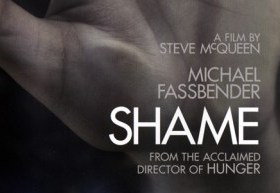
Venice Film Festival Screening: Shame

If Michael Fassbender's roles in X-Men: First Class and Cary Fukunaga's adaptation of Jane Eyre suggested he'd stopped taking risks, then Shame, his second film to screen at the Venice Film Festival, provides shocking evidence to the contrary.

A jolt to the system when seen at a 9am screening on Sunday, the film reunites the German-Irish actor with the British artist Steve McQueen, whose 2008 film Hunger put the actor on audiences' radar, and stunningly launched the artist as a feature director.

It was Fassbender's body that was wasting away as Bobby Sands in Hunger, but it is arguably his character's soul that is atrophying as Brandon, an office worker in Manhattan, whose fastidious outward appearance masks a messy inner life.

Brandon has an insatiable sexual appetite that prostitutes, one-night stands, pornography, and frequent masturbation cannot sate. Yet he seems to have his life in order – at least until his troubled sister, Sissy (Carey Mulligan), arrives in his apartment unannounced, sending him into a tailspin. Their closeness and physical familiarity, and the way that the nature of their bond is initially withheld, suggest that theirs could once have been more than just a straightforward brother-sister relationship, but McQueen is too subtle a director to spell everything out.

Fassbender and Mulligan dazzle as siblings struggling with their demons in different ways, while the former's descent into a kind of fleshly hell is both shocking and disturbing. Meanwhile, McQueen fulfils the promise of his first feature, and further cements his reputation as probably the UK's most daring director of the moment. 

The film is my tip for the Golden Lion, while Fassbender should collect the festival's acting award.

5/5

Originally published in The Scotsman

Thursday

Sook-Yin Lee: "People just assumed it was going to be a porno."

Canadian broadcaster/musician/artist Sook-Yin Lee discusses crossing boundaries in Shortbus.
Cannes, May 2006

How did you feel when you watched the film for the first time?

“Well I saw it last night for the first time with all the bells and whistles on. It was like, ‘There’s a lot of sex in this movie. . .’ But I also got really excited. There were a lot of things that just tickled me to see my friends doing their thing. I was really amazed by certain scenes and certain stories and so forth. I was really excited to be sitting there and sharing it with people because we’ve been working on it for a couple of years and we’re not quite sure what it is. Then to share it with other people and see their reactions was really great.”

How did this whole idea mature in your heads over the two years about what you wanted to do and what you wanted to express?
“A lot of us were strangers to each other and John cast the leads before there was a script. So it took a while to get to know each other just as people and have a level of comfort. And it took a while to excavate the characters, to research the characters and formulate the characters, try to come up with story and explore and do all the background and go out into the world and try to piece together our characters. So yeah, it was quite an interesting experience. When you’re in High School in Canada you go to camp, or you’re a Brownie or a Girl Scout, and I was never part of those kinds of groups, so this was kind of my adult camp, with friends, and just got up to weird experiments.”

What was the audition process like? Was it protracted?
“It was really fun. John knows how to throw a party, that’s for sure. It was a non-stop party. It was a strange social experiment so all of us put together a video tape and he chose the ones that were captivating to him and invited all those people to New York to play all kinds of games and improvisational games. We’d get drunk together and party together, play spin the bottle together, rate each other, just do weird, odd, funny things. He then found a system of pairing people up and threw them in the room together to see what kind of sparks flew.”

Are you still a journalist?
“I am, yes.”

Did you find any conflict between your acting job and your other work, or did you stop for that period?
“Yeah, I would take unpaid leaves of absence from work.”

Does it concern you what your work colleagues might think when they see the film?
“There was a bit of a kerfuffle in the beginning when they found out about the movie. Yeah, there was some reluctance to allow me to appear in the movie but a number of terrific artists like Coppola and Yoko Ono and Julianne Moore and Gus van Sant and Cronenberg and Atom Egoyan, the top Canadian creators, came to our support, because I don’t think my employers really knew what we were trying to create.”

Did they speak in the press about it?

“No, no, they said to me it’s not a good idea to be doing this movie.”

What did Cronenberg et al say?

“They said John is a credible artist. What had happened is there were a number of people writing separate letters in support, speaking on behalf of the project. Because the sound of it, with lots of sex and stuff, people just assumed it was going to be a porno. And, of course, it’s not. You know, it was just different people coming to its defence and saying it’s a proper narrative movie.”

How did you explain it to your parents, though?

“That’s difficult. I didn’t explain it to my parents. My dad knows that I’m here in Cannes but I’m not really crazy for him to see me having an orgasm and stuff. I’m sure he’s proud of me but he’s probably in agreement with me there.”

We still talk about sex as a taboo. What were your barriers that you had to overcome? Were there times when you thought you couldn’t do something and were shocked?

“Yeah, there were times. I was going through a lot of, ‘Is this okay? Is this betrayal? Is this loyalty?’ My partner was fine, he’s a cinematographer, and he was like, ‘Go out and make some good art.’ It was more me confounded by my own feelings of, ‘Can I share these things that I share with one person with another person, and in what context?’ So I really had to wrestle with that one. The other one was having to negotiate the female condom. Because in our scene where we have sex together, it wouldn’t make sense if my husband was wearing a condom and we’re married, right? I didn’t even know there was such a thing as a female condom. It’s like a large rubber thing. Whenever I remember this scene, I always remember the soundtrack [sings circus tune]. It’s like a big top. It’s like a tent. So that was a bit . . . you know? I didn’t know how to insert that apparatus.”

Do you think the current political climate is the reason for a film like this?

“In conservative times, and we are living in fearful conservative times, it’s a good time for art because there’s the opposition or the wondering about this, grappling with this neo-conservatism of this time, so I think it makes for good art. There’s a lot of interesting music coming up and art and movies. You need to have dialogue in those different opposing views.”

What were your motivations for taking part in this? Was it to test yourself? Was it to make a political statement?

“Ideologically I really liked the idea of putting sex in a narrative in a different way than we’ve seen, with some heart and humour, and awkwardness and humanity. I really loved that idea. So just from a let’s make some good art and make an interesting experiment I was right on board from that.”

Because of the way you were working presumably you were drawing on a lot of your own experience and feelings. So did that blur the line and was that sometimes difficult?

“I was really excited about working through some stuff. To be given a safe environment in which to explore aspects and then also in a fictional context, it’s like, ‘Oh yeah, I can go there and explore, and then detachment as well. I’m not going to have to carry it back home and continue living that life.’ It’s kind of like a licence to go and play around, so that was really great. Because I have by no means understood sexuality, and self love, and I’m just beginning to understand, so it was really fantastic for me to have that experience. To be able to go in there and muck about.”


© Stephen Applebaum, 2006

John Cameron Mitchell: "A viewer can look at the Da Vinci Code and be aroused."


John Cameron Mitchell explores sex and relationships in post-9/11 New York in Shortbus.
Cannes, May 2006


Briefly, what impact did your last film, Hedwig and the Angry Inch, have on your career? Did you get offers from Hollywood as a result?

“I did get offers from Hollywood and stuff and they all felt weird. I know how people get fucked up in Hollywood, and I was old enough not to get seduced by the money or anything. I have my rent-controlled apartment in New York and I don’t have to pay a mortgage, so I decided to wait it out and work on stuff that was more personal.”

Some of the bigger distributors were initially considering picking up Shortbus. Did that surprise you, and do you think people want to make a statement with the film?


"I think there are people in all companies that aren’t necessarily happy with Rupert Murdoch or whoever’s in charge, and they try to stick it in. But it’s kind of fantastic that some of the larger ones were considering it, because it would be nice to actually get a little dialogue going in the press and stuff about the nature of sex in film and how it differs from pornography. I want to be a little bit provocative with this, obviously.”

How does sex in film differ from pronography?

“Pornography, to me, is pretty much defined as something whose priority is to arouse. You could define it by the intent of the maker or the intent of the viewer. A viewer can look at the Da Vinci Code and be aroused! Anyone can be aroused by that bottle there. But, in our view, we weren’t necessarily making anything erotic – and I haven’t heard of anybody who’s got a hard-on from watching this film. Therefore I wouldn’t say it had any pornographic value.”

I think one of the differences is like what one of your characters says, they “own” the experience, whereas in pornography it’s the viewer who owns it.


"There’s a lot of projection from the viewer, yeah. I actually like porn, once in a while. I think the porn business is weirdly polarised the way that interesting, smaller films are from Hollywood, like rich and poor. There’s huge blockbusters that feel like they want to be Oscar-nominated movies and then there’s a lot of small movies that are really individual, and there isn’t really very much in between. Porn is the same way. There’s like the factory, formula porn, where everyone has sex in the same order in the same video in the same bodies with the same music, and then there’s this very amateur stuff that comes out too. So it’s interesting how economically porn parallels Hollywood. There’s not much difference in Hollywood to porn.”

In the press kit you say that watching two actors having sex tells us a lot about their childhood and what they ate during the day. Can you develop this idea?

“I think that sex is kind of like reading your palm, it tells you something about your life. For example, for some reason a lot of people in charge, like politicians and stuff, like to be very submissive in sex. So I might make some extrapolations about someone from having sex. If I see two people who are very much having a conversation in sex, I can maybe tell there’s a certain sensitivity going on and maybe there was a certain healthy childhood. If there’s something a little more violent, maybe there was something violent in their childhood. I feel like it’s a metaphoric language that can be used more comprehensively than it has been. Certainly a lot of films have been using sex lately and they’ve tended to be very harsh, in my view, and a little kind of negative. I just think it’s pretty funny.

“I love, for example, some of Catherine Breillat’s films. They’re dark. Fat Girl is terrifying. It’s fantastic! 9 Songs has its own structure, it’s very different from Brown Bunny or Ken Park or Battle in Heaven. Not that our sex is really good sex. Everyone is trying really hard, but it’s maybe more ridiculous. It’s like people are trying too hard. But they’re also having fun sometimes, too, like in the national anthem scene. So there are other aspects to sex that I hope people will take of advantage of, because it’s just as varied as something like music. It really is a language that can be used in all kinds of ways.”

Can you develop a sort of psychological profile out of it?

“I don’t know. You tell me. The exposition of my characters is in that opening sequence, in the way that they have sex. The couple is acrobatic, running from one thing to another, ADD. They’re trying too hard. Something’s wrong. They’re jumping all over the place and it seems very strenuous. Is there something wrong in their relationship? Some people might intuit that. The other guy’s trying to get his dick in his mouth. It seems like too much hard work. I mean he’s trying so hard. Meanwhile, someone is talking about the orgasm being the most lonely place and that’s a wonderful thing. She’s saying I want procreate in the dark like a worm and we cut to him trying to get his dick in his mouth. He’s trying to self-fertilise or something. I don’t know. To me it’s like sex can be interpreted different ways character-wise, theme-wise. Another character’s whipping and not being very happy being a dominatrix. We’re getting to know her through the sex. That’s what I mean when I say it can be used in different ways.”

What was your mandate when you were casting? Obviously there are no “well known” stars in the film.

“Well try getting Jennifer Aniston to give a blow job! I don’t know if you would have any success. You know, I get really distracted, often, with certain kinds of stories when stars are in them. You can’t get past them. It’s like ‘Look, he’s doing a working-class guy. Isn’t he good at that?’ rather than just buying into the story right away. It feels like a stunt sometimes. Someone like Cassavetes, who would use a lot of the same people, and certainly Gena Rowlands was a star of a certain indie magnitude in the 70s, managed to get past that. You weren’t aware of, ‘Oh look, there’s Gena Rowlands. Isn’t it amazing she’s so different?’ You’re in the story. So we avoided stars. And, of course, sexually, American stars would have nothing to do with this. We also avoided professional actors, because they’re worried about getting a sitcom when they’re 45 and can’t do indie films anymore, or whatever their career goals are. So we had an open call. We just let people find out about us. We did a lot of articles in papers and had a website. People sent in audition tapes.”

So people knew from the beginning what was required?

“Oh yeah. And I knew that they should be co-creators. If they’re going to be this exposed, they should create their characters, they should name their characters, they should discuss what their characters’ goals are and have input in all sides. I would have the final say but I would never ask them to do something they didn’t want to do. For example, Paul [Dawson, who plays James], in our conversation, was like, ‘When I was a kid, I used to be able to suck my own dick.’ I was like, ‘That’s great. You know that’s kind of a fascinating image of a sort of feedback loop of somebody. It’s kind of funny, too.’ So we would think of it in those terms. I said, ‘How would you feel about introducing the character like that?’ and he was like ‘Wow, I guess I should practice to see if I can still do that.’ So that was how a scene would come about. So we cast the actors first and then came up with the stories through improv.”

Was there anything that you wanted somebody to do that they particularly wouldn’t?

“I really asked what their limits were as we went along. Like there was safety concerns and condoms, and this and that, testing, and everybody discussing all that kind of stuff. The women were a little more nervous about the sex beforehand. I think guys can approach sex and separate it from feelings a lot easier. It’s funny because when we finally got to the days of shooting, that’s when the guys freaked out, when they realised they had to keep it up. So our friend Viagra was on the craft service table. Sometimes they took it too early and it wore off, and they were flushed for the wrong scene.”

Did you want to make a comment about New York, the city being much more interesting and free 10 years ago and now it’s so clean, 42nd Street is not there anymore?

“Ten years ago, I guess it was before Giuliani, no-one really knows when they’re in a golden age, right till later. I’m sure right now people will look back on their youth and go, ‘2006 was fucking amazing!’ It’s what you’re experiencing at that time. Yes, New York is way more expensive than it used to be, though under Bloomberg it’s less repressive than under Giuliani, the nightlife is better. But this idea of the salon being in New York, it’s an ancient European tradition of welcoming people into your house, offering art, food. The salon in the film was based on some places I had been, and there was a place called Cinesalon that was similar; it was more on the queer side than the Shortbus salon. But these places exist, and maybe the film will inspire more people to do that instead of gathering in a bar or some place that is less conducive to sociability.”

How much is this coloured by post-9/11 trauma and the question of how one lives in New York alongside Ground Zero?

“It’s very much in the shadow of 9/11. Many of us in the cast experienced it and experienced the blackout that was not too long afterwards, where they thought they were dead, and then realised, you know, it’s just a blackout. There really was no violence, it was a beautiful, beautiful experience where you’re walking down your street and didn’t know if you were on your street, so you had to deal with the person that was right in front of you and meet the people in your building and have a party on the stoop. I was with some of these actors that night and remember going to a bar with no air conditioning, so everyone took their clothes off. Someone was deejaying on an iPod with a transistor radio. You know, it was fantastic. So it’s definitely a love letter to New York in the shadow of 9/11, in the shadow of Bush. Because, you know, it’s probably the place where he’s least popular in the whole country, even though he pretended to defend our honour. You know, coming to New York. Who asked ya? He’s fucked up in so many ways. If we could secede from the Union we would. It’s also a difficult place to come to now because it’s economically difficult for young people. There’s a line in the film, ‘Why do people keep coming to New York after 9/11, it’s so expensive?’ and someone says, ‘Well, I’ve actually heard it’s because 9/11 was the first real thing that ever happened to some people. The first unedited thing they could experience in real time.’”

Do you think that 9/11 has had the same effect as AIDS in the 80s? They’ve both created an atmosphere of collective fear.

“Well, I don’t know whether you remember right after 9/11, people like Pat Robertson and Jerry Falwell said, ‘Well it’s because of homosexuality and foreigners, that’s why 9/11 happened.’ At least they’re honest. At least they’re speaking the certainty that they’re feeling. Because somehow the other - terrorists, the immigrant, the homosexual, whatever - they’re all the same thing for many people in their minds.”

Why do America stars find it so difficult to portray sex on camera?

“They used to say that all those sex stars of the 30s and 40s and 50s had terrible sex lives - you know, Marilyn Monroe, Rita Hayworth, Lana Turner and everything – and that’s why they needed the camera, to fill up something they couldn’t experience. They don’t in front of the camera because they tend to be the international stars and in the States as opposed to Europe, once their career founders they’re probably going to have to go on television and the networks are not going to want Jennifer Aniston having sex because the sitcom might then be threatened. It’s a career-oriented thing for American stars whereas in Europe it seems like it’s much more about the project.”

Now you have people like Paris Hilton having sex.

“Well she doesn’t really have any talent, so she has to use what she has.”

Do you think that sex sometimes correlates with loneliness? Sometimes when you see it as a single person in movies, it’s a flipside of loneliness, where they’re trying to get out of their head.

“Yeah, thank God for sex drive because a lot of people would never leave the apartment. At base it’s an appetite, like any other appetite. You know, for some people food is connected to love as well, but sex has all these tendrils and synapses that connect to other parts of our lives. Sometimes love and sex intersect and it’s very powerful, and dangerous to the heart. But yeah, the language of sex is kind of the language when we’re talking about connection. For me the film is really about the question that we all have to answer: are we going to be alone or not alone? James, for example, tries to be alone and ultimately alone by ending it [suicide]. You can’t get more lonely than that. He can’t feel past his skin because whatever has happened to him, he hasn’t been able to let anything penetrate his mind and body and soul. I think we all have to make that decision at some point and in a way it’s the most important decision that anyone can make, because it involves politics and it involves sex and it involves love. For the last few years, we Americans have been alone. We don’t want immigrants. We don’t want anyone. And it doesn’t work. Americans now are realising the mistakes that have been made lately based on these kinds of fears.”

The final song in the film talks about embracing your demons because they’re actually your friends – and it’s I guess what all the characters learn to do in the end – and I wondered what your demons are/were?

“You know, certainly I wanted this to be useful to other people but it’s been very useful to me. I grew up in a very repressed Catholic/military environment and sex was very scary to me. Growing up gay and in the closet and all that, it was like the chimera that was there all the time, because who you were attracted to was taboo. The distillation of this was the sex act itself, which was a symbol for all these things, and that was reduced. You know, like in the Catholic Church, for example, that act has to be a certain way, it has to have a function, be procreative, and it has to be within marriage. It’s so frightening to so many people that it has to be bottled. And, of course, we see the result of trying to bottle and crush something that basic. You can’t do it. It’s impossible to crush and destroy it. So I’m learning about that, too. I find sex much less scary having done this film. And I think it was the same for some of the actors, they wanted to confront some demons.”


© Stephen Applebaum, 2006